Simplifying the Great Outdoors: A Hands-On Review of the Napier Lite Pack Camping Bundle
Article Editorial Team
When it comes to planning a car camping excursion, the packing process often stands out as one of the most laborious and mentally taxing parts of the entire trip. Coordinating individual pieces of gear, verifying that tent stakes and poles are accounted for, and rolling up sleeping bags can quickly turn a relaxing weekend getaway into an administrative headache. For many outdoor enthusiasts, streamlining this logistical hurdle is the key to actually enjoying the experience.
Eliminating that friction through a single, ready-to-go package can remove a significant amount of stress, allowing travelers to focus entirely on the recreation and relaxation aspects of their journey. Operating under this premise, outdoor gear reviewers frequently seek out all-in-one solutions designed to take the guesswork out of preparation. When the opportunity arose to test the Napier Lite Pack, an all-inclusive camping bundle promising a lightweight combination of a tent and two sleeping bags packaged neatly into a single convenient duffle, the prospect was immediately intriguing.
Designed specifically to lower the barrier of entry for casual campers, the Napier Lite Pack aims to address the common pain points of gear organization. By packing the fundamental necessities into one grab-and-go container, the bundle minimizes the pre-trip preparation required before hitting the open road.

What is a Camping Combo?
In the context of modern outdoor recreation, a camping combo can be defined simply as a curated grab-bag of essential supplies that travelers can throw directly into the trunk of a vehicle and head straight for the destination. This approach drastically minimizes the amount of mental energy and planning that must be expended before initiating a trip.
The Napier Lite Pack specifically curates what is arguably the three most important elements for a successful overnight outdoor stay: a shelter and two thermal sleeping bags. Together, these components form the core foundation of a campsite setup.
Weighing in at a total of 18 pounds for the entire combination, the bundle strikes a balance between portability and automotive convenience. While an 18-pound package is far too heavy for traditional backcountry backpacking, it is more than light enough for a short hike into a walk-in camping site or a brief stroll from a parking area to a more secluded, rustic campsite.
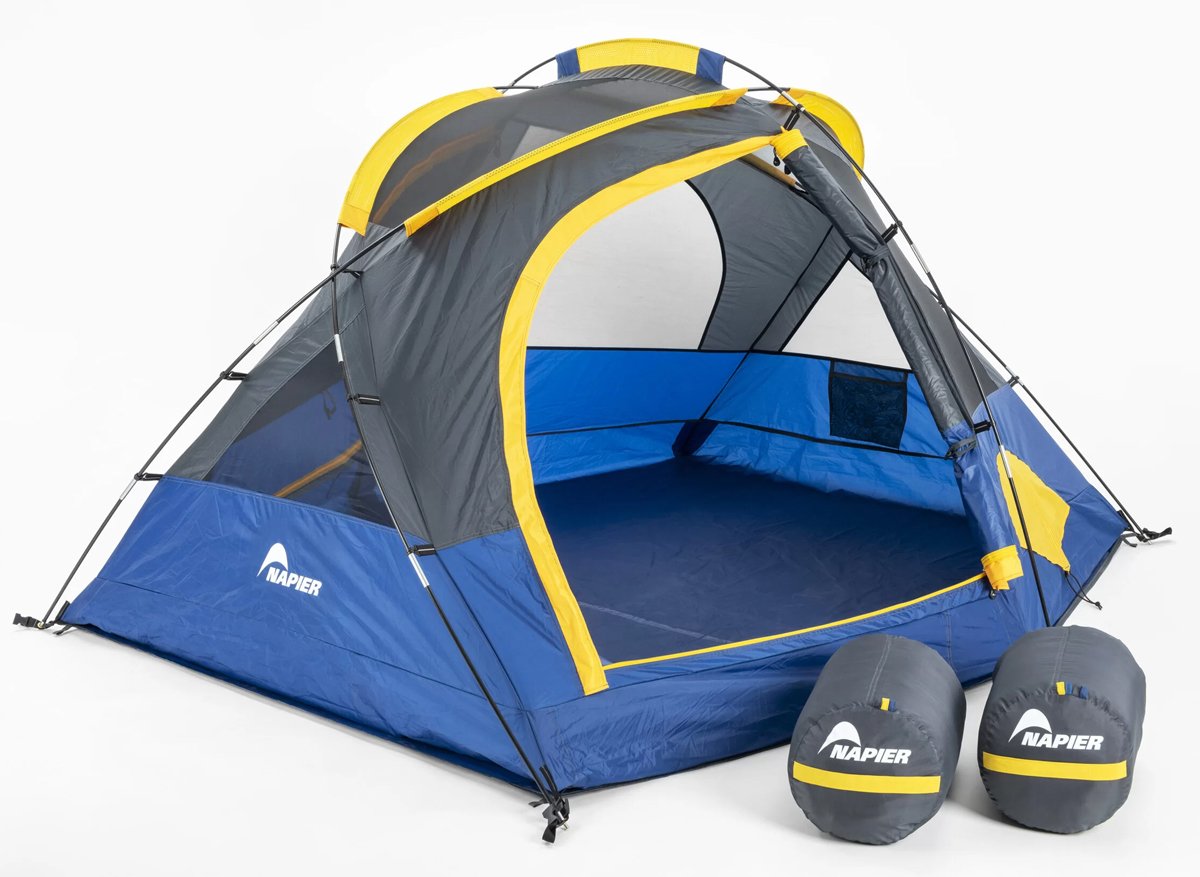
Furthermore, the entire kit is housed within a duffle bag that compresses down to dimensions of 28 inches by 14 inches by 10 inches. This compact footprint ensures that the bundle can easily stow away even in the trunk of a compact car, leaving ample room for coolers, clothing, and other personal luggage. To make transportation even more manageable, the duffle comes equipped with an adjustable shoulder strap, allowing campers to haul their entire sleep system in a single effortless trip from the vehicle.
Putting the Equipment to the Test
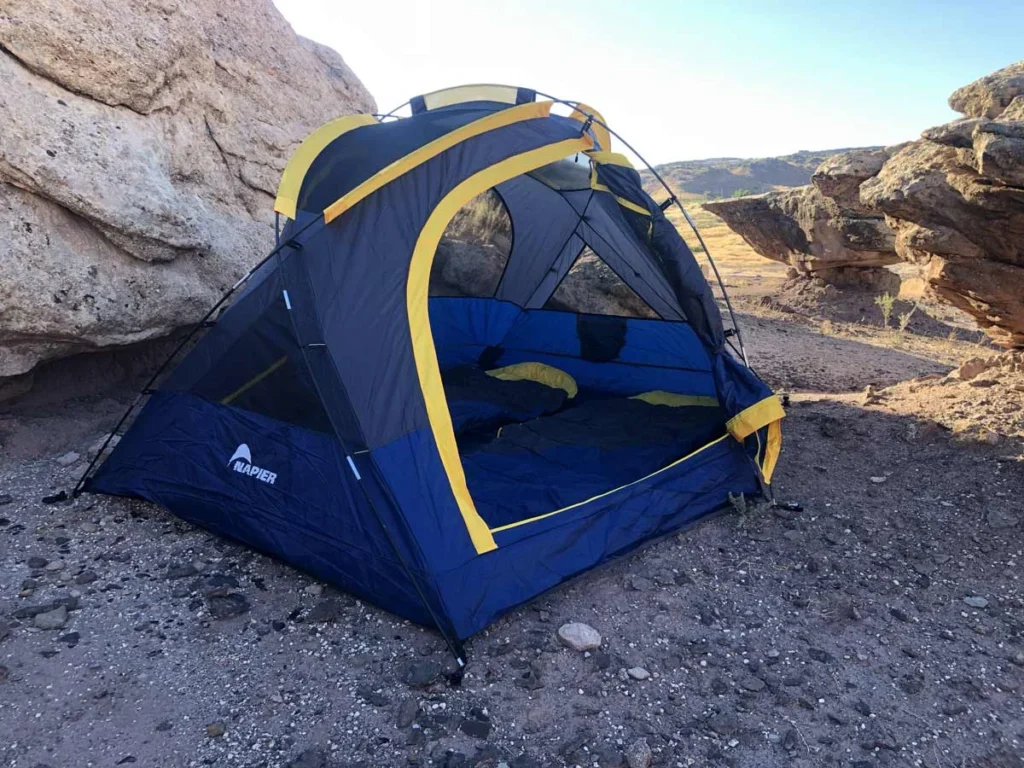
To properly evaluate the claims made by the manufacturer, reviewers took the Napier Lite Pack out into the field for an overnight camping excursion. From the very beginning of the setup process, thoughtful design choices became apparent. Most notably, the tent footprint was rolled directly in alongside the primary framework, entirely eliminating the need to lay out and align multiple separate pieces of equipment before assembly.
Additionally, the tent structure features adjustable side-release buckles built directly into the system. These buckles simplify the teardown process immensely, making it remarkably straightforward to compress the tent fabric and secure it back inside the storage sack without the usual wrestling match associated with packing up soft goods.

The structural skeleton of the tent relies upon three poles constructed from shock-corded fiberglass. Within the broader landscape of camping equipment, aluminum tent poles are traditionally viewed as superior because they offer a higher strength-to-weight ratio, making them both lighter and more durable against harsh weather. However, in the context of car camping—where overall equipment weight is significantly less of a strict constraint—fiberglass serves as a dependable and cost-effective alternative that performs adequately under normal conditions.
Assembling the shelter is a straightforward mechanical process. Campers simply slide the fiberglass poles through the designated fabric sleeves on the tent body and then secure the structure by snapping the attached plastic hooks onto the poles. During the field test, a single person was able to complete the entire assembly process from start to finish in less than five minutes, demonstrating the efficiency of the design.
Design, Space, and Aesthetics
Beyond its functional efficiency, the tent included in the Napier Lite Pack stands out visually. It presents a modern, stylish profile that distinguishes it from more utilitarian or industrial-looking shelters on the market. For campers who prefer sleeping under the stars and enjoying clear night skies, the design incorporates a generous array of mesh windows that maximize ventilation and upward visibility while keeping insects at bay.

The shelter is officially rated to comfortably accommodate two adult occupants. Reviewers accustomed to tight, minimalist backpacking tents noted that the Napier model felt exceptionally spacious by comparison. There was ample interior volume to comfortably fit two adults alongside several pieces of personal gear with room to spare, avoiding the cramped feeling that often plagues two-person tents.
The included sleeping bags matched this theme of generous sizing. Rather than adhering to the traditional, restrictive mummy-bag design that hugs the body tightly, these sleeping bags feature a tapered-style end that provides extra room for occupants to move their legs and feet around comfortably during the night. Measuring 7.2 feet from end to end, the bags are long enough to accommodate taller campers without making them feel constrained.
In terms of thermal performance, the sleeping bags are rated to keep users comfortable in temperatures down to 25 degrees Fahrenheit. This temperature rating provides a reliable safety margin and sufficient warmth for casual campers embarking on spring, summer, or autumn trips where nighttime temperatures drop moderately.

Weather Protection and Versatility
While the field test took place in a dry desert environment where precipitation was absent—allowing the team to forgo the rainfly during actual sleeping hours—the reviewers did unpack and install the rainfly separately to evaluate its design and ease of use.
The rainfly provides full coverage for the tent structure and can be installed rapidly because it does not require any specialized auxiliary poles or complicated rigging accessories. Deployment involves simply draping the material over the top of the assembled tent and securing each of the four corners with quick-clip attachments. For environments prone to heavy winds, additional storm flaps are included that can be staked firmly into the ground to maintain structural stability and prevent flapping.
Ultimately, camping combos of this nature are explicitly targeted toward casual outdoor enthusiasts who wish to experience nature with minimal barriers to entry and preparation. While the Napier Lite Pack may not represent the absolute lightest or most compact system available to specialized mountaineers, it successfully fulfills its core promise for consumers seeking essential gear at an accessible price point.

The convenience of consolidating the most critical components of a campsite—specifically the shelter and sleeping arrangements—into a single, unified location makes the pre-trip routine remarkably smooth. The roomy and well-constructed tent, comfortable sleeping bags, and reliable rainfly combine to form a cohesive system that simplifies outdoor travel. For individuals looking to acquire an all-in-one camping bundle to jumpstart their outdoor adventures without assembling disparate pieces of gear from scratch, the Napier Lite Pack proves to be a practical and efficient option.
Related News