Solo Travel in South America: Discovering the Charm of Colonia del Sacramento, Uruguay
Article Editorial Team
When travellers map out a backpacking itinerary through South America, Uruguay is frequently overlooked, squeezed quietly between its heavy-weight neighbours, Argentina and Brazil. Known primarily for its vast agricultural landscape, prime beef production, and a flat terrain stretching along a modest thirty-kilometre coastline, this small nation boasts a progressive social climate and a relaxed pace of life. For travellers arriving from the bustling streets of Buenos Aires, however, a rewarding escape sits just a short ferry ride across the Río de la Plata. Colonia del Sacramento—commonly known simply as Colonia—offers one of the most accessible, safest, and visually striking day trips on the continent, making it an ideal destination for solo explorers seeking a blend of rich history and unhurried coastal charm.

Getting to Colonia del Sacramento
The journey to Uruguay’s oldest city is remarkably straightforward. High-speed ferries operated by companies such as Buquebus and Colonia Express connect Buenos Aires to Colonia in approximately one hour and fifteen minutes. Depending on how early bookings are made, one-way fares generally range between twelve and fifteen British pounds, though prices can fluctuate during peak seasons. Travellers operating on foot can easily secure tickets online by selecting single-fare options without vehicle accommodations.

Upon arrival at the small port terminal, visitors clear immigration before stepping out into the town. Many day-trippers choose to store their luggage at the local tourist information office situated directly across from the port in a prominent municipal building, allowing them to explore unencumbered before catching an onward bus or return ferry. For those wishing to venture deeper into the country, the local bus station is located a brief ten-minute walk from the historic center. Regular bus services operated by lines such as COT and Turil connect Colonia to the capital city of Montevideo in under three hours, with one-way tickets typically ranging between twelve and twenty US dollars.

Exploring the Historic Quarter
Founded in 1680 by the Portuguese under the commission of Prince Pedro II to defend territorial interests, Colonia del Sacramento stands as Uruguay’s oldest urban settlement. Today, its historic quarter—known locally as the Barrio Histórico—serves as the primary draw for international visitors. Designated as a UNESCO World Heritage Site in 1995, the district is celebrated for its remarkably preserved architecture, labyrinthine cobblestone streets, and colourful stone houses that evoke a distinct colonial past.

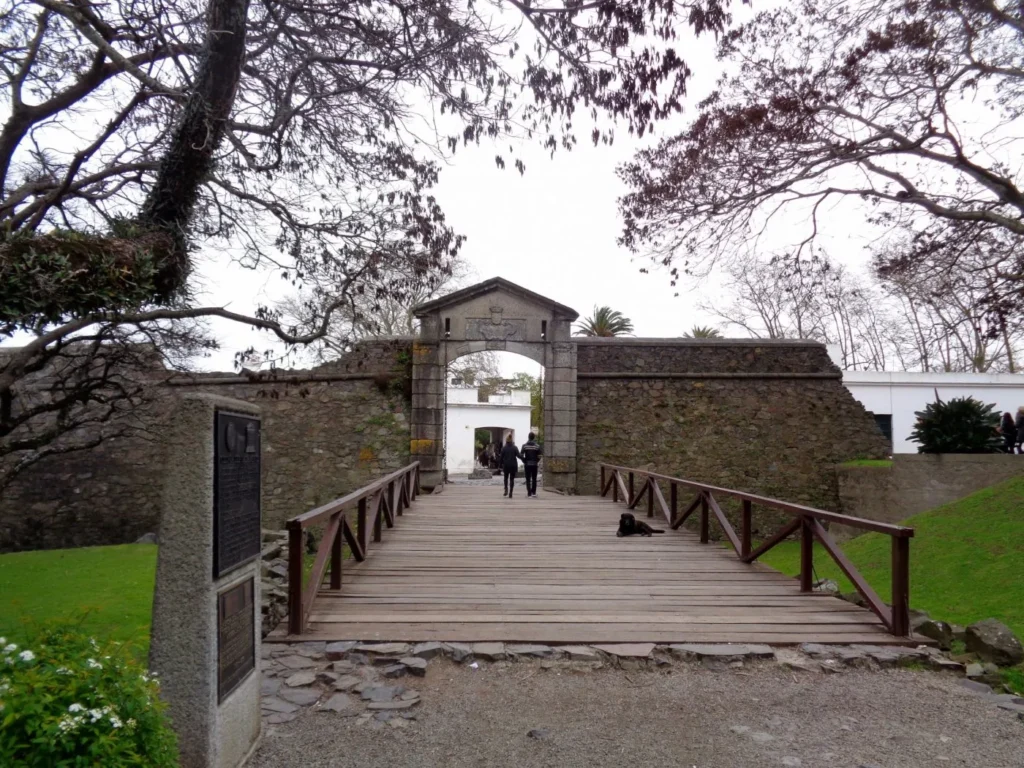
Entering the historic quarter requires crossing a wooden bridge leading to the Puerta de Campo, the ancient town gate constructed in 1745. The gate remains in exceptional structural condition, acting as a physical threshold that separates the modern urban expanse from the preserved historical sanctuary within. Navigating the neighborhood is intuitive, inviting leisurely strolls past pastel-coloured facades, intriguing stone sculptures, and walls etched with subtle artistic tributes to traditional tango culture. Visitors can pause at local cafes to sample regional empanadas or relax in shaded courtyards before continuing their exploration.

Architectural Landmarks and Cultural Sites
At the heart of the historic zone lies the Plaza de Armas, the city’s main square, which serves as a natural focal point for sightseeing and photography. Surrounding the plaza are several notable architectural landmarks, most prominently the Basilica del Santisimo Sacramento. Also referred to as the Church Matriz, this parish church ranks among the oldest in Uruguay. Although the original structure was erected by Portuguese settlers in the seventeenth century, the building standing today was largely reconstructed in the nineteenth century following a devastating gunpowder explosion.

Beyond the central square, Colonia offers a surprising concentration of specialized museums housed within historic buildings. Visitors holding a combined multi-site ticket can explore institutions such as the Tile Museum, the Paleontological Museum, and the Municipal Museum, gaining insight into the region’s diverse heritage. Another prominent landmark is the El Faro lighthouse, built in 1857 atop the ruins of an ancient convent. Visitors who climb to the top are rewarded with panoramic views stretching across the Río de la Plata, highlighting the historical significance of the river as a vital maritime trade route between Argentina and Uruguay.

Local Flavors and Coastal Promenades
No exploration of Colonia is complete without experiencing local culinary traditions. Uruguayans share a deep cultural affinity for mate, a traditional caffeinated herbal beverage consumed widely throughout the day. Visitors frequently join locals in sipping mate at outdoor tables in cafes scattered throughout the old town. For heartier fare, the national sandwich known as chivito offers a substantial combination of sliced grilled beef (churrasco), ham, bacon, a fried egg, cheese, tomato, and lettuce.

The city’s geography also encourages outdoor leisure along its waterfront. The Puerto Viejo—the old harbour—features a scenic promenade where sailing boats bob gently in the river current. While swimming is typically reserved for the warmer summer months, the harbour edge and nearby beaches provide peaceful settings for walking and observing river views, even during the cooler winter season.

Social Impact and Community Initiatives
For travellers conscious of their economic footprint, the region offers meaningful opportunities to support local communities. Initiatives like Manos del Uruguay, a non-profit organization established in 1968 by a collective of rural women, aim to improve economic conditions for female artisans in regional villages. By purchasing hand-spun, dyed, and knitted wool garments from cooperative shops, visitors ensure that their consumer spending directly supports grassroots economic empowerment.

While Uruguay is widely recognized as one of South America’s most progressive nations, social challenges persist, including issues surrounding early marriage rates among young women. Advocacy and support networks continue to address these concerns through community programs and legislative efforts aimed at strengthening protections for vulnerable youth.

Whether experienced as a seamless day trip from Buenos Aires or as the starting point for a broader journey toward Montevideo, Colonia del Sacramento offers a compelling blend of historical depth, architectural beauty, and accessible travel infrastructure, cementing its reputation as a rewarding destination for independent explorers in South America.
Related News