Unlocking the Amazon: A Comprehensive Journalistic Report on Traveling Through Manaus, Brazil
Article Editorial Team
By Lisa Imogen Eldridge
Updated: October 2026
Nestled deep within the northern region of Brazil, Manaus stands as a striking paradox—a bustling, cosmopolitan metropolis of more than two million residents functioning as the primary urban gateway to the world’s largest tropical rainforest. Long mischaracterized in popular imagination as a wholly underdeveloped frontier town, the capital of Amazonas offers a rich tapestry of nineteenth-century colonial history, booming river commerce, and opulent architecture. For global travelers seeking an authentic encounter with the Amazon basin without sacrificing urban amenities, Manaus serves as a remarkable base for exploration, culture, and conservation-focused tourism.

Understanding Manaus and Its Historical Context
As the capital of the vast Amazonas state, Manaus occupies a strategic location on the banks of the dark waters of the Rio Negro, just upstream from its confluence with the mighty Amazon River. The city’s architectural grandeur owes its existence to the historic rubber boom that spanned from the late nineteenth century to the early twentieth century. During this era of intense global demand for natural rubber, immense wealth poured into the region, transforming Manaus into one of the most technologically advanced and lavish cities in South America. Although the boom collapsed in the 1920s following the introduction of rubber tree cultivation in Southeast Asia, the physical legacy of that golden age remains powerfully visible today.
Today, the Amazon rainforest itself spans multiple South American territories, covering portions of Brazil, Peru, Ecuador, Colombia, Bolivia, Venezuela, Guyana, Suriname, and the French overseas department of French Guiana. Yet Manaus remains the unrivaled epicenter for commercial and tourist expeditions into the Brazilian sector of this critical global ecosystem. While many modern visitors treat the city merely as a brief transit point before heading directly into jungle lodges, a deeper exploration of the urban center reveals an array of cultural, historical, and ecological attractions.

Architectural Splendor: The Teatro Amazonas
Among the most enduring symbols of the city’s rubber-era prosperity is the Teatro Amazonas, an opulent opera house characterized by its iconic pink facade and dome covered in tens of thousands of glazed ceramic tiles imported from Europe. Located in the heart of the historic center, the venue continues to host classical performances, orchestral concerts, and theatrical productions. Visitors frequently find themselves enchanted by the juxtaposition of attending high European art forms within the humid perimeter of the Amazon basin.
For those unable to attend a live performance, structured guided tours are available from Tuesday through Sunday, providing historical context in English, Spanish, and Portuguese. These tours highlight the imported Italian marble, French furnishings, and crystal chandeliers that reflect the staggering wealth commanded by the rubber barons at the turn of the twentieth century.

Venturing into the Amazon Basin
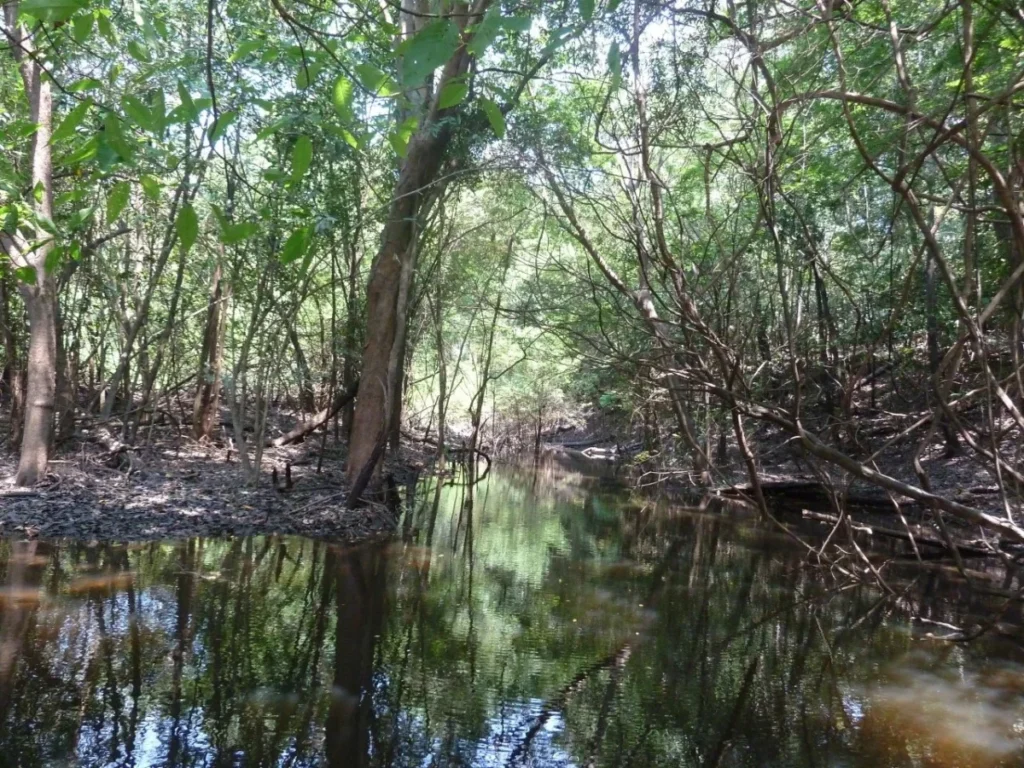
Beyond the urban core, Manaus serves as the launchpad for a wide spectrum of wilderness excursions. Travelers can choose from an array of local operators based around the central squares offering everything from single-day excursions to multi-day survival expeditions deep into the jungle. Reputable local outfitters such as Amazon Jungle Tours facilitate immersive experiences that range from community-led riverboat trips and piranha fishing to intensive wilderness treks focusing on medicinal plants, traditional survival techniques, and wildlife spotting, including the elusive pink Amazon river dolphins.
For travelers seeking a less rugged engagement with local ecosystems, day trips provide access to regional highlights such as the Meeting of the Waters. At this natural phenomenon, the dark, acidic waters of the Rio Negro run side-by-side with the sandy, sediment-heavy waters of the Amazon River for kilometers without immediately mixing, a spectacle driven by differences in water temperature, speed, and density. Day excursions frequently incorporate visits to nearby natural attractions, including the waterfalls of Presidente Figueiredo.

Local Gastronomy and Indigenous Heritage
The culinary landscape of Manaus is heavily influenced by its immediate riverine environment. Local restaurants, particularly those clustered around the historic city center near the opera house, feature abundant freshwater fish selections. Among the most popular regional delicacies is the tambaqui, a large, fruit-eating fish native to the Amazon basin. Dining establishments in the city offer visitors an opportunity to experience traditional Amazonian ingredients, complemented by widespread juice bars serving fresh local produce, including nutrient-rich açaí bowls and traditional Brazilian caipirinhas.
Beyond mainstream dining, Manaus plays an important role in promoting Indigenous culinary heritage. Initiatives such as Biatúwi, Brazil’s first Indigenous food house located in a restored colonial building in the historic center, are led by Indigenous chefs like Clarinda Ramos of the Sateré-Mawé people. These establishments offer traditional dishes such as quinhapira while actively supporting the economic and cultural preservation of Indigenous communities.

Urban Nature and Conservation Research
Travelers who wish to experience Amazonian biodiversity without undertaking a deep jungle trek can explore urban and suburban research institutions. The Instituto Nacional de Pesquisa da Amazônia (INPA) operates a public park known as the Bosque da Ciência, located roughly twenty minutes from the city center by bus. The institute functions as a sanctuary and research center for rehabilitated Amazonian wildlife, housing manatees, giant river turtles, and exhibits detailing the region’s vast insect and plant life.
Similarly, the Museu da Amazônia (MUSA) manages the Manaus Botanical Garden, a protected rainforest reserve within the city limits. MUSA offers elevated canopy observation towers that allow visitors to ascend above the dense forest roof for panoramic views of the surrounding jungle, alongside guided botanical trails that interpret the complex ecology of the region.

Markets and Community Trade
The commercial life of Manaus is anchored by historic public trading spaces, most notably the Adolpho Lisboa Municipal Market. Situated on the riverfront and constructed with striking wrought-iron architecture reminiscent of European design styles of the late nineteenth century, the market provides a bustling venue for purchasing regional produce, local fish, and handmade crafts.
In the immediate vicinity of the Teatro Amazonas, non-profit retail spaces such as Galeria Amazônica offer fair-trade options for souvenir seekers. Operated in cooperation with Indigenous and riverside community associations, these spaces ensure that revenue from the sale of traditional baskets, jewelry, and woodcrafts directly benefits the artisan communities who produce them.

Accommodations and Practical Logistics
The hospitality sector in Manaus ranges from budget-friendly guesthouses and centrally located hostels to mid-scale urban hotels. Travel advisors frequently recommend lodging within the historic center to ensure safe and convenient pedestrian access to the central square, tour operators, and cultural landmarks. Properties such as the GoldMen Business Manaus (formerly the Taj Mahal Hotel) and Local Hostel Manaus place visitors within a short walking distance of the principal downtown attractions while offering structured amenities and communal spaces designed to assist independent travelers.
While Manaus possesses a robust transportation infrastructure featuring reliable bus networks and regional airport connectivity, navigating the city requires a degree of logistical preparation. Transport links and urban exploration are best managed with awareness of local safety considerations, particularly for solo travelers navigating the wider metropolitan area. Most visitors find that a stay of several days to a week provides an ideal timeframe to absorb the city’s architectural heritage, sample regional cuisine, and complete excursions onto the surrounding rivers before moving onward through Brazil.
Related News