Bilt Is Confusing: How to Pick the Right Rewards Before It’s Too Late
Article Editorial Team
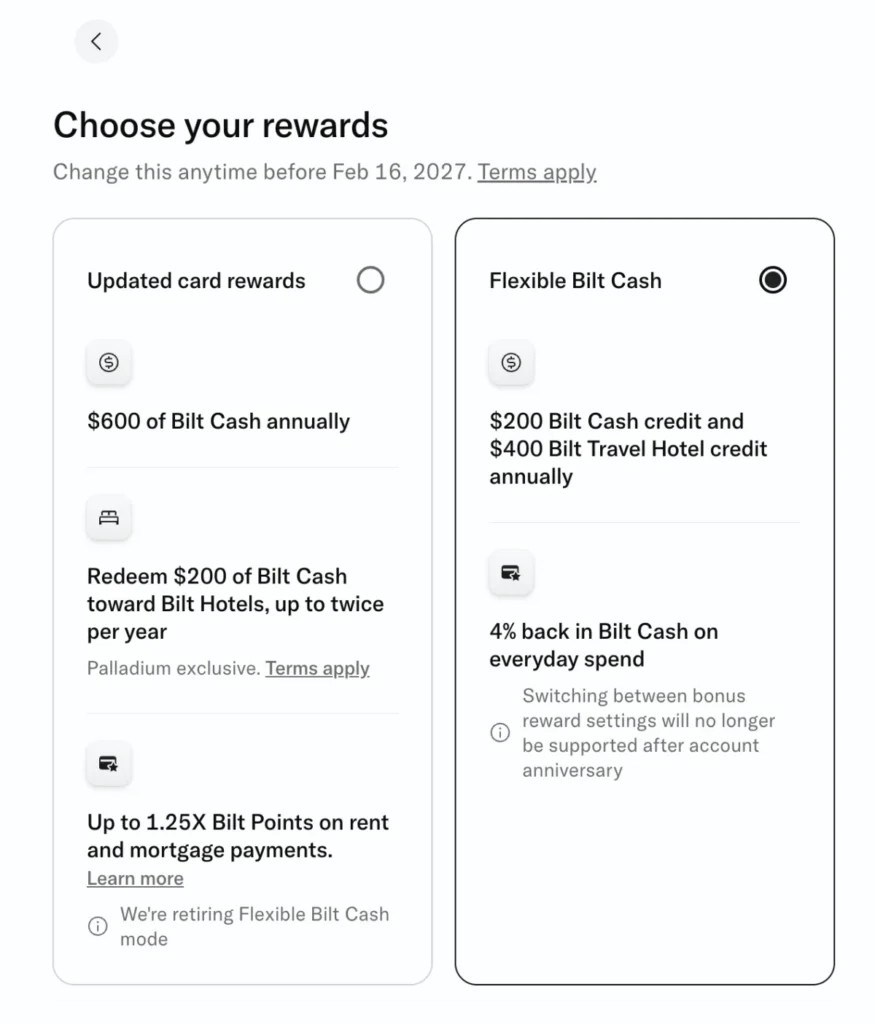
Cardholders who currently earn 4% back in Bilt Cash on everyday purchases must decide whether to opt out of upcoming changes and maintain the status quo. The deadline to make this choice arrives on the day before each cardholder’s individual card renewal anniversary. Meanwhile, consumers who do not yet hold a Bilt credit card but wish to access the Flexible Bilt Cash option face a broader timeline constraint: they must submit an application before the end of 2026. Beginning January 1, 2027, all new cardholders will be automatically enrolled in the updated rewards setup with no option to switch.
The announcement, made public by Bilt, has immediately sparked widespread debate across the points and miles community, with the most pressing question being which rewards track provides better long-term value. Because the program has grown increasingly complex, determining the optimal path requires careful analysis of individual spending habits, housing costs, and reward redemption preferences.
For prospective applicants who have remained on the fence about acquiring a Bilt credit card, the closing months of 2026 serve as a critical window. Individuals who apply prior to January 1, 2027, retain the ability to choose Flexible Bilt Cash, the configuration that yields 4% back in Bilt Cash in addition to standard point earnings. Those who wait to apply in 2027 will be placed directly onto Bilt’s new system without any possibility of reverting to the legacy structure. Applying before the deadline does not permanently lock a cardholder into the older framework, as users retain the freedom to migrate to the new benefits at any time. However, waiting until the new year closes that door permanently, making an early application a strategic safeguard for heavy everyday spenders.
The choice of which specific Bilt card to acquire heavily influences the value of retaining Flexible Bilt Cash. Within the current lineup, the Bilt Palladium Card and the Bilt Obsidian Card stand out as the primary options capable of utilizing Point Accelerators, which represent the main justification for keeping the flexible earning track alive. Point Accelerators allow Palladium and Obsidian cardholders to generate an extra 1x point per dollar—stacked on top of normal rewards—by redeeming $200 worth of Bilt Cash. Each accelerator applies to up to $5,000 in purchases, and cardholders can utilize this mechanism up to five times annually. Given that the Palladium Card inherently earns 2x points on all purchases, heavy spenders can effectively elevate it to a 3x rewards card on up to $25,000 in annual spending.
Conversely, the no-annual-fee Bilt Blue Card lacks access to Point Accelerators, meaning its accumulated Bilt Cash is restricted to auxiliary perks such as rideshare credits and dining discounts. Consumers leaning toward the Bilt Blue Card would likely find themselves equally well-served by the updated rewards track, removing any urgency to rush an application before the turn of the year.
For those deciding between the Palladium and Obsidian cards, the choice hinges on spending volume and categories. The Bilt Palladium Card is tailored for individuals who plan to route all everyday spending through the card, earning 2x points on all transactions alongside an annual offering of $200 in Bilt Cash and $400 in hotel credits. The Bilt Obsidian Card, featuring a lower annual fee, is optimized for consumers who concentrate their spending primarily on dining and groceries, earning 3x points in those selected categories, 2x on travel, and 1x elsewhere, accompanied by a $100 hotel credit and full Point Accelerator compatibility.
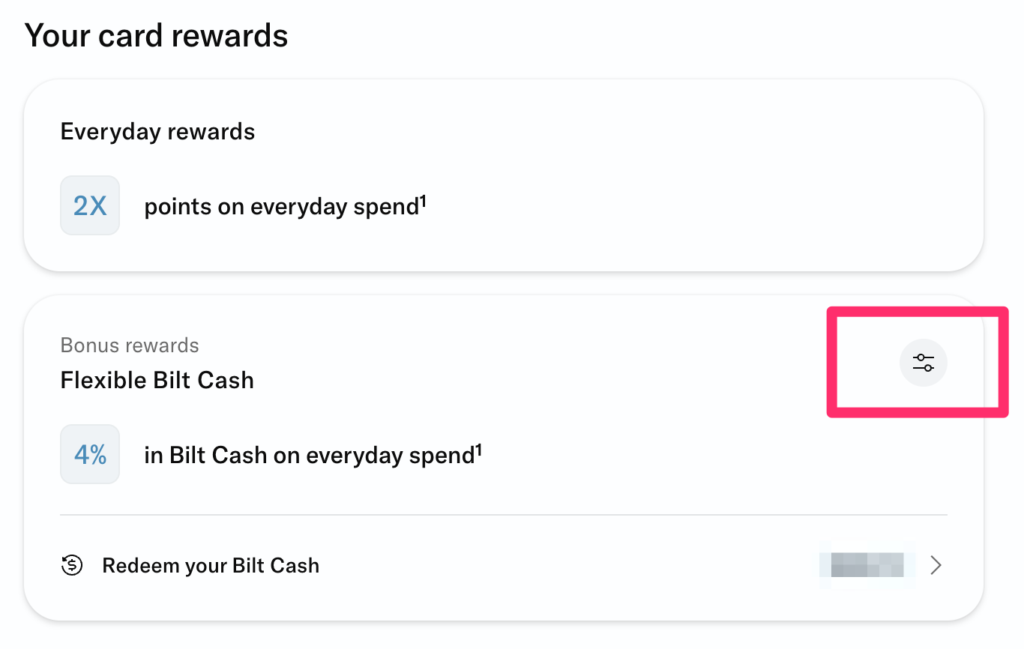
The confusion surrounding these policy shifts is compounded by misaligned timelines. While certain program adjustments take effect universally on January 1, the most critical deadlines are tied directly to individual cardholder anniversaries. Currently, Bilt members enjoy the ability to toggle between earning structures within the mobile application on a monthly basis to suit their changing financial patterns. Once a cardholder’s annual renewal passes, however, that flexibility vanishes permanently. Cardholders who elect to keep Flexible Bilt Cash remain on that track unless they choose to transition to the new benefits, at which point the migration becomes irreversible.
The rewards selection interface is already live within member accounts, though navigating the menu requires decoding terminology that differs from the phrasing used earlier in the year. Members who previously utilized housing-only modes will find that the updated card rewards mirror that earning architecture while incorporating a revised package of annual credits. For instance, on the Bilt Palladium Card, the previous configuration of $200 in Bilt Cash and $400 in hotel credits is being consolidated into a single $600 Bilt Cash allocation.
In media briefings, Bilt representatives have maintained that the majority of cardholders currently bypass the Flexible Bilt Cash option in favor of simpler structures. Critics and seasoned points analysts, however, point out that the initial complexity of the Bilt 2.0 launch heavily influenced user behavior, driving many members toward whichever option was easiest to comprehend rather than what delivered maximum financial return. Furthermore, financial analysts note that Flexible Bilt Cash inherently delivers its highest value to high-spending members—the exact demographic that incurs the highest rewards costs for the issuer.
While program simplification remains a widely acknowledged objective for loyalty programs seeking to eliminate complex spreadsheets and flowcharts, the transitional phase has introduced considerable friction. Industry observers suggest that legacy Bilt Cash earning methods may eventually be phased out entirely as the program matures.
For current cardholders evaluating their options without a spreadsheet, the analysis largely reduces to a comparison between monthly card expenditures and housing obligations. Because Bilt Cash unlocks points on rent or mortgage payments at a rate of $30 per 1,000 points, the 4% back structure translates to roughly 1.33 housing points per dollar spent. Remaining balances can be directed toward Point Accelerators, allowing heavy spenders to maximize returns.
When comparing total annual points yielded under a heavy spending model—such as a $2,000 monthly mortgage paired with robust everyday card expenditures—Flexible Bilt Cash frequently outperforms the updated structure by tens of thousands of points, leaving residual Bilt Cash available for secondary perks. Conversely, cardholders who direct minimal spending through their cards relative to their rent will find the updated rewards track straightforward and beneficial without the need to manage complex accelerators.
Ultimately, Bilt’s long-term push toward simplification requires members to weigh their monthly card spending against their housing costs before their individual anniversary deadlines arrive. Those who outspend their rent or prefer maximum flexibility retain a strong incentive to secure the legacy option while it remains available.
Related News