Why Traditional Hotel Bar Training Fails During the Rush—And How a 30-Minute Simulation Fixes It
Article Editorial Team
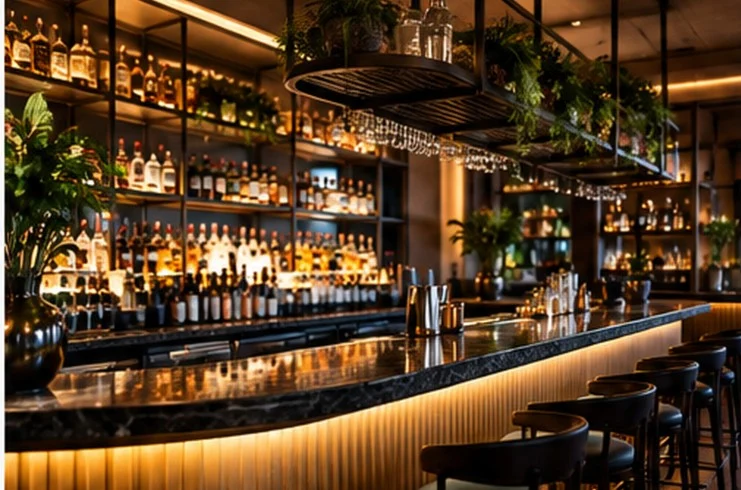
At 5:45 p.m., a hotel bar can look immaculate: ice wells are fully stocked, glassware is polished to a high sheen, and bartenders project absolute confidence behind the counter. But as the clock ticks forward to 6:15 p.m., the atmosphere shifts dramatically. Conference guests flood in from afternoon sessions just as evening restaurant tickets begin printing in rapid succession. Suddenly, a finished cocktail sits waiting indefinitely at the service pass, a crucial garnish runs critically short, and a floor server finds themselves unable to confirm whether a substitute ingredient is safe for a guest with a severe food allergy.
While the staff undoubtedly knows the drink recipes by heart, the actual service begins to unravel. This common scenario highlights a persistent gap in modern hospitality education: the distinction between knowing how to craft a cocktail in isolation and maintaining operational composure under real-world pressure.
Industry experts point out that standard mixology tastings or recipe tests only evaluate individual technique. In contrast, a realistic 30-minute operational rush reveals whether an entire hospitality team can collaboratively deliver accurate beverages, communicate effectively with guests, and recover gracefully when customer demand suddenly overflows capacity. For hotel general managers and food and beverage directors, implementing this targeted rehearsal offers a focused way to measure true bar readiness without waiting for a disappointing, live guest shift to expose hidden vulnerabilities.
Choose the Right 30 Minutes
To make simulations effective, management must ground the exercise in real operational data rather than hypothetical worst-case scenarios. Leadership can utilize a property’s recent point-of-sale reports alongside daily arrival forecasts, active restaurant reservation books, and upcoming conference event schedules to identify a busy but representative half-hour window.
The goal is to recreate the typical ticket mix and timing encountered during a genuine peak period. This might include a flurry of classic cocktails, a signature house drink requiring extra preparation steps, a zero-proof order catering to the growing non-alcoholic segment, and a guest inquiry regarding specific ingredients.
Crucially, the exercise must be executed using the exact staffing levels and workstation layouts that the hotel would realistically deploy during a busy shift. Observers should record how orders naturally arrive across the half-hour rather than issuing a massive wave of tickets simultaneously. If producing every single drink during the drill would create unnecessary product waste, properties can utilize clearly identified training orders and simulated liquid pours. However, the rehearsal must still accurately practice actual ticket routing, physical equipment access, and verbal guest communication to yield meaningful insights.
Keep the Rush Intact
Before starting the simulation clock, managers must brief the entire team to establish clear roles and accountability. Participants need to identify who is responsible for accepting incoming orders, building drinks, checking technical specifications, delivering finished beverages to the pass or table, and communicating any unexpected delays to floor staff. Furthermore, the team must confirm the exact physical locations of written recipes and comprehensive allergen information, as well as designate who holds the authority to approve a sudden ingredient substitution.
Once the parameters are set, the team undergoes a full 30 minutes of timed, realistic ordering. During the exercise, supervisors introduce one plausible disruption that mirrors real hospitality environments—such as a depleted garnish station, a delayed glassware pickup from the dish room, or a complex inquiry regarding a drink’s contents. Observers must take notes on how the staff responds independently, resisting the urge to step in and solve every minor problem for them.
However, safety remains paramount. Observers are instructed to stop the rehearsal immediately if an unsafe practice is observed. Speed must never override strict allergen controls, basic sanitation standards, or responsible alcohol service regulations.
One particularly valuable diagnostic tool during these drills is the two-order collision. This occurs when a floor server urgently needs a quick highball for a waiting guest at the bar top while the service bar simultaneously receives a complicated, multi-step signature cocktail. Observing whether the team naturally prioritizes and communicates the sequence or simply grinds to a halt behind the same piece of equipment helps managers identify fundamental handoff problems that another traditional recipe lesson could never resolve.

Measure the Bottleneck, Not Just the Clock
Following the completion of the simulation, management and staff review a concise set of key operational observations. These include the exact elapsed time from initial order receipt to acknowledgement, ticket completion, and final pickup; the number of drinks that required a remake; instances of missing mise en place; and situations where guests would have been left without a timely service update.
To maintain proper context, these results must be evaluated alongside the order volume and total team size present during the drill. A raw average preparation time holds little operational meaning if the underlying ticket mixes or staffing configurations fluctuate wildly.
Post-exercise debriefs often ask staff to pinpoint precisely where decision-making became unclear. If a finished drink sat untouched at the service pass, the team must define clear ownership of the pickup role. If a batch of house-made syrup was nearly exhausted during the rush, managers can establish a firm replenishment threshold and a mandatory shift-handover check.
When a bartender repeatedly leaves their primary station to retrieve tools or glassware, leadership should consider repositioning those items or altering the sequential preparation steps. Most importantly, cross-training colleagues should only occur for tasks where staff members have proven their competence and received proper authorization to perform them.
Turn One Rehearsal Into One Operational Change
To prevent training fatigue and ensure lasting improvement, properties should select no more than two actionable enhancements for the next comparable live shift. Management must assign a single owner for each change and set a simple check date to evaluate its effectiveness.
For instance, relocating frequently used glassware to a more accessible shelf allows managers to test whether finished drinks spend less time waiting at the pass. Alternatively, revising the kitchen and bar garnish preparation schedule helps verify whether the station stops running short during peak hours. Leadership must remember that a single rehearsal is never definitive proof of a permanent productivity gain.
Integrating these operational findings directly into pre-shift briefings and written brand standards ensures long-term retention. A truly useful operational standard clearly outlines the task, its designated owner, the exact point at which help must be requested, and the standard guest-facing response when service inevitably slows down. Properties are encouraged to repeat the 30-minute simulation whenever a menu changes, staffing levels shift, or recurring service complaints arise from guests.
Train the Team Guests Actually Meet
Ultimately, a hotel bar’s busiest operating period is never a simple test of who can shake a cocktail the fastest. Rather, it serves as a comprehensive evaluation of how the physical station layout, the menu design, and the human elements work together in harmony.
When training successfully reproduces the intense pressure of a real hotel rush, general managers and food and beverage leaders gain the unique ability to identify operational friction long before guests experience it firsthand. By doing so, they protect the elements that matter most to the guest experience: absolute drink accuracy, unwavering safety standards, and attentive, professional hospitality.
Related News