Choice Hotels President and CEO Dominic Dragisich Charts a Growth-Driven Path Heading Into 2027
Article Editorial Team

Choice Hotels International is carrying powerful momentum into the coming year, buoyed by accelerating room growth, rising third-quarter performance metrics, and a renewed emphasis on strengthening relationships with its network of franchise owners. At the helm of this ongoing evolution is Dominic Dragisich, who officially stepped into the role of president and chief executive officer in August following a brief stint as interim CEO beginning on May 20.
Dragisich’s appointment marks the latest milestone in a nearly decade-long tenure with Choice Hotels International. He initially joined the hospitality enterprise as chief financial officer in 2017 before expanding his leadership footprint across multiple divisions. Over the years, he has served as executive vice president of operations, chief global brand officer, and later as chief growth and strategy officer.
The early months of Dragisich’s permanent tenure have yielded notable results. Choice has witnessed a continued upward trajectory in its U.S. net rooms growth rate, alongside an increase in U.S. Revenue Per Available Room (RevPAR) during the third quarter. Coupled with a steadily expanding conversion pipeline, these indicators position Choice to enter 2027 with substantial operational momentum. In an exclusive interview with LODGING, Dragisich reflected on his transition into the CEO seat, analyzed the company’s third-quarter performance, and outlined the core strategic opportunities that will shape the brand’s continued expansion.
Reflecting on his first several months leading the enterprise, Dragisich emphasized a philosophy centered on sharpening focus and prioritizing the foundational principles that have anchored Choice’s success over the years. Chief among these priorities is cultivating deeper, more collaborative relationships with property owners. In an economic landscape marked by varying degrees of uncertainty, Dragisich noted that franchisees expect complete transparency, an open line of communication, and a franchisor willing to listen and act decisively on their feedback.
To guide the company moving forward, Dragisich outlined three primary directives. The first focuses heavily on unit-level economics for owners, operating under the premise that when franchisees achieve sustainable profitability, Choice succeeds alongside them. The second directive emphasizes U.S. rooms growth, which has achieved three consecutive quarters of sequential improvement. The third pillar centers on maintaining a disciplined, capital-light business model.
Looking back at his career trajectory within the company, Dragisich believes that his varied executive positions have uniquely prepared him to navigate the complexities of the CEO role. Moving from the financial side of the organization into operational leadership, strategic oversight, and ultimately top executive command has granted him a comprehensive, 360-degree perspective of the enterprise. This multifaceted path provided him with firsthand operational experience across every core functional area of the business.
His time in the finance department taught him how to transform the organization into a more effective business partner while simultaneously supporting long-term corporate growth plans. Transitioning subsequently into operations allowed him to build a solid operational foundation and adopt a tactical mindset regarding day-to-day enterprise functionality. Later, as chief growth and strategy officer, Dragisich was tasked with looking beyond immediate quarterly benchmarks to chart the company’s long-term trajectory. At Choice Hotels, he noted, leadership evaluates strategy in terms of decades rather than months or quarters.
Throughout this progressive career journey, Dragisich has successfully synthesized financial discipline, tactical operational execution, and high-level strategic vision. Furthermore, his circulation through these diverse roles has enabled him to forge robust, enduring relationships with institutional investors, property owners, and internal corporate associates alike.
Prioritizing Franchisee Engagement and Conversion Strength
Demonstrating a hands-on approach to leadership since taking the helm, Dragisich has personally met with more than 900 franchise owners to gain a granular understanding of their daily challenges and business needs. These conversations have consistently reinforced that owners value fresh energy, cultural transparency, and disciplined execution of the operational drivers that have historically fueled Choice’s success.
The strength of these owner relationships is directly reflected in the company’s development metrics. U.S. net rooms growth has surged, with hotel openings increasing by 17 percent year-over-year. Dragisich observed that owners ultimately vote with their wallets, choosing to expand their investments where they see tangible value. By strategically investing in both people and operational processes, Choice has maximized the advantages of its conversion-led model.
This conversion strategy has long served as a vital competitive advantage for Choice Hotels, and its importance is magnified in the current macroeconomic environment. With new construction supply growth hovering at 50 basis points or less industry-wide, conversion-friendly strategies provide a reliable alternative for development.
To capitalize on this environment, Choice has concentrated on shortening conversion timelines, minimizing upfront capital expenditures, and reducing Furniture, Fixtures, and Equipment (FF&E) costs. Working hand-in-hand with franchisees throughout this streamlined process has accelerated growth. In fact, Dragisich projects that approximately 90 percent of Choice’s total hotel openings for 2026 will stem from conversions. When paired with the sustained success of the company’s extended-stay segment, this strategic progression has significantly bolstered the net rooms growth algorithm.
Tailored collaboration with franchisees remains a cornerstone of Choice’s operational philosophy. A significant portion of the company’s portfolio consists of independent mom-and-pop owner-operators who look to their franchisor for guidance and hands-on support to maximize property performance. Choice has successfully leveraged its corporate scale to negotiate substantial cost reductions for its network. Prototype development costs have declined by 25 percent over the course of the year, while FF&E costs have dropped by approximately 20 percent. These savings were achieved by rationalizing the approved vendor network and securing volume discounts that directly benefit owners.
The strength of these collaborative relationships is further demonstrated by retention and reinvestment statistics. More than half of all franchise agreements signed by Choice this year have been executed with existing owners. According to Dragisich, this trend proves that current partners possess deep confidence in the company’s strategic direction, value the brand portfolio, and appreciate the continuous support provided throughout the conversion and operational lifecycle.
Industry Outlook
From a broader macro perspective, Dragisich expressed strong optimism regarding the current state of the hospitality industry, noting that market conditions have grown increasingly constructive. This improved environment is clearly reflected in consistent RevPAR gains, marked by sequential improvements quarter after quarter. Several underlying economic factors have contributed to this positive turnaround, beginning with resilient consumer travel behavior.
Focusing specifically on Choice’s core target markets, Dragisich pointed out that employment levels have remained stable within the midscale and upper-midscale lodging segments. Stronger job reports have translated into sustained travel demand from these consumer demographics. Additionally, the expansion of project-based corporate demand has provided a reliable boost to business travel, which is directly benefiting the extended-stay portfolio. Leadership feels confident regarding the sustainability of these favorable trends heading into 2027. By concentrating on controllable factors—such as strategic commercial investments and the strengthening of midweek business travel—Choice has positioned itself against a robust backdrop.
Addressing broader economic discussions surrounding the K-shaped economy, Dragisich noted that spending at the lower end of the economic spectrum continues to drive commercial performance. Specifically, lower-income segments are outpacing higher-income segments in terms of percentage growth in both wages and jobs, directly supporting travel activity across accessible price points.
Momentum Heading Into 2027
Entering the new year with considerable momentum, Choice Hotels benefits from positive indicators across nearly every core revenue driver. While acknowledging that industry-wide challenges occasionally persist, Dragisich expressed immense confidence in the positioning of both the company and the wider hospitality sector as they look toward 2027.
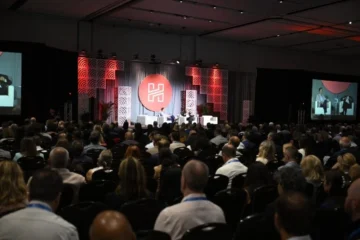
To maximize this momentum, leadership remains firmly committed to ensuring franchisee profitability, recognizing that top-line revenue generation at the property level is inextricably linked to corporate success. Furthermore, Choice is focused on fully capitalizing on recent technological investments, including advanced digital tools such as EasyBid and Business Direct, which were showcased at the company’s 70th annual convention.
More broadly, Dragisich emphasized that Choice—and the wider hospitality industry—must continue to cultivate a deeply guest-centric culture. By understanding the unique priorities of value-minded travelers who select accommodations based on optimal value at accessible price points, Choice continues to refine its brand portfolio and guest programs. Ultimately, driving sustainable demand and financial performance for hotel owners remains the organization’s primary mission as it builds toward the future.
Related News