Beyond the Classroom: How the Salton Sea Leadership Program is Cultivating the Next Generation of Conservationists
Article Editorial Team
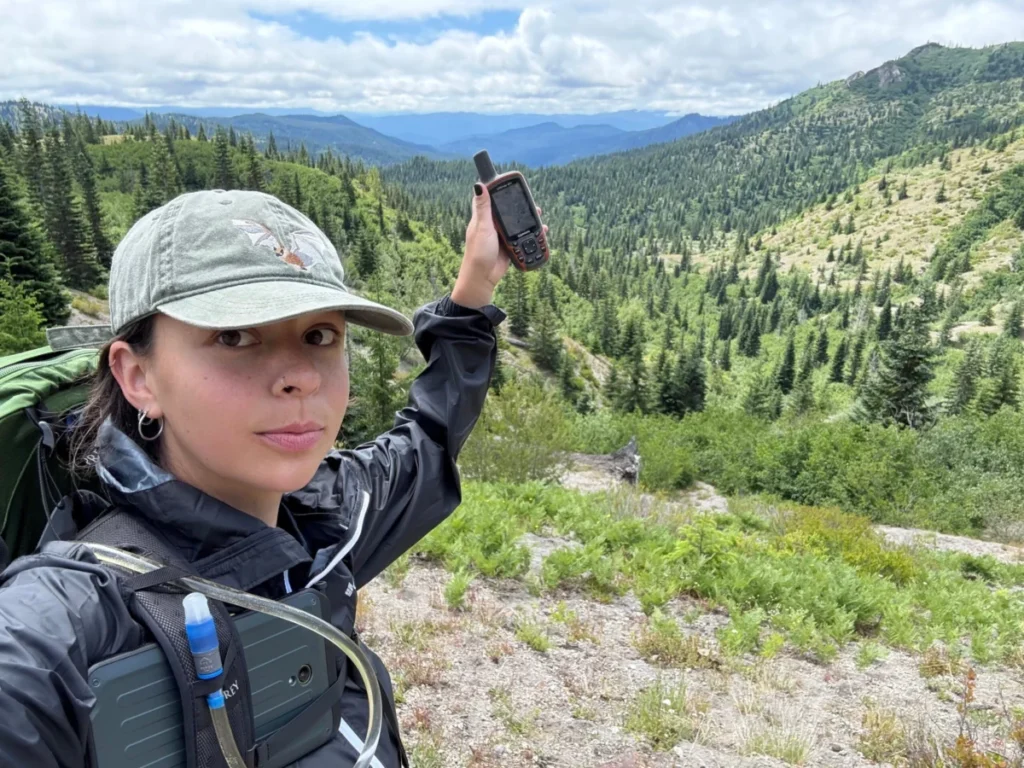
On a sweltering October morning, the desert heat had already pushed toward 90 degrees by 7:00 a.m. Under the vast, pale sky of the Coachella Valley, biologist Kevin Manajerro and researcher Melanie Davis stood at the back of a truck, methodically organizing the specialized gear required for a day of fieldwork. Their destination: a rugged survey site overlooking the Salton Sea. As they moved into the landscape, flanked by the striking silhouettes of the Orocopia Mountains to the east and the Santa Rosa Mountains to the west, the reality of conservation work became clear—it is demanding, precise, and deeply connected to the land.
The team moved with purpose, following six pre-determined transects. Their focus was the Flat-tailed Horned Lizard (Phrynosoma mcallii), a small, cryptic reptile that has evolved remarkable camouflage adaptations to minimize its shadow against the desert floor. After hours of careful observation, the effort yielded a moment of genuine triumph: the team spotted a lizard, marking the first documented sighting at the site since Kevin began his surveys. For Kevin, a participant in the 2026 cohort of the Salton Sea Leadership Program (SSLP), this was more than just a data point; it was a testament to the trajectory his career had taken since completing the program.
The SSLP is an intensive, four-month educational initiative designed to bridge the gap between local residents and the professional world of environmental science. Each year, a cohort of 10 participants is selected to work directly with researchers, engineers, and environmental advocates operating within the Coachella and Imperial Valleys. The program functions not merely as a series of lectures, but as an immersive internship that provides a front-row seat to the efforts aimed at protecting the complex ecosystems shared by wildlife and human communities alike.
Kevin’s path to the Center for Conservation Biology (CCB) at the University of California, Riverside (UCR), was paved through the connections he made during his time in the SSLP. While he had initially met Dr. Lynn Sweet through his employment at REI, it was his earlier introduction to Melanie Davis—a guest speaker for the SSLP—that opened the door to his current role. Melanie, who regularly presents her research on the endemic Orocopia Sage (Salvia greata) to program participants, actively encourages students to pursue conservation careers regardless of their formal academic backgrounds. Today, Kevin serves as a lab assistant in Dr. Sweet’s lab, conducting wildlife surveys in critical habitats such as the Coachella Valley Wildlife Refuge and earning college credit through the College of the Desert’s Work Experience Program.
The success stories emerging from the SSLP are not limited to Kevin. Amanda Bautista, a 2025 program alumna, brought an existing passion for avian research to the cohort. During her time in the program, she developed the first-ever Salton Sea bird guide as her capstone project, a tool that has proven valuable for local observers. Her transition into professional research was swift; she moved on to the Pacific Northwest Research Station, where she engaged in telemetry surveys to map nesting habitats for woodpeckers and assisted in the trapping of small mammals, including flying squirrels.
Amanda’s trajectory highlights the program’s commitment to long-term alumni engagement, which includes ongoing support for job placement and community participation. Through these networks, Amanda was hired as a seasonal survey technician for the University of Idaho’s Yuma Ridgway’s Rail research project, based at the Sonny Bono Salton Sea National Wildlife Refuge. The work involved rigorous field tasks, such as recording morphological measurements and collecting samples to study selenium bioaccumulation in the rails—a critical issue for the health of the Salton Sea ecosystem.
Reflecting on her field experiences, Amanda noted the stark contrast between her work in Arizona and the vibrant, if sometimes cacophonous, reality of the Salton Sea. "In Arizona, the bird sounds were really quiet; I could hear the Rails splashing in the water," she explained. "At the Salton Sea, it’s so loud with all the birds and biodiversity." This observation underscored a fundamental lesson of the SSLP: the Salton Sea is not merely a regional feature but a vital node in the Pacific Flyway, serving as a critical stopover for more than 300 bird species and functioning as a designated Important Bird Area (IBA).
For Amanda, the SSLP offered more than professional development; it provided a sense of belonging. "It felt like a family," she said, noting that the diverse cohorts often bond over the unique challenges of being women in the sciences. Today, she works as an environmental biologist for a consulting firm, where she performs surveys for reptiles, birds, and small mammals, ensuring that regional construction projects remain in compliance with strict environmental regulations.
The program also fosters community leadership that extends beyond traditional scientific research. Ciara Taylor, another 2025 alumna, has become a cornerstone of the Coachella Valley’s outdoor culture. Initially meeting program organizers at the Salton Sea Bird Festival, Ciara served as a "cohort rallier" during her time in the SSLP, helping coordinate field trips and providing a sense of cohesion for her fellow participants.
Since graduating, Ciara has leveraged her background in design and her passion for the outdoors to build inclusive community spaces. Alongside her "partner in nature," Judy Gill, she manages PS Take a Hike, a hiking club that has evolved into a platform for broader community engagement. Ciara’s capstone project for the SSLP utilized a design-thinking lens, exploring how diverse backgrounds can be integrated to solve complex environmental issues.
"The program was a stepping stone to access the community and learn about things that were completely out of my wheelhouse," Ciara noted. This month, she and her team are hosting the first annual Take a Hike Fest at Francis Stevens Park in Palm Springs. The free, public event is designed to celebrate hiking culture, healthy living, and conservation by bringing together a coalition of nonprofits—including Audubon—and local outdoor organizations. The festival serves as the centerpiece for a full week of trail-based programming, further evidence of how SSLP alumni are translating their classroom experiences into tangible, community-wide action.
The impact of the program is quantifiable and growing. Over the course of its first two years, 22 alumni have utilized their training to expand their professional portfolios. Their contributions are diverse: some are leading Spanish-language bird walks to reach broader demographics, while others are developing Indigenous-led nature programming or becoming certified coastal stewards through the UC Cal Naturalist program. Several alumni have even taken their advocacy to the state level, traveling to the Capitol to speak on behalf of avian species and the protection of their natural habitats.
As the SSLP prepares to welcome its 2027 cohort, the program continues to serve as a vital entry point for those seeking to build community and contribute to the health of the Salton Sea. The application window, which opens this November, is open to all local residents, regardless of their prior experience in the sciences. By fostering connections between local enthusiasts and established professionals, the program ensures that the future of conservation in the Coachella and Imperial Valleys is rooted in local knowledge and community dedication. For those interested in joining this growing network of environmental leaders, the path forward is clear: the opportunity to engage with the land, the science, and the community is ready to be seized.
Related News