Delta Air Lines’ Small-Aircraft Strategy Faces a Pivotal Crossroads as Boeing 717s Age
Article Editorial Team

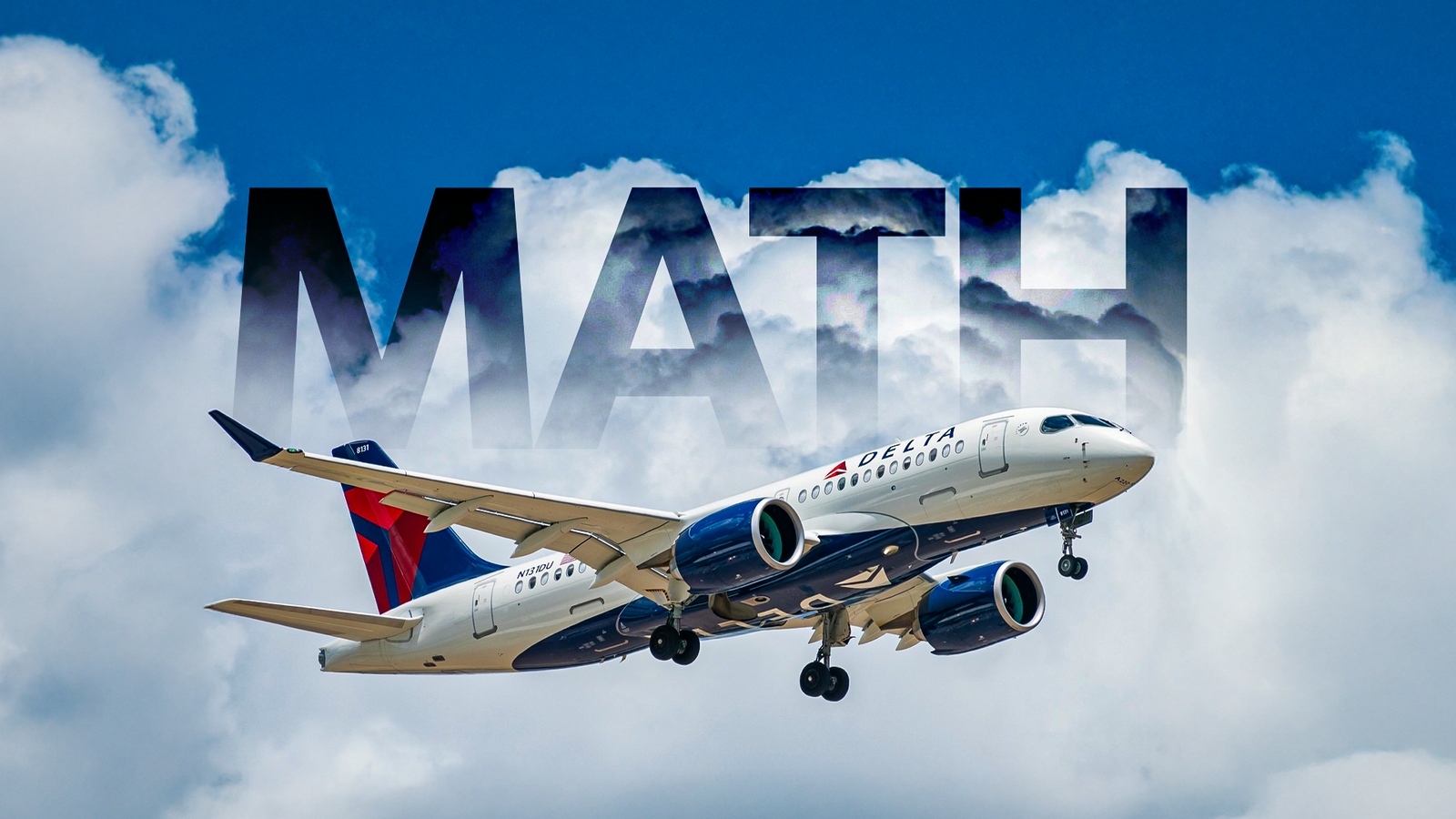
Delta Air Lines has long distinguished itself from other major United States carriers by maintaining a unique niche for some of the smallest mainline aircraft in the domestic skies. While its primary competitors overwhelmingly lean toward larger narrowbody jets to handle high-volume trunk routes, Delta has carved out a distinct operational philosophy. By deploying aircraft such as the 109-seat Airbus A220-100 and the 110-seat Boeing 717 directly under mainline operations, the airline has successfully served smaller markets and secondary destinations where massive passenger demand is absent, yet a mainline presence remains commercially viable.
However, this distinctive approach is entering a period of significant transition. With the Boeing 717 fleet advancing in age and approaching major, costly maintenance milestones, Delta faces critical decisions regarding the future of its small-aircraft network. The gradual retirement of these veteran jets raises important questions about how the carrier will continue to service lower-demand routes, whether it will adjust flight frequencies, or how it will rely on other compact aircraft types in the years ahead to preserve the flexibility of its extensive domestic system.
Why Delta Operates Such Small Mainline Aircraft
To understand Delta’s fleet composition, it is necessary to examine the fundamental difference between mainline and regional operations within the US aviation industry. Mainline flights are operated directly by the airline using its own internal pilots and cabin crew, whereas regional flights are typically outsourced to third-party partner carriers operating under brand umbrellas such as Delta Connection. These regional partners traditionally fly smaller aircraft, including the Embraer E175 and the Bombardier CRJ900.
Yet, pricing structures, labor arrangements, and operational control shift dramatically when an airline chooses to operate a smaller jet with its own mainline personnel rather than delegating the flying to a regional affiliate. Delta is currently the only major US network carrier to maintain mainline aircraft with seating capacities hovering right around the 110-seat mark. This deliberate strategy allows the airline to match precise passenger volumes on thin routes without deploying an aircraft that is too large to turn a profit, while simultaneously avoiding the limitations and cost structures associated with regional outsourcing.
How Pilot Scope Clauses Give Delta an Advantage
A primary driver behind Delta’s decision to keep small jets in its mainline fleet involves complex labor negotiations and collective bargaining agreements, specifically provisions known as scope clauses. These contractual terms dictate how much regional flying a major carrier can allocate to external regional partners. Scope clauses originated and gained immense prominence during the 1990s as regional aviation expanded rapidly, sparking serious concerns among mainline pilots that management would shift profitable routes to lower-cost regional operators. Consequently, these clauses were instituted across major airlines primarily to protect the job security and career progression of mainline pilots.
Under standard scope agreements used by many major US carriers, regional partners are generally restricted to operating aircraft with a maximum capacity of 76 seats and a maximum takeoff weight of 86,000 pounds. Delta’s specific pilot agreement, however, features a strategic provision that provides the airline with greater latitude to expand its regional capacity.
Under the terms of its contract, Delta is permitted to operate a baseline allotment of larger regional aircraft with 71 to 76 seats, but it unlocks an allowance for dozens of additional regional jets in that same category on the condition that it operates an eligible small narrowbody aircraft directly within its mainline fleet. Delta successfully met this contractual prerequisite by introducing the Boeing 717 and, later, the Airbus A220-100. While competing airlines like United Airlines have similar provisions in their pilot agreements, United never introduced an eligible small mainline narrowbody to unlock that expanded regional fleet allowance, while American Airlines negotiated an entirely different structure altogether. Delta’s unique arrangement has provided a powerful labor-driven incentive to keep compact mainline jets firmly embedded in its schedule.
Why Delta’s Small Aircraft Make Financial and Operational Sense
Operating smaller aircraft with mainline pilot crews inherently carries higher labor costs than outsourcing, but Delta engineered creative financial frameworks to make both the Boeing 717 and the Airbus A220-100 economically viable. The strategy began in earnest in 2012, when Delta reached a landmark agreement with Southwest Airlines and Boeing Capital to lease or sublease a massive fleet of 88 Boeing 717s that had previously been flown by AirTran Airways. This transaction allowed Delta to acquire a sizable, pre-owned fleet of reliable aircraft without the monumental capital expenditure of purchasing entirely new airframes.
At the time, Delta intended for the 717s to systematically replace aging 50-seat regional jets on a capacity-neutral basis. Airline leadership noted that the transition would deliver a substantial improvement in economic efficiency relative to the smaller regional equipment being phased out. The 717s quickly found a natural home on shorter, high-frequency domestic routes where their unique capacity and robust design excelled.
Years later, Delta seized another major fleet opportunity by placing an initial order for 75 of the aircraft then known as the Bombardier C Series, which eventually became the Airbus A220-100. This order sparked a high-profile international trade dispute in which competitors alleged heavily discounted acquisition pricing well below production costs. Regardless of the pricing specifics, the A220-100 proved to be a versatile asset capable of handling longer domestic routes of around 900 miles. These routes frequently serve business-heavy markets that were previously operated by smaller regional jets like the CRJ700, CRJ900, and Embraer E175. Furthermore, Delta outfitted the A220 with unusually spacious, wide economy seats, combining enhanced passenger comfort with strong operating economics.
Why Delta’s Small-Aircraft Strategy May Be Changing
Despite the historical success of these aircraft, Delta’s small-jet strategy is approaching a notable turning point as the Boeing 717 fleet moves closer to eventual retirement. The 717 has been a cornerstone of the airline’s domestic network for well over a decade, but age is rapidly becoming an operational hurdle. Fleet data indicates that Delta’s remaining 717s carry an average age exceeding two decades, and the aircraft type has long been out of production. Furthermore, the 717 is powered by Rolls-Royce BR715 engines, which are entirely unique to that specific airframe. Maintaining an aging fleet with specialized, non-standard powerplants can become increasingly difficult and prohibitively expensive as the aircraft accumulate flight cycles.
Industry observations and fleet planning indicators suggest that Delta has already begun evaluating early retirements for a portion of its 717 fleet as individual airframes approach major, capital-intensive heavy maintenance checks. Replacing these aircraft will not be a simple one-for-one proposition. While the Airbus A220-100 offers modern technology and superior range, its capacity and performance characteristics differ from the 717.
To manage the eventual exit of the 717 fleet, aviation analysts anticipate that Delta will likely deploy a combination of larger Airbus A220-300s, reassign existing A220-100s and Airbus A319s, and potentially accept slightly lower frequencies in certain secondary markets that cannot organically support a larger aircraft’s seating capacity.
How Delta’s Small-Aircraft Strategy Could Evolve
Delta Air Lines’ long-standing commitment to smaller mainline aircraft illustrates that airline fleet planning is a delicate balancing act that extends far beyond simply matching passenger demand with physical seating capacity. Labor scope clauses, advantageous acquisition terms, and the ongoing need to serve diverse geographic markets have all shaped the carrier’s distinct operational footprint.
As the Boeing 717 gradually exits active service, Delta’s domestic network strategy will inevitably evolve. While the Airbus A220 family and the Airbus A319 provide flexible smaller-capacity alternatives, replacing the specific capabilities of the 717 across every historical route will present distinct challenges. Ultimately, Delta’s ability to harmonize aircraft operating economics, complex labor agreements, and passenger demand trends will dictate how the airline sustains its competitive edge across its vast domestic network for years to come.
Related News