The Rise of Precision Pastries: Meet the Bakeries and Artisans Redefining the Modern Bakery Scene
Article Editorial Team
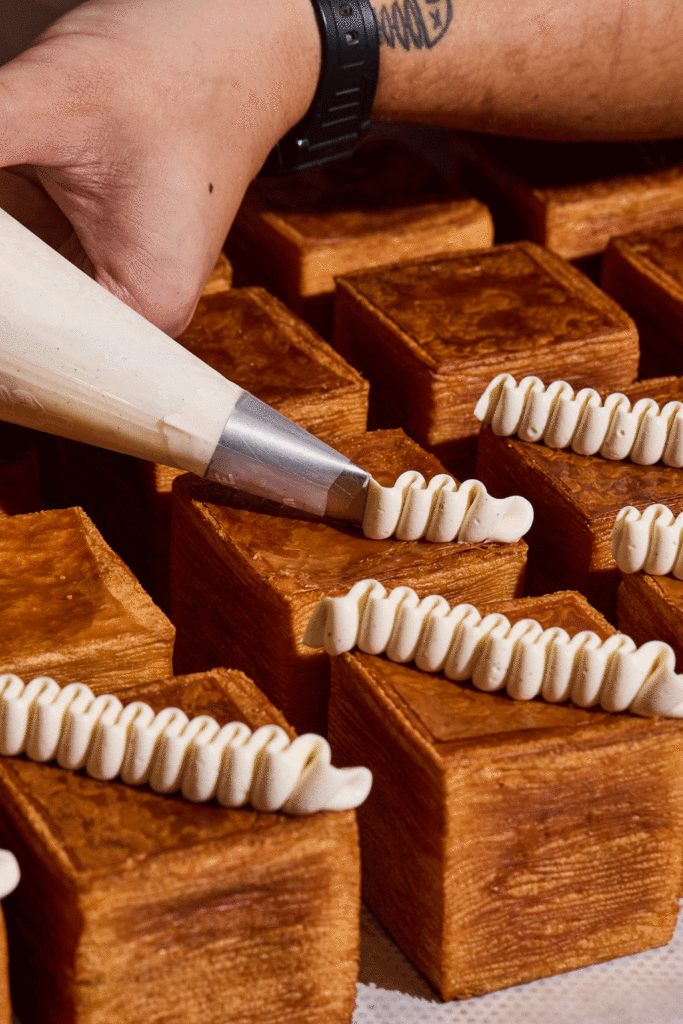
If there is one undeniable trend that has captivated food lovers across the country over the past several years, it is the dramatic evolution of the local bakery. Across major metropolitan areas, bakeries have significantly elevated their craft, moving far beyond traditional offerings into realms that blend meticulous technical precision with deeply personal expressions of cultural identity and modern flavor profiling.
According to Eater editorial director Missy Frederick, today’s top pastry shops are not only pushing the envelope beyond expected flavor combinations, but they are also thriving during an era when "little treat" culture has reached an all-time peak. As part of this year’s Eater Awards, presented by Capital One, editors have highlighted the standout destinations and visionary bakers who are leading the charge in this nationwide pastry renaissance. From Chicago and Los Angeles to Brooklyn, San Francisco, and Seattle, these bakeries are defining what it means to be a modern artisan in the culinary world.

Chicago, Illinois: Bad Butter
In Chicago, few new culinary destinations have generated as much organic excitement and devoted following as Bad Butter. Visitors to the bakery know they have arrived when they spot the characteristic line cascading out of the whitewashed storefront along West Cortland Street—a steady queue that rarely lets up until the pastry case is completely empty for the day.
The mastermind behind Bad Butter is Dan Koester, who previously served as the head baker at Soho House Chicago. Like many in the hospitality industry, Koester found himself at home during the disruptions of 2020. He began handing off excess home-baked sourdough loaves to friends and family, eventually organizing free pickups for the community. After he was officially laid off that summer, Koester took a leap of faith and launched an online bakery business, quickly amassing a massive, loyal following across the city.

Following a successful residency at the Emily Hotel, Koester finally debuted his permanent Bucktown bakery, giving Chicagoans a full view of his impressive range. Shelves are routinely stocked with still-warm, charred, and dimpled flats of focaccia generously showered with scallion furikake. Twice-baked almond croissants boast an impossibly crisp, exquisitely laminated exterior that yields to a subtle, aromatic almond paste filling. Meanwhile, a spicy harissa monkey bread delivers a cloudlike texture balanced by a cooling pool of creamy labneh drizzled with silky olive oil.
Bad Butter’s menu successfully balances breadth with seasonality. Customers navigating the indoor line eagerly await their turn to claim a towering cruffin, dusted in fine grains of sugar and piped full of tangy ginger plum jam, or a seasonal tart piled high with plump, lacquered blueberries. Securing a pastry box filled with these diverse confections is widely regarded by local diners as well worth the wait.

Los Angeles, California: Chainsaw
Out in Los Angeles, the journey from an underground operation to a brick-and-mortar storefront has culminated in one of the city’s most vibrant dining spaces. Chainsaw was born as an underground dinner party run out of Karla Subero Pittol’s Echo Park garage. By November 2025, the concept finally secured a permanent home in the form of a lively café in Melrose Hill—an increasingly dynamic neighborhood that has swiftly evolved into a hub for some of the best independent restaurants in Southern California.
At the Melrose Hill café, Subero Pittol channels her rich Venezuelan heritage through a menu that feels both deeply personal and effortlessly contemporary. Diners can order arepas plump with beans, limey guasacaca, and cheese; a Venezuelan hot dog, locally known as a perro caliente, buoyed by a vibrant and acidic slaw; and her bracingly tart passionfruit-lime icebox pie, a signature creation that has earned a fierce cult following of its own.

Stepping into Chainsaw feels akin to visiting Subero Pittol’s personal home kitchen, where she routinely greets both regulars and newcomers as if they were old friends. Guests study a handwritten menu that changes on a daily basis, making attachment to any single dish—aside from the ever-present icebox pie—a risky endeavor when temptation lurks around every corner.
The café’s impact on the local Los Angeles food scene is immediately visible in the near-constant crowds lingering outside, reading newspapers over an espresso or tucking into Subero Pittol’s latest culinary experiments, such as a full English breakfast served exclusively for a single day. In a city historically lacking in untamed, authentic Venezuelan cooking, Chainsaw provides a vital home for Subero Pittol to celebrate her cuisine in a way that feels distinctly and authentically Los Angeles.

Brooklyn, New York: Diljān
In Brooklyn, a compelling fusion of Afghan and Latin American culinary traditions has given New Yorkers an entirely unique bakery with a distinct point of view. Located on a corner near Atlantic Avenue in Brooklyn Heights, Diljān is the collaborative creation of Ali Zaman and Mohamed Ghiasi—the owners of Astoria’s Little Flower Cafe—who teamed up with Honduran American baker and cookbook author Bryan Ford.
The synergy of their combined talents yields some of the most innovative and sought-after baked goods in New York City. The Saffron Shah features a laminated pastry holding delicate saffron cream in the shape of a crescent, a subtle nod to an important Islamic symbol. Halwa crowns a rich, sticky bun, while a swirl of samosa pastry wraps halal lamb beneath a generous dusting of powdered sugar.

Savory offerings are equally prominent, anchored by an enormous Afghan flatbread crowned with creative toppings such as halal beef bacon with scallions or sour cherry cream cheese. The team has also expanded into specialty pizzas topped with cheese and Afghan cumin, kofta kebabs, and beef pepperoni. Rotating daily specials, such as flan paired with cardamom-poached apricots and conchas stuffed with firni (a traditional rice pudding), give patrons innumerable reasons to return and become regulars.
San Francisco, California: Parachute Bakery
San Francisco’s notoriously competitive pastry scene has a new frontrunner in Parachute Bakery, where pastry chef Nasir Armar brings together the rigorous discipline of fine dining and boundary-pushing flavor combinations. Having previously honed his craft at Michelin-starred establishments like Sorrel and Saison, Armar applies high-end techniques to create patisserie standards and seasonal standouts that command immediate attention both in-person and across social media feeds.

At his Ferry Building bakery, the exacting execution of layer after buttery layer is immediately apparent in the structural curves of lychee-laden bowtie croissants and geometric cube croissants. Attention to detail extends equally to ingredients and fillings, as seen in charcoal-colored, sesame-topped cookies combining black sesame and yuzu, or seasonal fruits integrated seamlessly into laminated pastries. During the summer months, ripe mango is sliced into a bulging mound atop a bed of vanilla tapioca pudding, utilizing a flaky croissant pastry shell as its sturdy, buttery base.
Vegetables and savory components also claim a rightful footing on the menu. Stalks of grilled asparagus shine inside baton-shaped croissant shells accompanied by fennel jam, sheep’s milk ricotta, and ramp pesto. In a nod to local culinary history, the kitchen even introduced a brief, experimental croissant piped with clam chowder—a playful reference to the city’s famous soup-in-a-bread-bowl tradition at Fisherman’s Wharf. From potato-laden samosas to bright tomato shakshuka reinterpreted into pastry form, Parachute continues to cement its reputation through an adventurous, visionary approach.

Seattle, Washington: The Pastry Project
Just off Pioneer Square in downtown Seattle, patrons line up outside two charcoal-painted Dutch doors, framed by a picture window decorated with a cheerful rainbow pennant garland. Through the glass, the baking team at The Pastry Project assembles neat slices of layer cake, trays of cinnamon rolls slathered in glossy frosting, and thick oatmeal cookies sandwiching rich cream.
While various iterations of The Pastry Project have operated for several years through baking kits and a popular summer soft-serve window, founders Emily Kim and Heather Hodge permanently expanded their public footprint with the debut of a year-round bakery window. The shop now offers reliable access to signature salted chocolate chip cookies alongside rotating seasonal items like maple-sweetened pancake croissant wheels and feather-light peanut butter and jelly cakes finished with whipped peanut frosting.

Beyond crafting elephant-ear-style cardamom croissants and other daily confections, Kim and Hodge have woven a powerful social mission into their business model. In collaboration with local partners, the bakery offers free pastry education, professional career training, and job placement assistance specifically designed for individuals facing traditional barriers to employment. To date, 41 students across nine distinct cohorts have completed the program. Additionally, the space offers physical residencies for emerging food entrepreneurs seeking affordable kitchen space, alongside an onsite community cookbook library that invites neighborhood engagement.
Related News