Navigating Royal Caribbean’s Oasis Class: What Travelers Need to Know About the Mega-Ships
Article Editorial Team
Even for travelers who have never stepped foot on a Royal Caribbean vessel, the imagery is hard to miss. Brightly colored mega-ships featuring sprawling open-air courtyards, vibrant atriums, and towering aquatic features frequently dominate television commercials and vacation advertisements. These striking floating resorts are designed to offer an abundance of activities and amenities, making them particularly popular destinations for family vacations.
Yet, for every traveler captivated by the promotional imagery, common questions inevitably arise before setting sail: Do vessels of this magnitude feel overwhelmingly large, and is it genuinely possible to experience everything they have to offer during a single voyage? Understanding the scope, layout, and operational nuances of Royal Caribbean’s Oasis Class ships provides crucial context for anyone planning a cruise vacation.

(Disclosure: Sailings on Allure of the Seas and Wonder of the Seas were provided at no cost, while travel aboard Utopia of the Seas was independently paid for by the writer. All expressed opinions remain entirely independent.)
What is an Oasis Class Ship?
Within the cruise industry, vessels are categorized into specific fleets or classes by individual cruise lines. While ships belonging to the same class may feature distinct thematic elements, entertainment options, localized activities, and unique amenities, their fundamental structural layout and overall physical dimensions remain remarkably similar.
Before the introduction of Royal Caribbean’s newer Icon Class, the Oasis Class ships held the distinction of being the largest vessels in the company’s entire fleet. Today, they still rank securely among the largest passenger cruise ships operating anywhere in the world.
It is important to note that discussions surrounding the Oasis Class generally address the fleet as a whole rather than a single uniform vessel. Specific features, restaurants, and entertainment lineups can vary slightly from one ship to another, making it essential for travelers to consult Royal Caribbean’s official resources to verify the exact offerings available on their specific sailing.
What Are the Current Oasis Class Ships?
The evolution of the Oasis Class has spanned several years, with fleet additions continually pushing the boundaries of onboard design and engineering. Utopia of the Seas stands as the newest addition to the Oasis Class lineup, bringing fresh dining and entertainment concepts to the established hull design. Meanwhile, other notable vessels in the class have long served as flagships for the cruise line, each welcoming millions of vacationers over the years. Concurrently, newer innovations, such as Icon of the Seas, have been designated to a separate class entirely, highlighting the continuous advancement of cruise ship architecture.
What is Unique About the Oasis Class Ships?
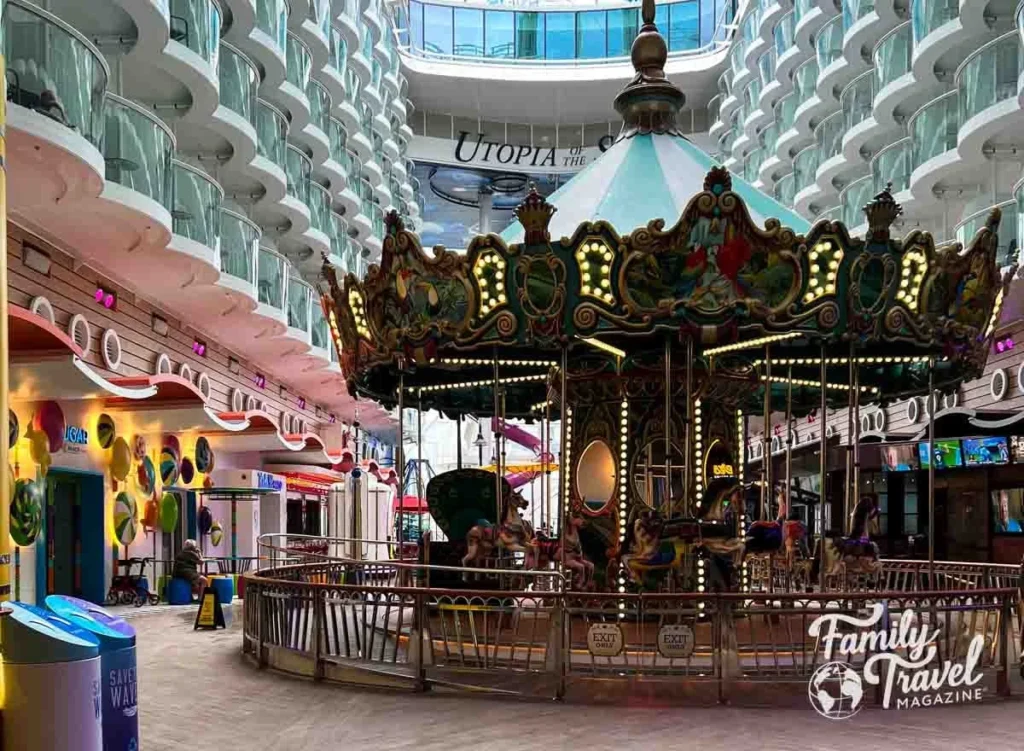
One of the most defining engineering achievements of the Oasis Class is its split superstructure design. By dividing the upper decks, the architects created wide-open, outdoor neighborhood areas that sit directly in the middle of the ship, flanked by interior-facing staterooms. This innovative layout fundamentally alters the traditional cruise experience, often making guests feel as though they are walking through an open-air park or a coastal boardwalk on land rather than navigating the metallic confines of a massive cruise ship.

Furthermore, the sheer physical scale of these vessels allows for an unprecedented concentration of family-friendly attractions. Because the square footage is so vast, designers have managed to pack an extraordinary variety of recreational facilities, dining venues, and entertainment spaces onboard. Consequently, most passengers discover that it is virtually impossible to see, explore, and participate in every single offering during a standard seven-day sailing, leaving plenty of reasons to return.
What Are the Neighborhoods on the Oasis Class Ships?
To manage the massive scale and passenger capacity of these floating cities, Royal Caribbean divides the Oasis Class ships into distinct architectural zones known as "neighborhoods." While the exact configuration can vary slightly depending on the specific vessel, the overarching concept remains consistent across the class.
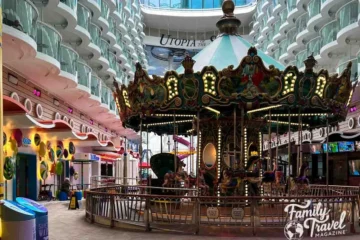
These curated zones help break up the interior geography of the ship, ensuring that passengers can easily navigate from high-energy entertainment hubs to quiet, reflective retreats. Neighborhoods typically encompass open-air green spaces featuring thousands of real plants, bustling seaside-themed boardwalks equipped with traditional carousels, sprawling pool and sports zones, entertainment districts, and exclusive suite-only enclaves designed to offer a more private experience for premium guests.

What Restaurants are on the Oasis Class Ships?
Dining on an Oasis Class ship is a sprawling culinary enterprise. While specific culinary venues can vary across different hulls, certain foundational standards remain universally accessible. The expansive Main Dining Room and the multi-station Windjammer Cafe serve as the primary culinary hubs where the majority of passengers gather for breakfast, lunch, and dinner.
Beyond these inclusive staples, the ships offer a wide array of specialty restaurants that require an additional cover charge and advance reservations. From high-end steakhouses and specialized seafood venues to hibachi tables and Italian trattorias, the culinary diversity is vast. Because specialty dining spots often fill up quickly, travel experts strongly recommend researching and booking desired dining experiences well in advance of departure.
What Entertainment and Activities are on the Oasis Class Ships?
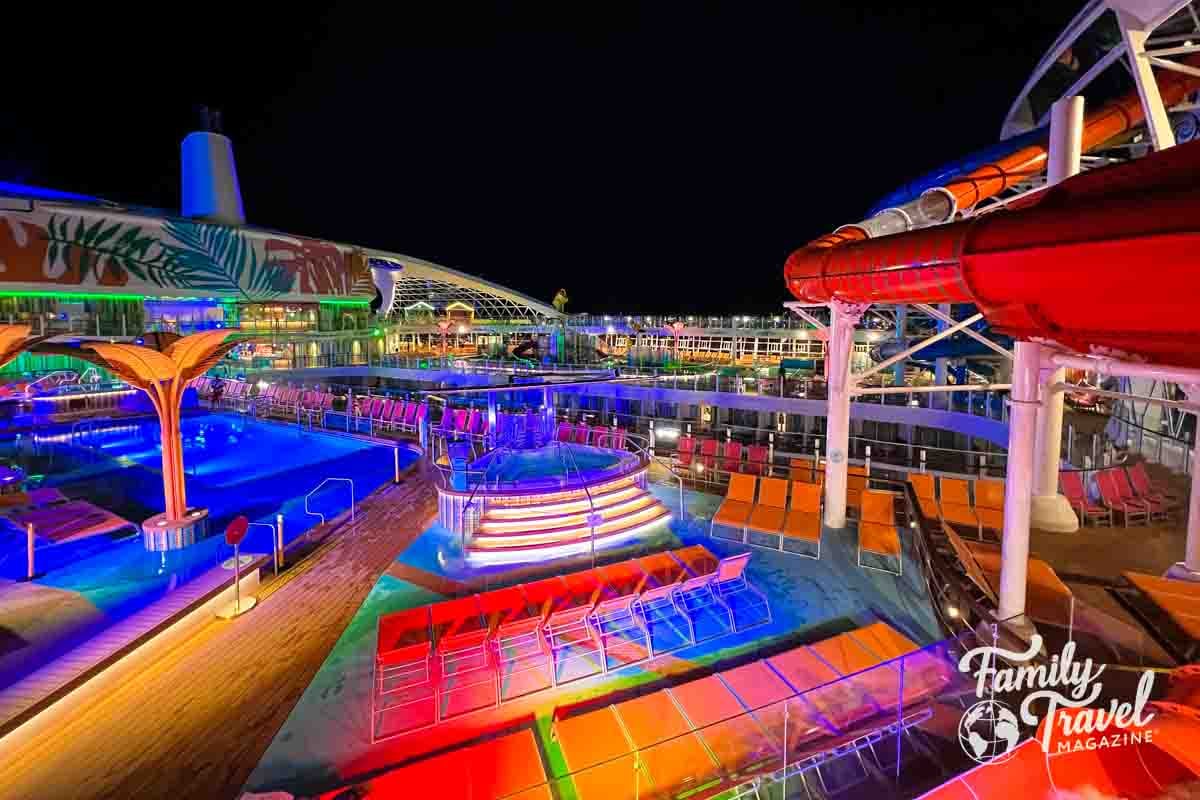
The breadth of onboard programming available on Oasis Class ships extends far beyond traditional cruise ship fare. Alongside the active offerings found within the Pool and Sports Zone—such as surf simulators, miniature golf courses, and climbing walls—families can participate in interactive escape rooms, high-tech laser tag sessions, and even recreational ice skating in an indoor arena.

The caliber of professional entertainment is equally ambitious, distributed across several specialized venues. Large-scale theatrical productions take place in the traditional Royal Theater, while precision figure skating shows are staged in Studio B. Outdoors, the aft-situated AquaTheater hosts daring acrobatic, high-diving, and synchronized swimming performances against the backdrop of the open ocean.
In addition to these signature productions, the ships feature a rotating lineup of guest comedians, headline tribute bands, and live musicians. Because entertainment scheduling varies by itinerary, passengers rely heavily on the official Royal Caribbean mobile app to track daily activities.
Securing reservations for these high-demand shows requires careful planning. Many popular productions must be reserved in advance—typically opening on the first day of the month preceding the sail date and remaining available up to four days prior to embarkation, subject to availability. Passengers who recently sailed aboard Utopia of the Seas noted that popular performances booked up rapidly, underscoring the importance of establishing a daily schedule that balances dining times with show reservations.

What Types of Staterooms Are on the Oasis Class Ships?
Accommodations aboard Oasis Class vessels encompass all the traditional categories found across the broader Royal Caribbean fleet, ranging from cozy interior staterooms and oceanview rooms to standard balcony cabins and luxurious multi-level suites. However, the unique architectural design of the Oasis Class introduces a distinct category of accommodations: inward-facing balcony staterooms that overlook either the Central Park neighborhood or the vibrant Boardwalk.
For travelers weighing their lodging options, promotional programs like RoyalUp offer an opportunity to bid for an upgraded stateroom category prior to departure, though these upgrades are never guaranteed. Securing a preferred room location requires booking well in advance. Furthermore, travelers choosing balcony cabins must decide whether they prefer a traditional ocean view or an inward-facing neighborhood balcony, as each offers a remarkably different atmospheric experience. Room placement also warrants careful consideration, as the immense size of the ship makes proximity to elevators, public decks, and overhead activity areas a significant factor in daily comfort.
What Are the Kid-Friendly Elements of the Oasis Class Ships?
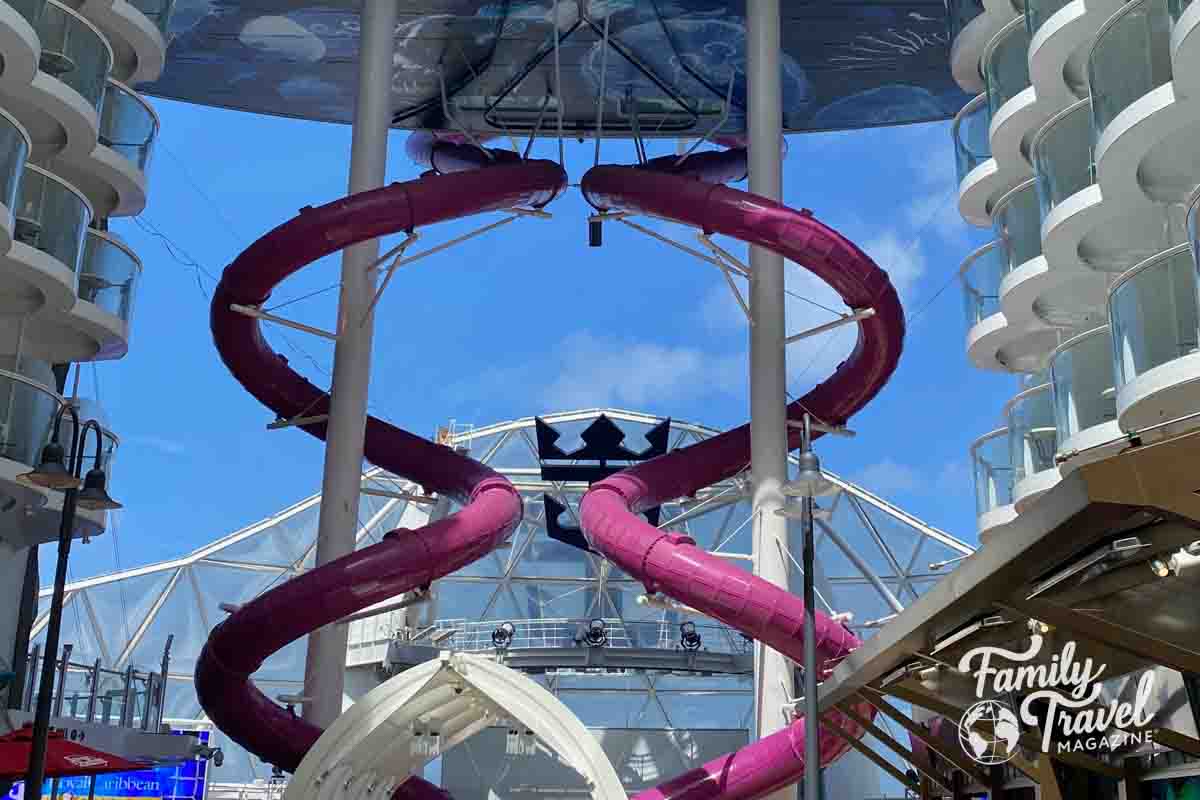
Given their immense size and resort-style layout, Oasis Class ships are exceptionally well-suited for families traveling with children and teenagers. The integration of multi-story waterslides, dedicated youth and teen clubs tailored to different age groups, active sports deck installations, and family-oriented theatrical productions ensures that younger guests remain thoroughly engaged throughout the journey. The variety of programming helps bridge the generational gap, providing distinct spaces where teenagers can socialize independently while younger children enjoy supervised recreational activities.
Why Choose an Oasis Class Ship?
Families comparing various cruise options often find compelling reasons to select an Oasis Class vessel over smaller alternatives. The primary advantages center on the sheer volume of choices available. With an extensive array of distinct neighborhoods, numerous dining venues, diverse entertainment spectacles, and expansive recreational facilities, these ships offer a self-contained resort environment where travelers rarely experience repetition. The ability to cater to varied multigenerational interests—allowing grandparents, parents, and children to pursue entirely different activities before reuniting for dinner—makes the class a versatile choice for large family gatherings.
How to Choose an Oasis Class Ship
For travelers committed to sailing on an Oasis Class ship but uncertain which specific vessel to select, several distinguishing factors warrant evaluation. While the core architectural layout remains consistent, older ships in the class have undergone strategic dry-dock refurbishments to incorporate newer amenities, while the newest additions feature contemporary interior design elements and updated dining concepts. Reviewing the specific launch years, recent revitalization schedules, and minor variations in onboard venues will help prospective cruisers align a particular ship with their personal vacation priorities.
Does an Oasis Class Ship Feel Too Big?
A frequent hesitation among prospective cruisers is whether a ship of this immense scale will feel overwhelmingly large or crowded. Given that these vessels rank among the largest passenger ships ever built, the concern is entirely understandable.

While seasoned cruisers generally report that the neighborhood layout successfully disperses crowds—preventing most public areas from feeling suffocatingly packed—these ships certainly lack the intimate atmosphere found on smaller vessels. Many families ultimately view the expansive size as a positive attribute, appreciating that a larger physical footprint translates directly into a broader selection of onboard amenities and entertainment options. Even over the course of a seven-day itinerary, fully experiencing every corner of the ship remains a challenge.
For travelers who remain undecided about committing to a massive floating resort, opting for a shorter introductory sailing provides a practical solution. Shorter itineraries, such as the three- and four-night sailings currently operated by Utopia of the Seas out of Port Canaveral, offer an accessible way to experience the scale and features of the Oasis Class without a week-long commitment.
Related News