Mission-Driven Hospitality: How The Lantern Columbia Is Redefining Inclusive Employment in the Hotel Industry
Article Editorial Team
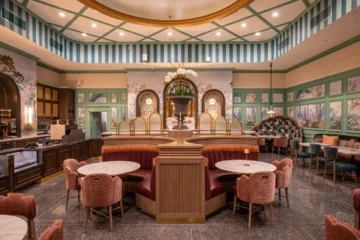
Hotel openings are always noteworthy occasions, marking new investments in local communities, architectural achievements, and the expansion of hospitality brands. However, the January debut of Raines’ The Lantern Columbia was especially meaningful. Situated in Columbia, South Carolina, the property has quickly established a unique identity by championing a deeply inclusive workforce model that is transforming traditional notions of hotel and restaurant operations.
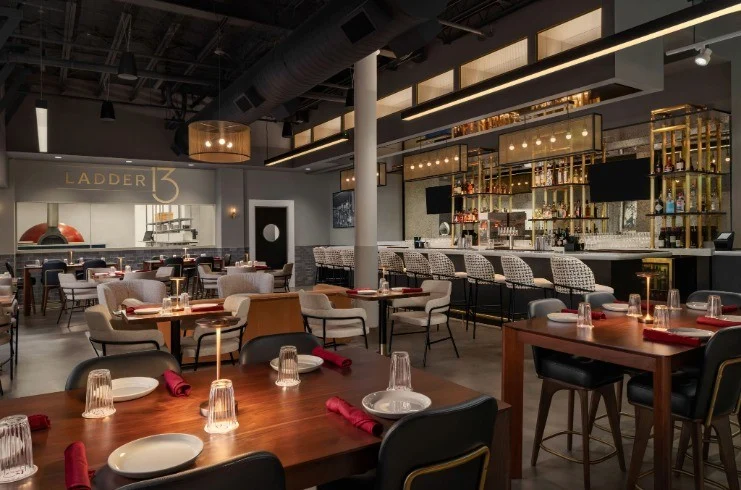
From its inception, the property has partnered closely with the University of South Carolina’s College of Hospitality, Retail and Sport Management, as well as the CarolinaLIFE program, to actively recruit and employ individuals with intellectual and developmental disabilities, such as autism and Down syndrome. Less than a year after opening its doors, these individuals make up nearly 40 percent of the hotel’s total team. This inclusive staffing model extends directly into Ladder 13, the property’s on-site restaurant and bar led by James Beard nominee Kevin Johnson. The impact of these partnerships and the dedication of the staff are already yielding external recognition, with Southern Living naming Ladder 13 its Restaurant of the Month for August.
For General Manager Rick Hayduk, the culture being built at The Lantern Columbia represents the continuation of a personal and professional commitment to mission-driven hospitality. Hayduk previously worked with the ClemsonLIFE program during his tenure as general manager of The Shepherd Hotel in Clemson, an experience that profoundly shaped his career perspective and aligns closely with his own family background.
“I’ve got two kids with Down syndrome,” Hayduk explained. “I had set out many years ago when my daughter was born to take a look [at the job market]. Hospitality is a great industry for people with disabilities, and it’s because of who they work next to.”
Hayduk outlined how individuals with intellectual and/or developmental disabilities frequently struggle to acquire meaningful career pathways in the broader labor market. While charitable organizations often provide valuable outlets that allow them to work, these positions are frequently non-paying volunteer roles. The Lantern Columbia, however, changes that dynamic. Through its structured partnerships with the CarolinaLIFE program and other local organizations, the hotel opens its doors to prospective employees, offering comprehensive training designed to transition them into valued, contributing members of the workforce.
Building a Strong Culture
Training and developing these individuals inherently requires a different approach from standard onboarding practices. Hayduk explained that the process takes significantly more time, noting that tolerance and compassion are vital components of success. Pointing out that training can take “three to four times” longer than usual, he stated that the process relies heavily on repetition, which demands profound patience from trainers and fellow employees alike.
Adding to the supportive environment, the restaurant manager brings personal insight to the table as the parent of a daughter with autism. Beyond her professional qualifications, she possesses firsthand experience interacting with individuals with disabilities, instilling a high level of compassion and patience throughout the daily training regimen.
Another critical aspect of the training and operational process is understanding that these individuals may not be able to successfully train for or execute every task a traditional role might require.
“We call it a mosaic,” Hayduk explained, noting that these employees often lack the same physical endurance or stamina as others. A typical dinner service, for instance, represents an intense four-to-five-hour push that aligns more closely with these employees’ capabilities, whereas a traditional eight-hour housekeeping shift might not be a suitable fit.
The mosaic approach is the direct result of having individuals who can perform three or four tasks out of a total of ten, for example, to an exceptionally high standard, while being unable to handle the remaining duties or sustain a full-length shift. Consequently, operational planning requires a tailored mindset.
“Scheduling is one of our most difficult things,” Hayduk noted. “You have to be open to the fact that you can’t just plug and play individuals who can work that six-to-eight-hour shift and do all 10 of the tasks. In our case, you may have someone who could work three to four hours, but they can only do four of the 10 tasks. So then you’ve got to find someone to supplement the remaining six tasks.”
Navigating these logistical dynamics requires a considerable amount of additional work on the leadership side. However, The Lantern Columbia’s team remains deeply unified by a shared belief in their core mission.
“We have a lot of subject matter experts, whether they’re bartenders or food servers, and I would say almost to a person, every single one of them is working here because of our mission and our purpose,” Hayduk said. “So yes, I’m a food server. Yes, I’m a line cook. But I think it’s great that our restaurant, our hotel, employs people with disabilities, and I want to be a part of it. That’s really the key to it.”
Despite its strong social mission, The Lantern Columbia remains steadfast in its commitment to delivering exemplary, high-end service. Hayduk emphasized that the property successfully trains its team to meet rigorous hospitality standards.
“Our thesis is you can employ up to 40 percent and still deliver a four-star hospitality experience,” he stated.
A significant part of achieving this standard lies in matching each individual precisely to their role and its associated tasks. Management ensures that roles align with personal strengths and comfort levels.
“We were not going to put an introverted, non-communicative individual with autism as a host in the restaurant,” he explained. “But we also have some that are so social that they would go seat a guest and wouldn’t come back for 20 minutes. They’re just sitting there tableside, talking them up.”
Ultimately, success comes down to finding the best possible fit for each individual and their specific skillset, ensuring both employee confidence and guest satisfaction.

Given the unique challenges involved in operating with this specialized team dynamic, assembling the right overall staff is crucial. Hayduk outlined how Raines’ core company values serve as fundamental drivers of the selection and evaluation process. One primary value is “better today than yesterday.” During interviews, prospective employees are evaluated on their commitment to continuous personal and professional improvement.
Another foundational building block is “elevate every experience.” Management looks for candidates who genuinely want to create special moments for guests and colleagues alike, while also maintaining positive relationships with vendors.
Perhaps most importantly, the company emphasizes the value of “seeking to understand,” an approach that proves especially valuable when working alongside individuals with autism or other developmental disabilities.
“That face might be a little different than what you see on the inside,” Hayduk noted. “So, you’re trying to understand who they are, even though they might be stoic.”
This philosophy extends naturally to guest interactions as well. If a guest appears frustrated during check-in, employees are encouraged to look beyond the surface reaction and understand the underlying cause. Simultaneously, engaging warmly with guests to learn about the purpose of their stay is viewed as an equally valuable interaction.
These shared values converge to create a distinct atmosphere throughout the property.
“There’s a vibe in this hotel,” Hayduk said. “And it’s special… When someone comes to Columbia, South Carolina, we want them to feel something. We want them to look at our staff, the way, and it really is magic when the 60 percent interact with the 40 percent. And they uplift each other.”
Local Partnerships
Collaborating with the University of South Carolina’s College of Hospitality, Retail and Sport Management has been a cornerstone of The Lantern Columbia’s identity from the outset. Hayduk recalled that even before Raines officially acquired the property, their team reached out to the academic institution to build upon an existing relationship.
“We met with them and said, we’re going to put a hotel in your backyard, and we would like to incorporate the students,” he said.
Beyond offering immediate employment opportunities, the Raines team aspires to make a broader community impact well beyond the physical boundaries of the hotel. Hayduk expressed hope that as these students eventually transition to subsequent career opportunities elsewhere, they will encourage other hospitality businesses to adopt inclusive hiring practices.
“Our desire is, ‘Hey, have you guys considered working with people with disabilities? I did this in Columbia working at The Lantern. Why wouldn’t we do that? I could show you how.’ So that’s a bigger goal that we have at Raines,” Hayduk explained, adding that the company plans to incorporate training and resources developed at The Lantern into other properties to scale this mission-driven model.
Lessons for Other Hotels
While replicating The Lantern Columbia’s exact operational model may not be practical for every hotel in the industry, Hayduk highlighted several universal takeaways and tangible returns on investment.
First, he noted that after investing time and resources into training these individuals, properties will find dedicated team members who are exceptionally grateful for their employment. This loyalty is particularly valuable within the context of today’s competitive labor market. Furthermore, Hayduk pointed to the intrinsic joy that individuals with disabilities bring to the workplace, noting their infectious enthusiasm for coming to work helps uplift the entire staff.
The return on investment extends directly to the guest experience as well. While acknowledging traditional hospitality amenities such as luxury bedding, Hayduk underscored the profound difference that human connection makes for visitors.
“If you don’t leave inspired, then we failed,” Hayduk said. “Because you’re just seeing this humanity restored, as I call it, where there’s a guy with Down syndrome or someone who’s autistic, they’re interacting with the staff, and they’re doing their thing. You have to be uplifted about that.”
Specifically highlighting the team members at Ladder 13, Hayduk described the employees as unbelievable additions who actively drive repeat business from guests who return specifically to see them.
“We’ve gotten return business because of the individuals, whether they’re hosts or whether they’re bussing tables, and we do it in a very high-end program,” he concluded. “It really works, and it shouldn’t stop here at The Lantern or Ladder 13. This can be done if you are willing to put in the investment of time. In selecting the person and training them up, there is a significant return by the guest and by their fellow colleagues and teammates.”
Related News