Indigenous Communities in Tanzania Protect Ancestral Lands and Traditional Ways of Life Through Carbon Offset Initiative
Article Editorial Team
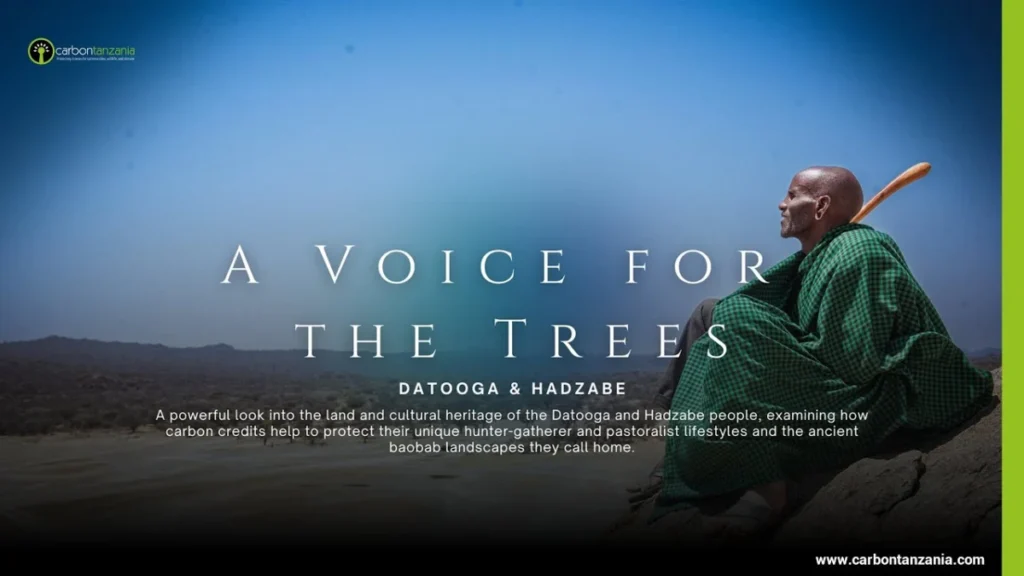
In a newly released video produced by Carbon Tanzania, members of Tanzania’s Indigenous Datooga and Hadza communities share powerful accounts of how the Yaeda-Eyasi carbon offset project has fundamentally transformed their ability to protect their ancestral lands and safeguard their traditional way of life.
The short film highlights the deep cultural and existential connection these Indigenous groups maintain with their territory, capturing the sentiment of community members who emphasize that their homeland is not merely a place of residence, but an intrinsic part of their identity. "This land has been our home forever," community members express in the video. "It is part of who we are."
The Yaeda-Eyasi Landscape Project, which forms a key component of Sustainable Travel International’s Climate Impact Portfolio, operates by channeling carbon revenue directly into community-led forest protection initiatives. For generations, both the hunter-gatherer Hadza and the pastoralist Datooga have faced mounting external pressures, including land encroachment by outside invaders and the gradual degradation of natural habitats that sustain their livestock and foraging practices.
Through the structure of the carbon offset program, these challenges are being directly addressed by empowering local residents to act as stewards of their environment. Communities are financially compensated for actively protecting their local forests from illegal logging, agricultural encroachment, and other forms of exploitation. A cornerstone of this locally driven model is the employment of locally appointed rangers, who earn stable, reliable incomes through carbon finance. These rangers monitor forest boundaries, deter unauthorized land use, and ensure the ecological health of the landscape is maintained.
The tangible impacts of this financial and structural support are becoming increasingly visible across the Yaeda-Eyasi region. Conservation efforts have allowed local forests to steadily recover from past degradation. At the same time, traditional economic activities and ecological benefits have flourished. Among these is honey production, a vital practice for the Hadza people, which has seen a notable increase as the health of the local woodland ecosystem improves.
Beyond environmental restoration, the forests continue to serve their traditional role in sustaining the daily lives of community members. The landscape provides essential wild fruits and other foods for gathering, while offering critical grazing land that supports the livestock central to the pastoralist Datooga culture.
The influx of carbon revenue has also stretched far beyond direct land management, catalyzing broader socioeconomic development in a region that has historically lacked access to essential public services. Funding generated through the project has been successfully channeled into vital community infrastructure, including the construction and support of local schools and health clinics. By investing in these facilities, the initiative has successfully brought education and healthcare closer to home, reducing the physical and economic barriers that community members previously faced in accessing these fundamental rights.
Reflecting on the profound reliance that these communities have developed on the conservation initiative, German Sedoyeka, the Yaeda-Eyasi Project Manager, recalls a poignant conversation with a local resident. "I once asked a community member what would happen if the carbon project were to leave," Sedoyeka recounts. "He said, ‘If the carbon project were to leave today, the situation would be very bad. Life would be very difficult.’"
This sentiment underscores the precarious balance facing Indigenous conservation models worldwide, where external market mechanisms have become intertwined with the daily survival and cultural continuity of traditional populations. The Yaeda-Eyasi Landscape Project stands out as an example of how targeted carbon finance can align environmental conservation with Indigenous rights and community development, offering a lifeline to landscapes and cultures that have endured for centuries.
The video documenting these efforts, providing a firsthand look at the realities of community-led conservation in northern Tanzania, was provided by Carbon Tanzania, highlighting the ongoing collaboration between local Indigenous stewardship and international climate action frameworks.
Related News