Navigating the Carbon Offset Market: A Comprehensive Look at Project Types, Quality, and Pricing
Article Editorial Team
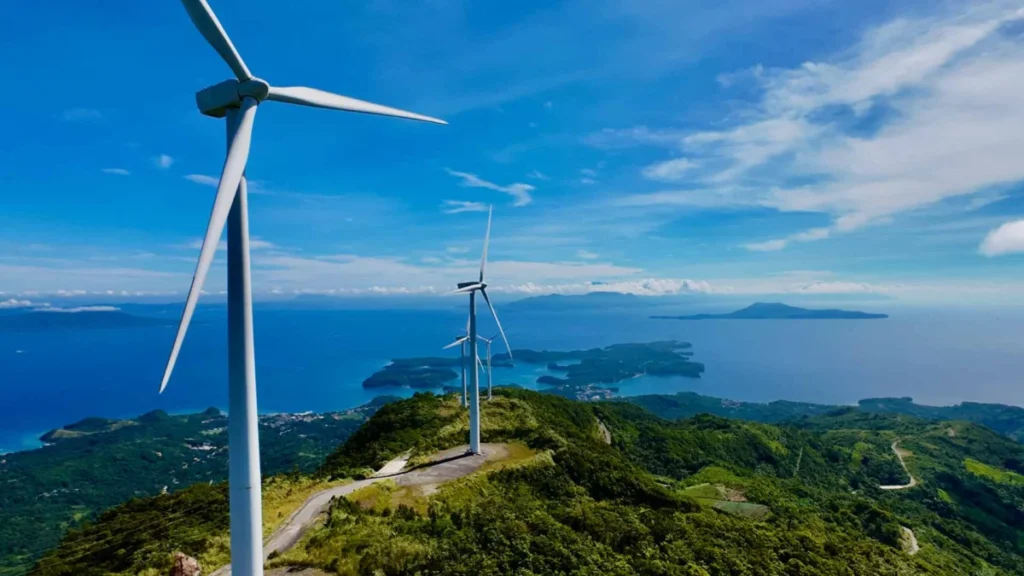
Not all carbon offsets operate in the same way. While some initiatives focus on protecting existing forests or constructing modern wind farms, others work to restore vital coastal mangroves or pull carbon dioxide directly out of the atmosphere using emerging technologies. As organizations and individuals increasingly turn to carbon credits to neutralize their environmental footprints, understanding the mechanics, differences, and real-world applications of these projects has become essential.
Carbon offset projects are climate initiatives specifically designed to reduce or remove the greenhouse gas emissions that drive global climate change. Operating across a vast spectrum of environments—from tropical rainforests and rural farmland to bustling metropolitan centers—these projects take many forms, including wetland restoration and waste-to-energy conversion.
The emission reductions or removals generated by these initiatives are rigorously measured and verified by independent experts. Once validated, a single carbon credit is issued for every metric ton of greenhouse gases successfully addressed. When buyers purchase these credits, their financial contributions directly support the ongoing work of the project. The primary categories of carbon offset projects encompass forestry, energy, waste and industrial management, blue and teal carbon, agriculture, and technological carbon removal.
Avoidance Versus Removal Projects
At a fundamental level, carbon offset projects fall into two primary categories: avoidance and removal. Avoidance projects act as a shield against future emissions, preventing them from entering the atmosphere in the first place. Examples include constructing a renewable wind farm to displace fossil fuel-based power generation or legally protecting vulnerable forests from industrial clearing.
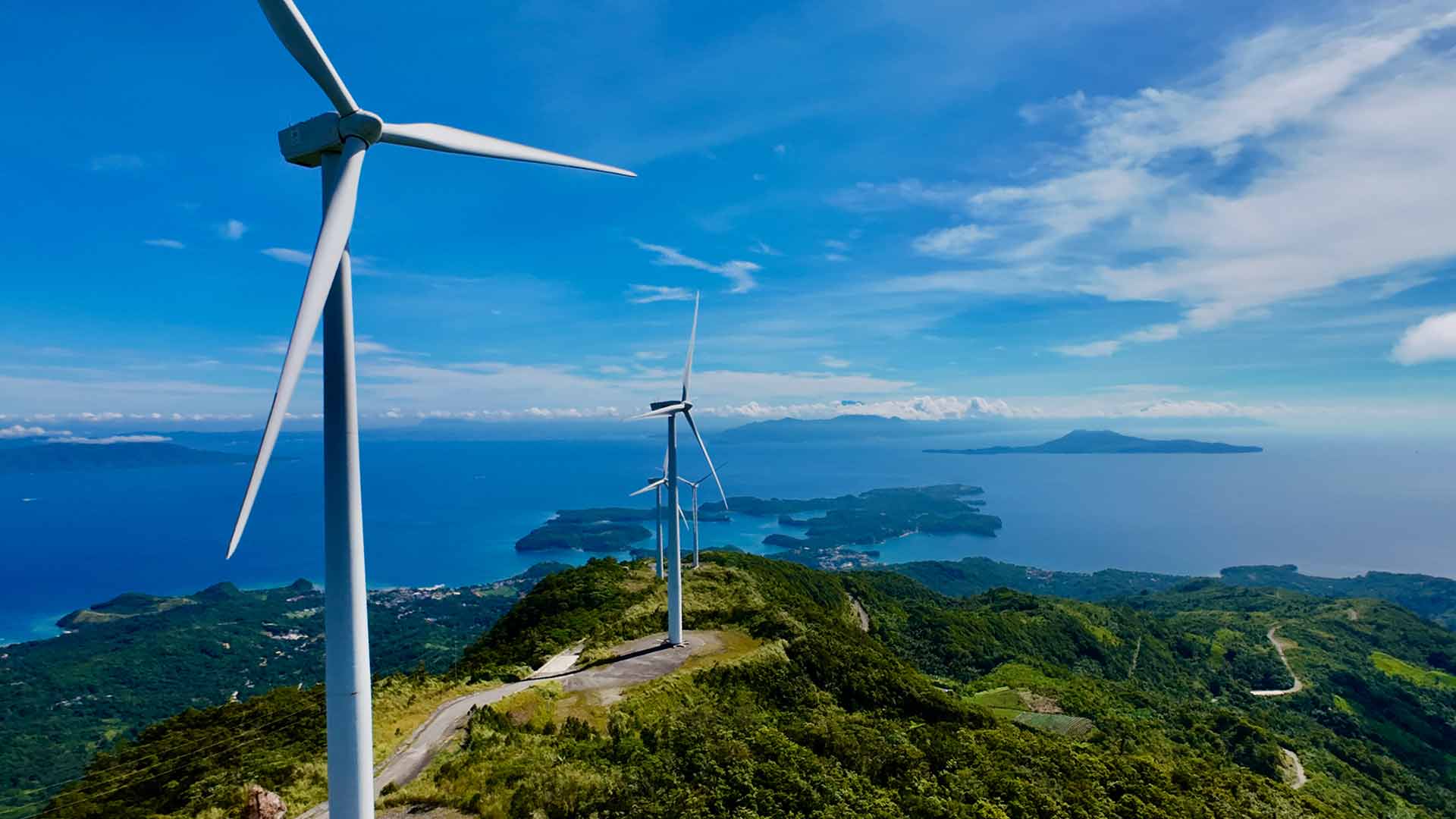
Conversely, removal projects actively draw down carbon that is already present in the atmosphere. These efforts utilize biological methods like reforestation or engineered solutions such as direct air capture.
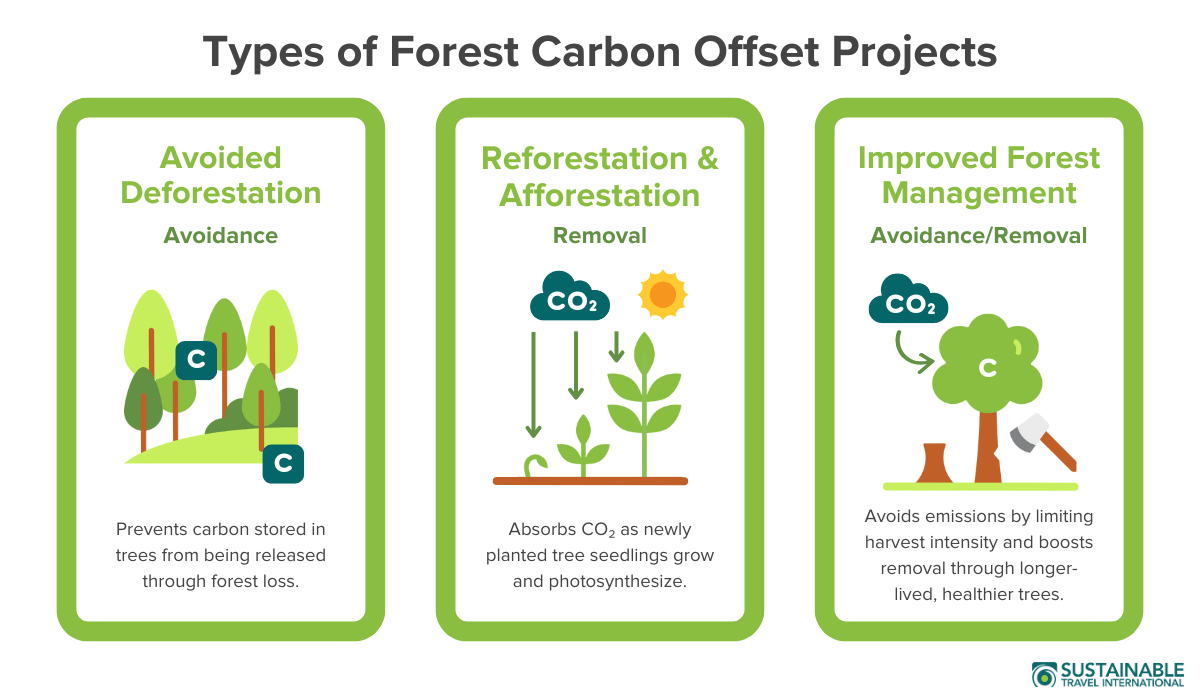
Forest-based initiatives, for instance, tap into the natural power of trees, which fight climate change by absorbing and storing carbon through photosynthesis. Forest carbon offset projects generally fall into three main types: avoided deforestation, which protects existing canopies; reforestation and afforestation, which establish new tree cover; and improved forest management, which optimizes the health and carbon-sequestration capacity of managed woodlands.
To put the scale of these efforts into perspective, the carbon emissions generated by a single round-trip flight between New York and London are roughly comparable to the amount absorbed by 25 tree seedlings over a decade, or the emissions avoided by protecting 1.5 acres of forest from deforestation for an entire year.
Energy and Industrial Carbon Initiatives
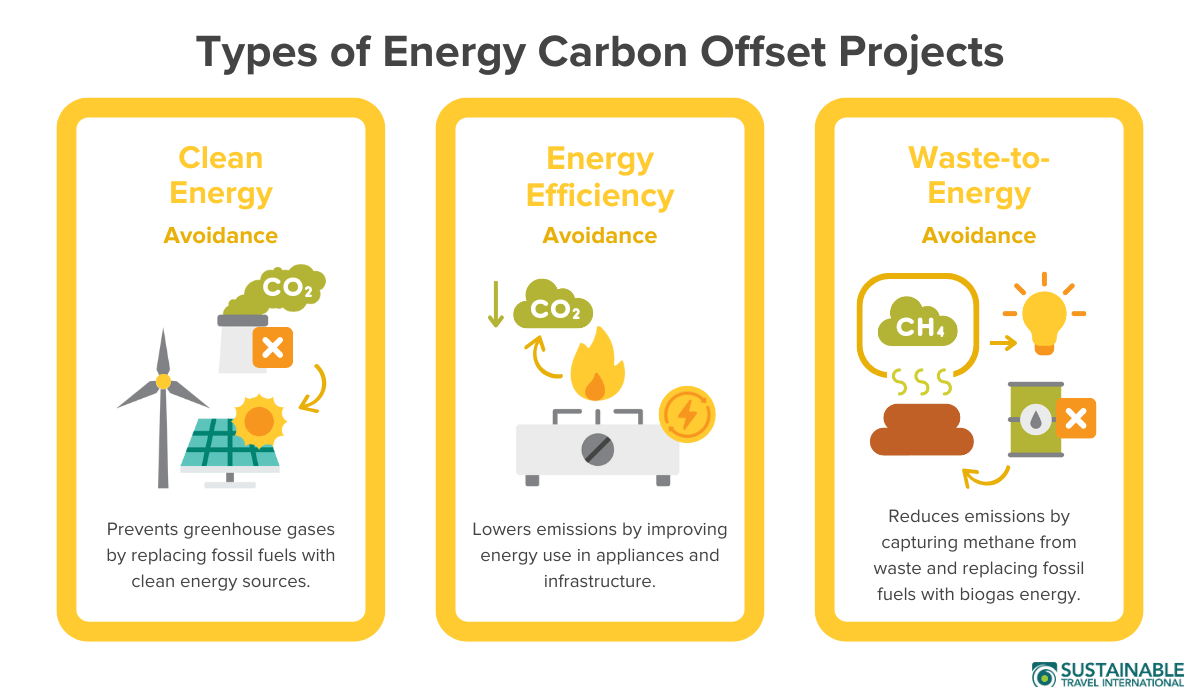
Energy carbon offset projects target greenhouse gas emissions by fundamentally transforming how power is produced, consumed, and sourced. These initiatives successfully replace carbon-intensive fossil fuel power generation with clean, renewable energy sources, recover valuable energy from organic waste streams, and curb overall demand through the deployment of highly efficient appliances and industrial systems.
The emissions footprint of a New York-to-London round-trip flight is roughly equivalent to the emissions avoided by bypassing the combustion of 1,666 pounds of coal or 147 gallons of diesel fuel.
Beyond power generation, other initiatives focus heavily on managing waste and industrial byproducts to mitigate greenhouse gas emissions. Waste disposal projects capture and destroy methane released by rotting organic material in landfills, utilize recycling to bypass the emissions associated with manufacturing virgin materials, and promote composting to prevent methane formation entirely. A prominent example is the Quanzhou Canhua PET Recycling Project in China, which transforms used plastic beverage bottles into raw plastic flakes, substantially cutting carbon emissions by eliminating the need to synthesize new plastic from oil and gas. Recycling just 128 bags of trash instead of sending them to a landfill yields a comparable emissions avoidance to the transatlantic flight mentioned previously.
Meanwhile, industrial process projects tackle pollution generated by complex manufacturing and chemical operations by destroying or replacing potent greenhouse gases. These interventions may involve capturing methane leaking from active or abandoned coal mines, neutralizing nitrous oxide produced during chemical manufacturing, or substituting high-emission refrigerants with environmentally cleaner alternatives.
Expanding Horizons: Blue, Teal, and Agricultural Carbon
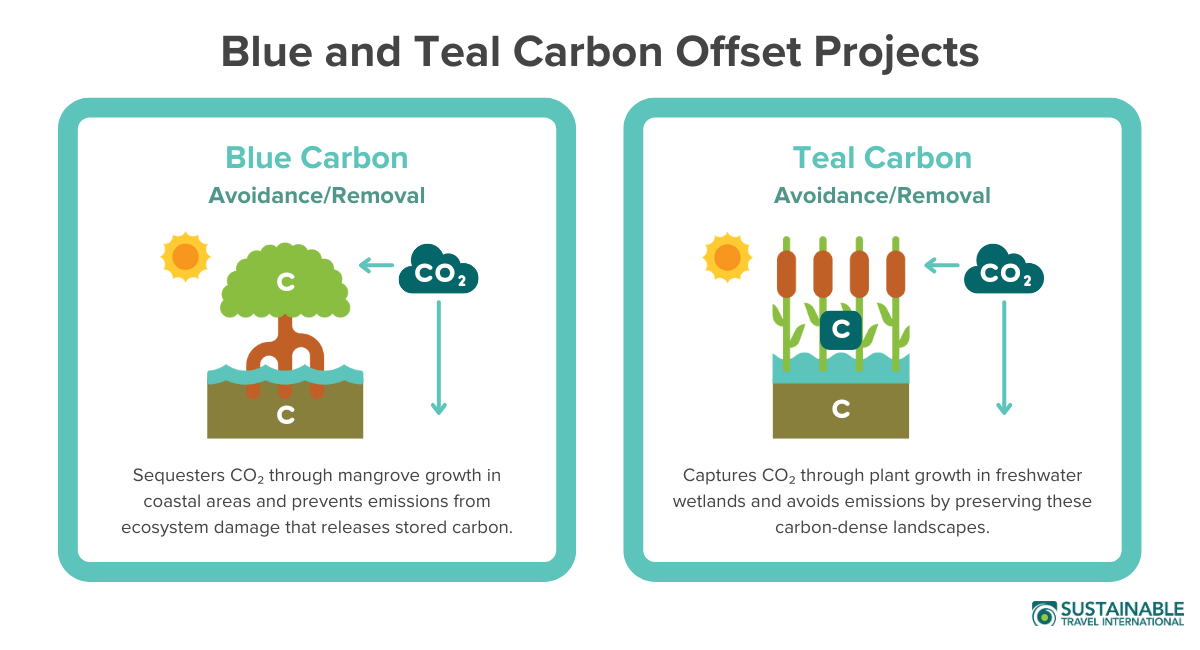
Emerging categories of carbon offsets are also gaining traction for their exceptional efficiency. Blue carbon offset projects focus on the protection and restoration of vital coastal ecosystems, such as mangroves, while teal carbon initiatives concentrate on freshwater wetlands. Although these ecosystems cover significantly less geographic area than terrestrial forests, they possess an extraordinary capacity for carbon sequestration, absorbing carbon up to 10 times faster than land-based trees. Furthermore, they can store twice as much carbon per equivalent area, primarily within waterlogged soils where extremely slow decomposition rates trap the carbon safely for thousands of years.
Notable real-world examples include Mikoko Pamoja, a community-driven initiative dedicated to conserving and restoring mangroves along the southern coast of Kenya, and Rimba Raya, a project that protects Indonesia’s expansive peat swamp forests—a critical sanctuary for rehabilitated orangutans that was once slated for conversion into commercial palm oil plantations.
Agricultural carbon offset projects similarly reduce emissions by implementing land and livestock management strategies designed to curb high-emission farming practices while actively enhancing carbon storage within agricultural soils and surrounding vegetation.
Technological Innovations in Carbon Removal
Technological carbon removal represents another frontier, utilizing heavily engineered systems to capture and sequester carbon in durable, long-lasting forms. Direct air capture utilizes specialized machinery and advanced chemical processes to pull carbon dioxide directly out of the ambient air. The captured gas can then be permanently stored deep underground or repurposed into commercial products such as synthetic fuels and concrete. Beyond entirely artificial systems, technology is also increasingly deployed to enhance natural carbon removal processes, accelerating and strengthening the earth’s innate biological capacity to sequester carbon.
As the global carbon market has evolved over the past decade, retirement patterns for carbon credits have shifted significantly. While avoided deforestation and traditional renewable energy projects have historically dominated market volume, categories such as blue carbon and innovative technological removals are experiencing steady growth. Together, this diverse suite of solutions provides a comprehensive toolkit for addressing emissions at scale, particularly for hard-to-abate sectors where eliminating emissions directly at the source remains technologically or economically challenging at present.
Ensuring Quality and Understanding Market Pricing
The climate impact of carbon offsets is not uniform, making quality assurance a critical pillar of the market. High-quality carbon offset projects are rigorously verified against established independent standards and must clear several demanding criteria. Their verified emissions reductions must be genuinely additional—meaning the results would not have materialized without the financial backing of carbon credit sales. Furthermore, the stored carbon must remain secure over the long term, and the projects must avoid simply displacing emissions elsewhere. Many of the most robust projects also deliver tangible socioeconomic and environmental co-benefits for local communities and regional biodiversity.
Pricing across the carbon market varies dramatically, ranging from roughly $1 to $1,000 per metric ton. This valuation depends heavily on project type, geographic location, scale, and prevailing market demand. Projects that undergo rigorous independent verification and generate meaningful co-benefits for local populations generally command higher prices.
Project scale and maturity also heavily influence cost. Large, established wind and solar installations benefit from economies of scale, producing credits at lower price points. Conversely, smaller initiatives entail higher operational costs relative to their output, resulting in pricier credits. Emerging technological removal solutions, such as direct air capture facilities, remain at the higher end of the pricing spectrum due to their infancy and the intensive engineering required to scale their operations.
Organizations such as Sustainable Travel International curate diverse portfolios that blend forestry, energy, blue and teal carbon, and technological removal projects. By supporting a mix of initiatives through internal due diligence processes that go beyond baseline certification standards, buyers can support multifaceted climate action simultaneously.
Related News