A Critical Turning Point: Why Global Forest Restoration Must Define COP17 and COP31
Article Editorial Team
As world leaders, climate negotiators, representatives from Indigenous communities, and civil society stakeholders converge for two of the most consequential international summits—the Convention on Biological Diversity’s COP17 and the UN Framework Convention on Climate Change’s COP31—a singular, urgent realization is taking center stage: the world’s forests must be returned to the very heart of global climate and biodiversity strategy. These ecosystems are not merely a background feature of our planet; they are the literal lungs and life-support systems of Earth. Without a profound renewal of political leadership, financial commitment, and international collaboration, the world risks failing to meet the foundational goals necessary to secure a habitable future.
The urgency of this moment cannot be overstated. We are currently navigating a global landscape defined by "overshoot"—a term now central to the UN Environment Programme’s 2026 Limiting Overshoot report. The scientific consensus is stark: the world is set to surpass the 1.5 degrees Celsius threshold of global temperature rise established by the Paris Agreement. Our collective challenge has shifted from simple prevention to a complex, high-stakes recovery mission: we must limit this period of exceedance and return to a 1.5-degree trajectory as rapidly as possible.
Recent research, including a forthcoming peer-reviewed study by Cui et al., highlights that halting the destruction of forests and reversing degradation are among the most effective, scalable, and immediate tools we possess to curb rising temperatures. When combined with comprehensive ecosystem restoration, these actions could provide up to one-third of the total climate mitigation required by 2030. Forests are not just passive observers of climate change; they are active, indispensable engines of stability.
The Multifaceted Value of Global Forests
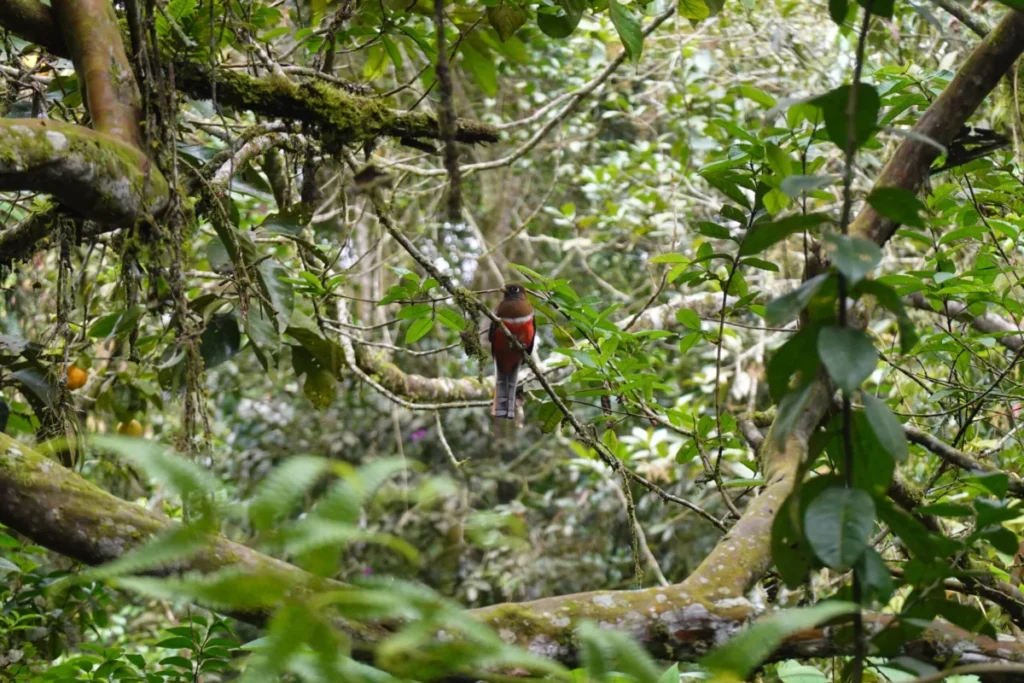
To understand why forests are so critical to the international agenda, one must look beyond carbon sequestration. Forests serve as the bedrock of global terrestrial biodiversity. They are the primary habitat for 80 percent of all amphibian species, 75 percent of bird species, and 68 percent of mammal species. Furthermore, they support an staggering array of 60,000 distinct tree species. When we lose a forest, we do not just lose trees; we lose the biological heritage of the planet.
Beyond their role as a sanctuary for wildlife, forests provide essential "ecosystem services" that directly underpin human survival. They regulate the water cycles that determine the viability of global agriculture, recycle nutrients required for food security, improve water quality, and provide the oxygen necessary for life. Moreover, healthy forests act as natural infrastructure, shielding communities and economies from the increasing frequency of extreme weather events, from flooding to heatwaves.
For organizations like Audubon, the connection between forest health and broader ecological stability has been clear for decades. Forests are vital habitats for birds throughout the Americas. Audubon’s own scientific modeling indicates that more than 75 percent of threatened forest bird species in Latin America face a high risk of extinction if global warming exceeds the Paris Agreement’s temperature goals. Yet, these same forests serve as "climate strongholds," providing refuge for species while simultaneously sequestering carbon and cooling the local environment. Protecting these areas is an act of both environmental stewardship and climate defense.
The economic argument for forest conservation is equally compelling. Forests are the backbone of livelihoods for more than one billion people worldwide. They generate tens of billions of dollars annually through sustainable timber harvesting, ecotourism, the burgeoning bioeconomy, and payments for ecosystem services. Current estimates suggest that forest carbon revenues account for over $473 million annually, with bioeconomy-related products and certified forest goods bringing in billions more. Perhaps most importantly, the return on investment for forest conservation is extraordinary: studies suggest that every dollar invested in halting deforestation yields an 83-fold return in saved products and services. In short, the preservation of our forests is not an economic cost; it is one of the most profitable investments humanity can make.
A Gap Between Promise and Progress
Despite the overwhelming evidence of their importance, our collective progress remains hampered by a disconnect between rhetoric and reality. In 2023, parties to the Paris Agreement reached a milestone during the first Global Stocktake, cementing a 2030 goal to halt and reverse deforestation and forest degradation. This commitment echoed previous high-level promises, such as the 2014 New York Declaration on Forests and the 2021 Glasgow Leaders’ Declaration on Forests and Land Use.
However, as global attention has been pulled toward competing crises, the momentum required to meet these targets has slowed. While there have been minor victories—most notably a 15 percent reduction in global deforestation rates in 2025—we remain significantly behind the pace needed to reach our 2030 objectives. This shortfall is not a benign failure; it has grave, tangible implications for climate stability, biodiversity, economic prosperity, and the well-being of millions who rely on forest ecosystems for their daily survival.
Galvanizing New Leadership
The tools required to meet our goals are already in our possession. The challenge today is not a lack of technology or knowledge, but a lack of sustained, coordinated application. The Forests & Climate Leaders’ Partnership, which unites over 40 governments, represents a critical step in accelerating cross-border action. Furthermore, innovative financial instruments like the Tropical Forests Forever Facility are finally beginning to bridge the gap between conservation efforts and the capital required to sustain them. These mechanisms complement existing market-based solutions, such as the LEAF Coalition, the International Civil Aviation Organization’s CORSIA, and the evolving frameworks under Article 6 of the Paris Agreement.
Crucially, the global community is increasingly recognizing that the most effective forest stewards are often those who have lived alongside them for generations. Indigenous peoples continue to lead the world in forest conservation, demonstrating how innovative governance and community-led management can protect vast tracts of land more effectively than top-down policies. As we look toward the future, the forthcoming "Forests Roadmap" is expected to serve as a vital reference document, consolidating these tools and strategies into a coherent framework for global action.
The upcoming sessions at COP17 and COP31 offer a rare window of opportunity. Heads of state, CEOs, and civil society leaders have the chance to move beyond the language of aspiration and into the language of execution. The year 2027 must be a turning point, a time to catalyze political will and reignite the global movement for our forests. We call upon leaders in government, finance, insurance, agribusiness, and multilateral institutions to come to the negotiating table prepared to implement the radical, necessary steps to meet our 2030 forest goals. The fate of the planet’s biodiversity, the stability of our climate, and the health of our global economy depend on the actions taken today. It is time for all stakeholders to join the movement and ensure that our forests remain a living, breathing asset for generations to come. #forestsforward
Related News