Solo Air Travelers Facing Steep Fares as Major Airlines Continue Hidden Pricing Penalties
Article Editorial Team
More than a year after an industry-wide uproar forced major U.S. carriers to rethink their domestic pricing models, a new analysis reveals that solo air passengers are facing even steeper financial penalties than before. What initially appeared to be a brief, experimental pricing anomaly has instead evolved into a widespread practice for select legacy carriers, driving up travel costs significantly for individuals flying alone, whether for leisure or business.
Last spring, reporting brought to light that the nation’s three largest legacy carriers were quietly implementing significantly higher fares for solo and business travelers compared to groups of two or more passengers. The revelation triggered an immediate and fierce consumer backlash, hitting national news broadcasts and quickly compelling most of the involved airlines to drop the contentious fare structures altogether.
However, a comprehensive follow-up analysis of 5,000 flights across the nation’s five largest domestic carriers reveals a different reality today. Examining 1,000 nonstop domestic one-way routes per airline selected randomly across an eleven-month window, researchers found that two major U.S. carriers have not only maintained the pricing tactic, but have expanded it into a frustratingly commonplace phenomenon.
Delta, Alaska, and Southwest Avoid the Practice
Among the major carriers evaluated in the recent data collection, Delta Air Lines, Alaska Airlines, and Southwest Airlines did not charge higher fares for solo passengers on a single one of the 1,000 individual flights analyzed for each airline.
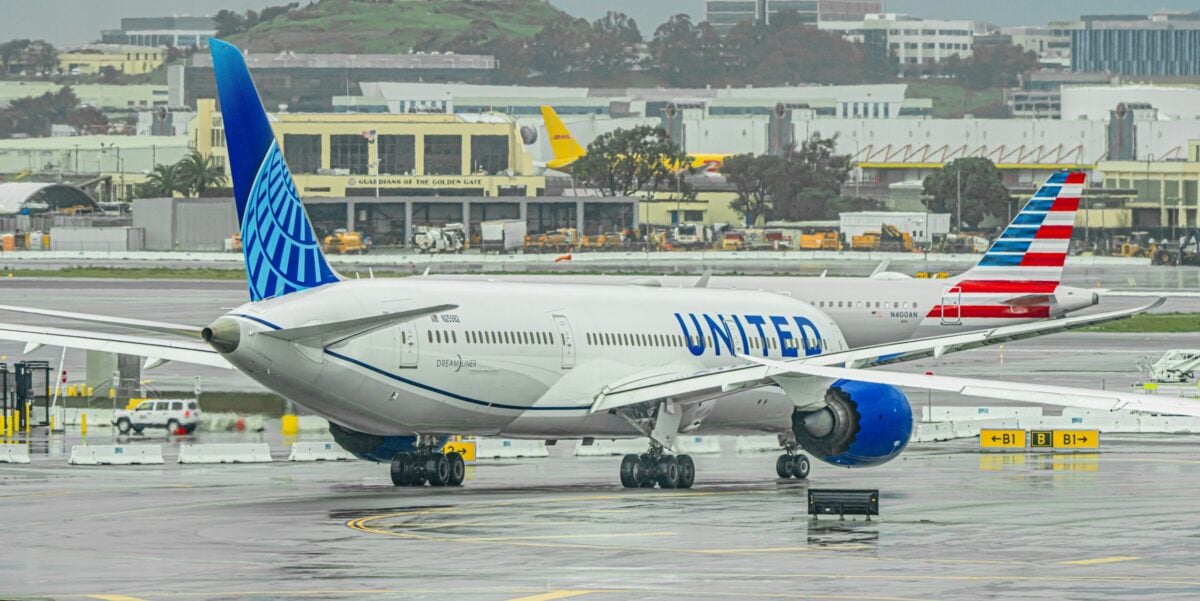
Last year, Delta briefly tested a similar pricing strategy on select domestic routes before swiftly reversing course as public scrutiny mounted. The airline never resumed the tactic. Today, the practice of penalizing solo passengers is concentrated almost entirely within the operations of American Airlines and United Airlines.
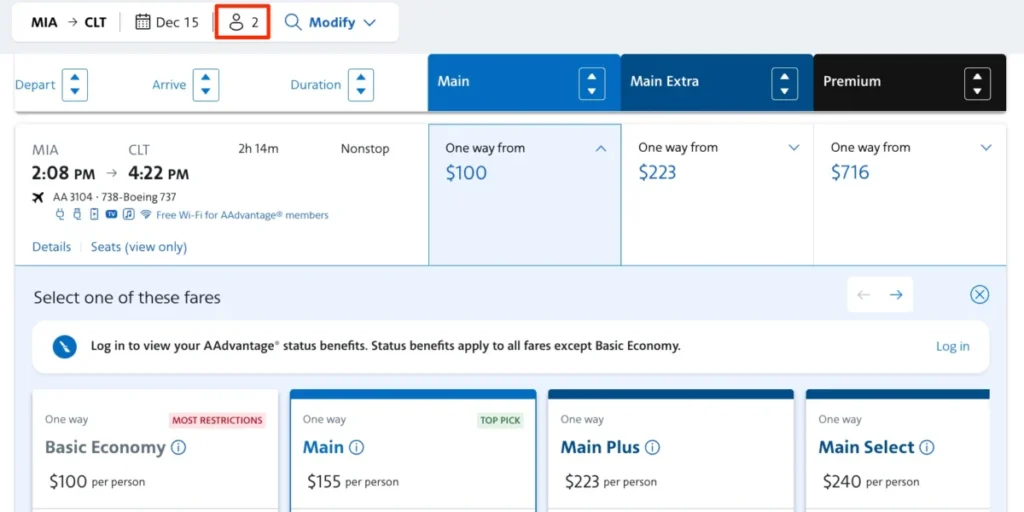
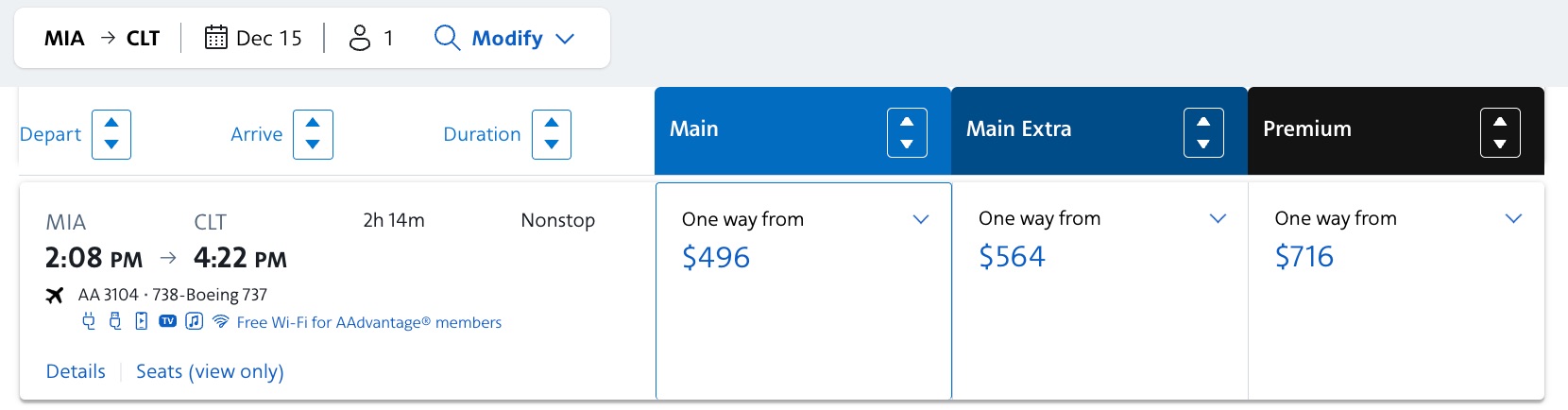
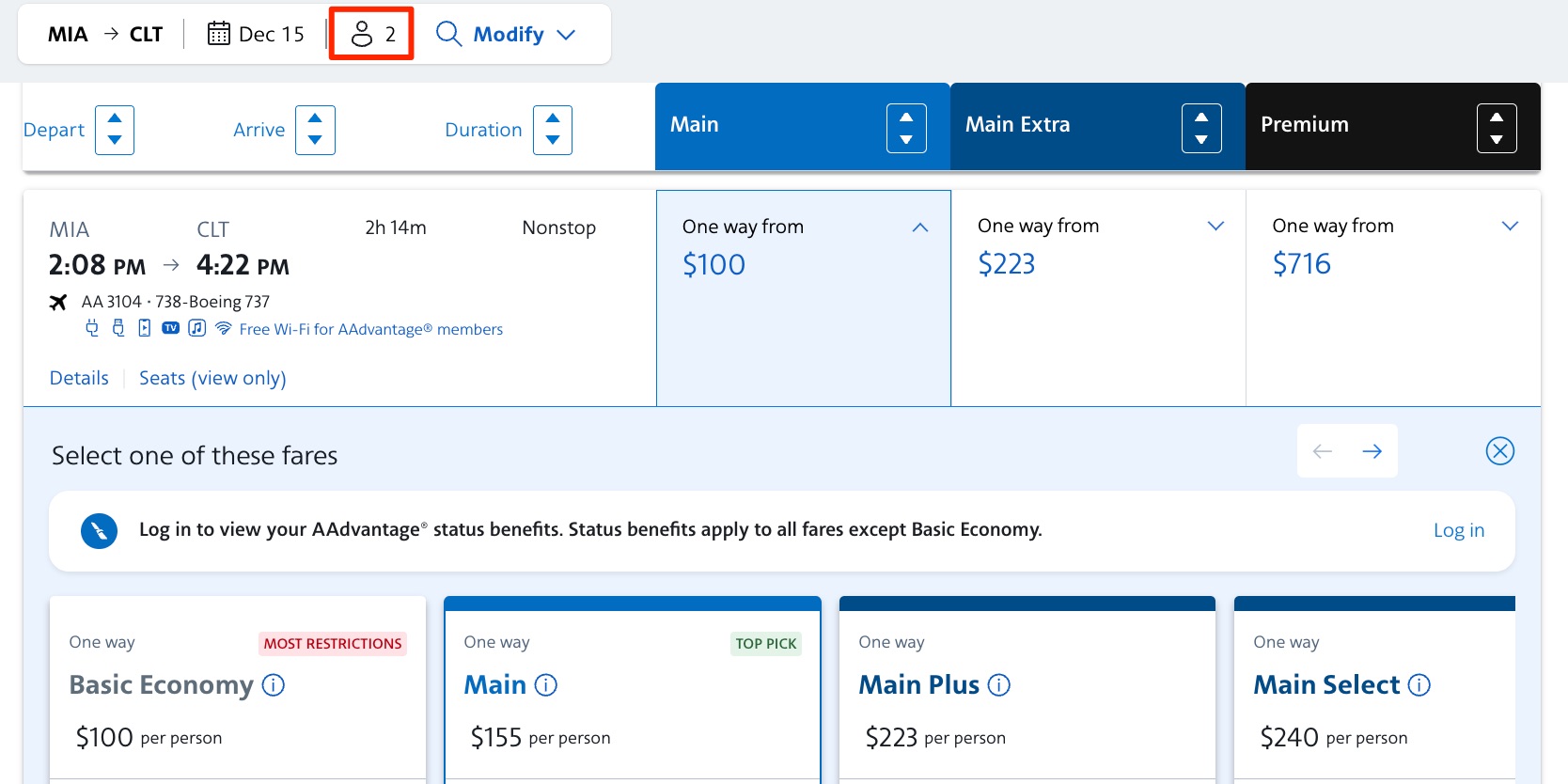
For passengers booking tickets on American and United, the penalties range from mild to egregious. For example, a single traveler searching for a one-way main cabin economy flight from Miami to Charlotte on American Airlines is quoted a price of $496. Yet, when a second passenger is added to the search query, the fare for that exact same main cabin seat drops precipitously to just $155 per person, meaning a booking for two passengers costs less overall than the ticket for a single traveler. Furthermore, an even cheaper basic economy fare priced at $100 becomes available to groups of two or more—an inventory option entirely hidden from solo search queries.
While these discrepancies appear most frequently on one-way itineraries, both carriers have gradually expanded the pricing structure to select domestic roundtrip journeys. In some cases, American Airlines has even applied higher fares for single passengers on short-term international routes heading toward Mexico and the Caribbean.
When approached for comment regarding these pricing structures, American Airlines did not respond to multiple inquiries, while United Airlines declined to comment.
Rising Costs Amid Broader Airfare Inflation
The persistence of higher solo fares arrives at a particularly sensitive time for American consumers, who are already grappling with inflated travel costs. Average airfares have risen significantly compared to previous years, driven in part by international fuel shocks and broader macroeconomic pressures. For many flyers, ticket prices on standard routes have doubled over the past year, heightening sensitivity to any perceived pricing unfairness.
Airlines face mounting scrutiny from regulators regarding their fare-setting methodologies. Lawmakers previously questioned Delta’s exploration of artificial intelligence for setting airfares, expressing concern over the potential for personalized pricing driven by individual consumer data—allegations that Delta has consistently denied. Concurrently, federal regulatory bodies, including the Federal Trade Commission, have ordered major airlines and corporate entities to provide detailed information regarding how consumer data is utilized to establish market prices.
While concrete proof linking these specific solo passenger premiums to advanced surveillance pricing remains limited, the practical reality of higher fares for individual flyers is well-documented and expanding.
A Penalty for Solo Travelers or a Discount for Groups?
When the controversy first erupted, industry defenders and former airline executives argued that the pricing discrepancies could just as easily be interpreted as volume discounts for larger groups rather than punitive measures directed at solo travelers.
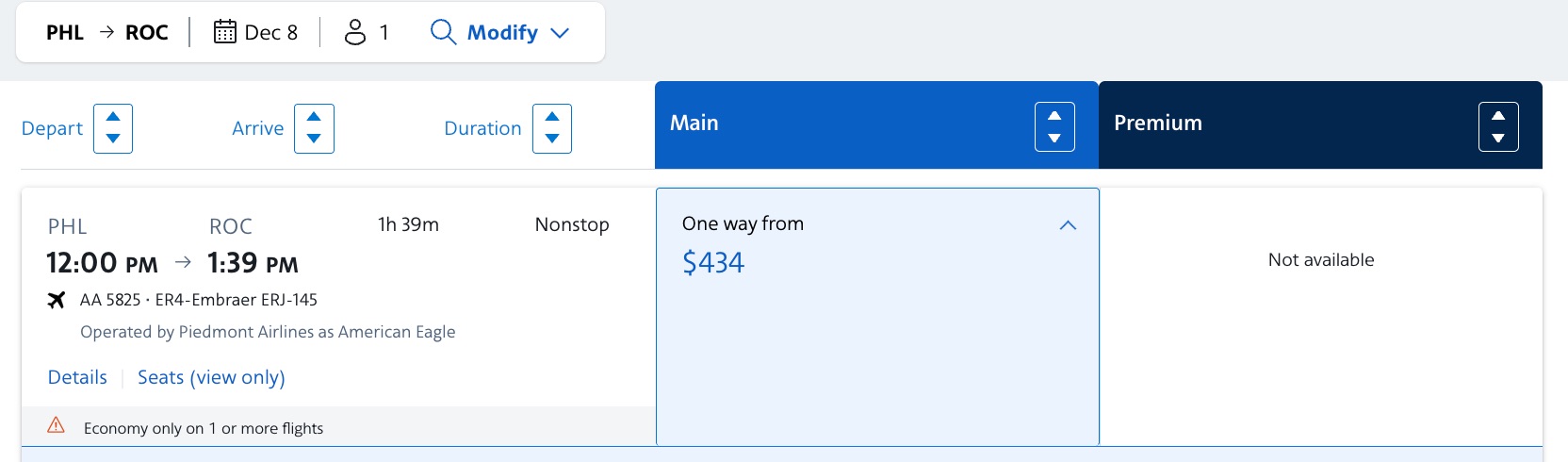
Unlike traditional retail environments where bulk purchasing yields clear, stable discounts, the commercial aviation sector operates under vastly different economic principles. Plane seats do not function like bulk consumer goods with transparent, fixed pricing tiers. Traditional volume-based discounting is virtually nonexistent in routine airline economics.
Data gathered from airline schedules further undermines the argument that these structures represent group discounts. On routes where American Airlines charged single passengers higher rates on certain dates while maintaining equal fares on others, the average ticket prices for groups of two or more were actually higher when the solo penalty was active. In a true discount scenario, group pricing would remain stable or decrease relative to baseline individual fares.
Geographic analysis reveals that these tactics are deployed most frequently at major airline hubs. While roughly one-third of the American Airlines itineraries analyzed nationwide featured higher solo fares, that proportion climbs to nearly 60 percent for flights operating through Philadelphia and reaches 65 percent for routes connecting through Charlotte. Conversely, the pricing strategy appears far less frequently at American’s largest operational hub in Dallas-Fort Worth.
Across both carriers, the pricing anomaly is noticeably more prevalent on routes where the airline holds a monopoly or faces minimal competition, compared to highly contested routes served by multiple competing carriers. A genuine promotional discount for multi-passenger groups would logically make more commercial sense in competitive markets, whereas charging elevated fares without competition relies on captive demand.
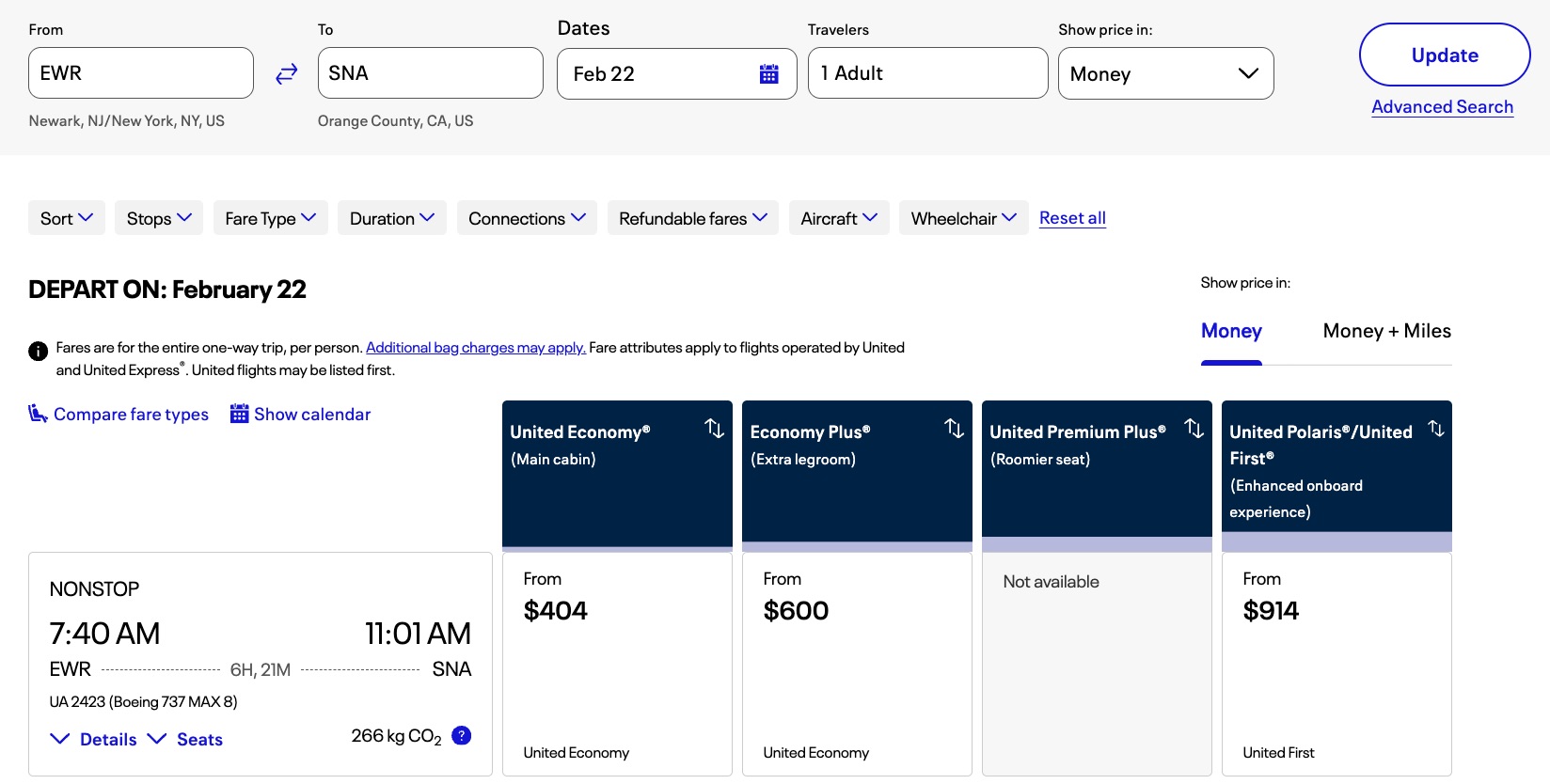
United Airlines exhibits a somewhat different pattern, employing the strategy less frequently than American. On several United routes, the pricing dynamic resembles a traditional companion discount rather than a direct penalty. Nevertheless, instances of substantial divergence persist, such as flights from Newark to Santa Ana where single passengers face significantly higher baseline quotes than pairs booking the exact same itinerary.
The Mechanics of Fare Segmentation
Airlines organize ticket sales through an intricate hierarchy of fare classes, each tied to specific inventory buckets and pricing thresholds. Historically, single travelers benefited from picking up the final remaining seats in lower fare tiers, whereas larger groups searching simultaneously were automatically forced into higher-priced buckets if not enough seats remained in the cheapest tier.
This modern pricing tactic effectively inverts traditional availability rules. Without public explanations from carriers, industry experts attribute the shift to advanced market segmentation. Airlines continuously seek to segment their customer base—separating budget-conscious vacationers, families, retirees, and corporate business travelers—to capture the maximum possible revenue from each distinct demographic.
Solo flyers, particularly on domestic routes, frequently include corporate travelers whose tickets are expensed through employer budgets. These passengers possess a higher price threshold, making them less sensitive to sudden cost increases of $80, $100, or more.
The mechanism enabling this differentiation lies deep within complex fare rules and restrictions accessible through advanced aviation distribution channels. Hidden inside the fine print of discounted multi-passenger fares are explicit accompaniment restrictions, which mandate that a ticketed passenger must be accompanied on all flight segments within the same cabin by at least one other adult.
When these restrictive fare rules are triggered, standard consumer booking portals and airline websites simply omit the lower-tier fares from solo search results, leaving individual passengers with only the higher-priced inventory options.
As a result, the financial burden falls indiscriminately not just on corporate travelers, but on any individual flying alone, including those traveling for family emergencies, friends booking separate itineraries, or spouses maintaining staggered travel schedules.
The data confirms that the practice is no longer a temporary anomaly. For solo air travelers navigating an increasingly expensive aviation market, the higher fares remain a persistent reality.
Related News