Antarctica Booms as Bucket-List Tourism Surges, Raising Concerns Over Polar Workforce Capacity
Article Editorial Team
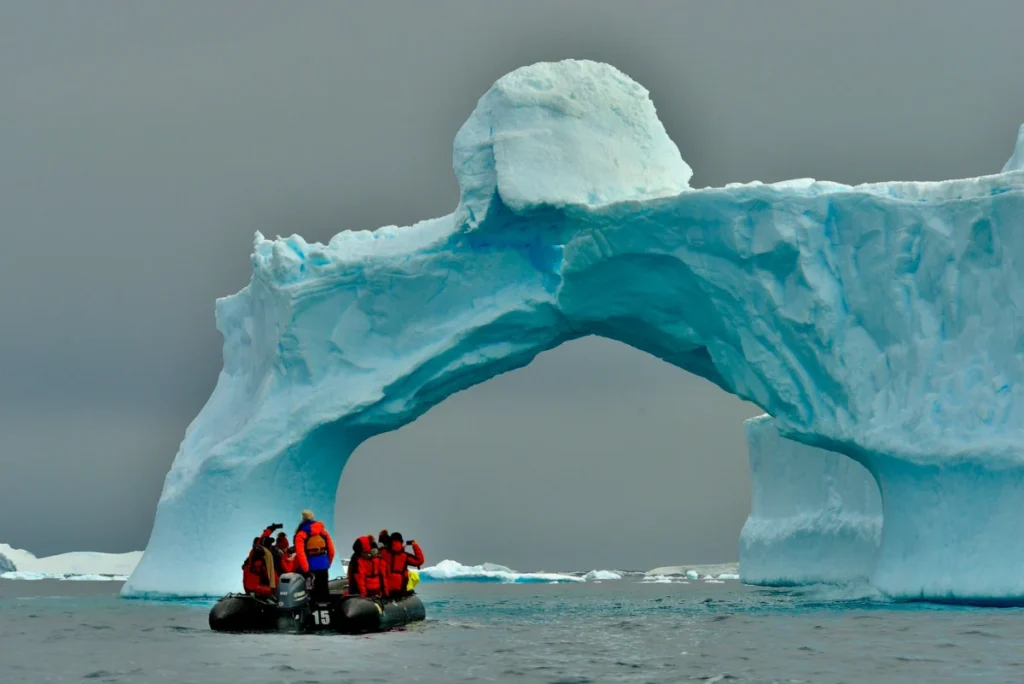
Antarctica, once the exclusive domain of hardened scientists, elite mountaineers, and a handful of intrepid explorers, has officially transitioned into a mainstream bucket-list destination that a rapidly growing number of travelers are ticking off their ultimate travel lists. As remote, ultra-exclusive trips become increasingly easier to book and wealthy travelers continually chase rarer, more remote experiences, the travel industry has rushed to accommodate the pent-up market appetite. To meet this unprecedented surge in demand, expedition operators have rapidly expanded their fleets, adding sophisticated new ships designed to navigate the treacherous Southern Ocean. However, even as luxury vessels multiply across the horizon, some veteran polar guides and industry insiders warn that the specialized workforce required to safely manage these voyages simply hasn’t kept pace.
The scale of this tourism explosion is staggering. Back in the early 1990s, the White Continent was visited by a modest cohort of roughly 8,000 tourists each season. Decades later, that figure has exploded exponentially. According to data compiled and reported by the International Association of Antarctica Tour Operators (IAATO), tourist arrivals soared to approximately 122,000 during the 2023–2024 season. If visitor numbers continue to grow at their current, relentless trajectory, long-term industry forecasts chart a near-fourfold increase over the span of just ten years. Projections indicate that the destination could witness upwards of 450,000 visitors by the 2033–2034 season, fundamentally transforming the geopolitical, environmental, and logistical realities of operating in one of the most fragile ecosystems on Earth.
Naturally, cruise lines and maritime operators have expanded their fleets to capture this booming demand. Major players in the expedition cruise sector have invested heavily in polar-class tonnage over recent years. For instance, Lindblad Expeditions operated two dedicated polar ships in 2019, while simultaneously having two more under construction to support its expanding footprint; both of those newly built vessels have since entered active service, carrying eager passengers into the icy wilderness. Similarly, luxury cruise operator Viking currently features two specialized expedition ships suitable for the demanding conditions of the polar regions, according to its corporate filings, alongside an additional two vessels currently on order to bolster its high-end adventure portfolio.
How the Gap Opened
The seeds for this vast fleet expansion were largely planted before the global disruption of the Covid-19 pandemic, a period when cruise lines across the board were capitalizing on an unprecedented wave of luxury travel spending and high consumer confidence in experiential tourism. Many of those ships were commissioned years ago, reflecting a pre-pandemic economic reality where future growth projections seemed virtually boundless. When shipyards finally delivered these multi-million-dollar vessels following pandemic-related delays, they entered a transformed travel market characterized by fierce competition, high net-worth consumers eager to spend on once-in-a-lifetime journeys, and an overwhelming volume of bookings.
Yet, while shipbuilders could deliver advanced naval architecture and state-of-the-art onboard amenities, cultivating the specialized human capital required for safe and educational polar navigation proved to be a far more complex challenge. Operating a vessel in Antarctic waters demands an elite tier of maritime expertise, including ice navigators, seasoned expedition leaders, marine mammal specialists, kayak guides, and wilderness safety officers who understand the unpredictable and often perilous nature of the Southern Ocean. As Jonathan Zaccaria, a seasoned industry professional, points out, the rapid scaling of physical assets occurred at a pace that the recruitment, training, and retention pipeline for veteran polar personnel simply could not match.
The widening gap between fleet capacity and trained manpower has sparked quiet conversations within the polar tourism community regarding safety, environmental stewardship, and the preservation of the visitor experience. Bringing a ship to Antarctica is vastly different from operating a standard Caribbean or Mediterranean cruise. The environment is unforgiving, weather systems can shift violently in a matter of hours, and infrastructure on land is virtually nonexistent. Every shore landing requires meticulous planning, strict adherence to IAATO environmental guidelines, and constant monitoring by experienced staff to ensure that tourists do not disturb native wildlife, trample fragile vegetation, or jeopardize their own safety around calving glaciers and unpredictable marine predators.
As the industry looks ahead toward the projected influx of hundreds of thousands of annual visitors over the coming decade, the primary bottleneck for sustainable growth may no longer be the availability of ships, but rather the people qualified to steer them. While travelers continue to book their passages in record numbers, eager to photograph towering icebergs and colonies of penguins from the decks of modern luxury liners, expedition operators face the mounting task of ensuring that their workforce expands proportionately—safeguarding both the travelers and the pristine, remote environment that draws them to the bottom of the world.
Related News