How Narrowbody Jets Transformed Premium Travel: A Look at Five Key Airbus A321neo and A321LR Routes with Lie-Flat Business Class Seats
Article Editorial Team
For decades, the luxury of a fully lie-flat business class seat on a long-haul flight was the exclusive domain of widebody aircraft. Travelers accustomed to crossing oceans or continents expected twin-aisle jets equipped with spacious cabins, large galleys, and sprawling premium sections. That long-standing aviation norm shifted on June 15, 2014, when JetBlue Airways introduced its Mint product on a single domestic route linking John F. Kennedy International Airport (JFK) and Los Angeles International Airport (LAX).
Operating a single-aisle Airbus A321 equipped with premium lie-flat beds in the front cabin, JetBlue disrupted a transcontinental market where established legacy carriers like American Airlines, Delta Air Lines, and United Airlines routinely flew narrowbody aircraft featuring standard recliner seats at high premium prices. By installing flat-bed suites on a single-aisle plane, JetBlue fundamentally redefined passenger expectations for short- and medium-haul premium travel.
A decade later, the evolution of the Airbus A321neo and its extended-range derivatives, such as the A321LR, has pushed lie-flat seating far beyond domestic transcontinental corridors, taking them deep into transatlantic airspace. This technological leap has been made possible by dramatic advancements in aircraft range and fuel efficiency. An Airbus A321LR can comfortably reach London from New York, enabling narrowbody aircraft to compete directly with widebody giants on routes that were once entirely closed to single-aisle equipment. Seat manufacturers have kept pace with these aeronautical developments, outfitting these smaller planes with sophisticated products like the Thompson VantageSOLO, which features private suites, closing doors, and direct aisle access for every single passenger.
The roster of airlines utilizing these aircraft for long-haul premium travel is an unusually diverse group. A prominent US low-cost carrier operates the highest volume of A321LR transatlantic routes in the industry. A boutique, all-business-class carrier flies the aircraft type equipped with 76 flat beds and no economy cabin whatsoever. Meanwhile, two European flag carriers utilize the versatile jet to launch and sustain thinner North American routes that lack the passenger volume to support a traditional widebody.
New York-JFK – Los Angeles: Where Lie-Flat on the A321 Started
When JetBlue launched its Mint service on June 15, 2014, between New York John F. Kennedy International Airport (JFK) and Los Angeles International Airport (LAX), the transcontinental market provided an ideal proving ground. Legacy competitors were charging high premium fares for standard domestic recliners on the same transcontinental city pair. JetBlue countered this status quo by offering fully flat beds and a vastly elevated overall onboard product. The competitive ripple effects quickly forced a transformation of premium transcontinental flying across all major US network carriers.
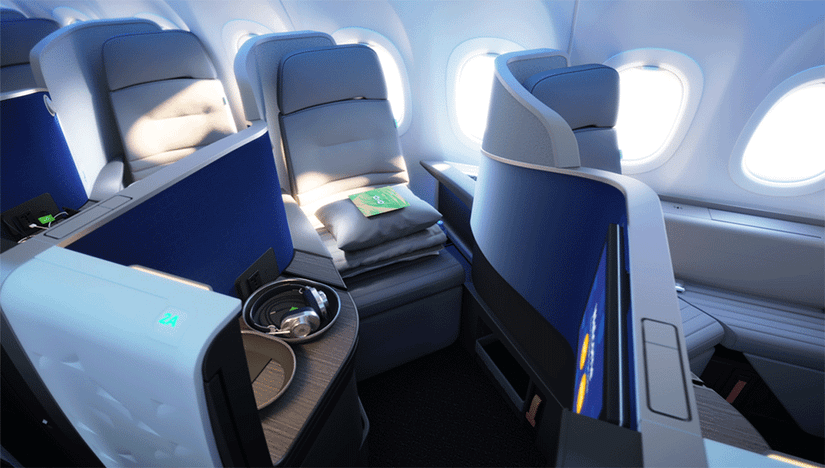
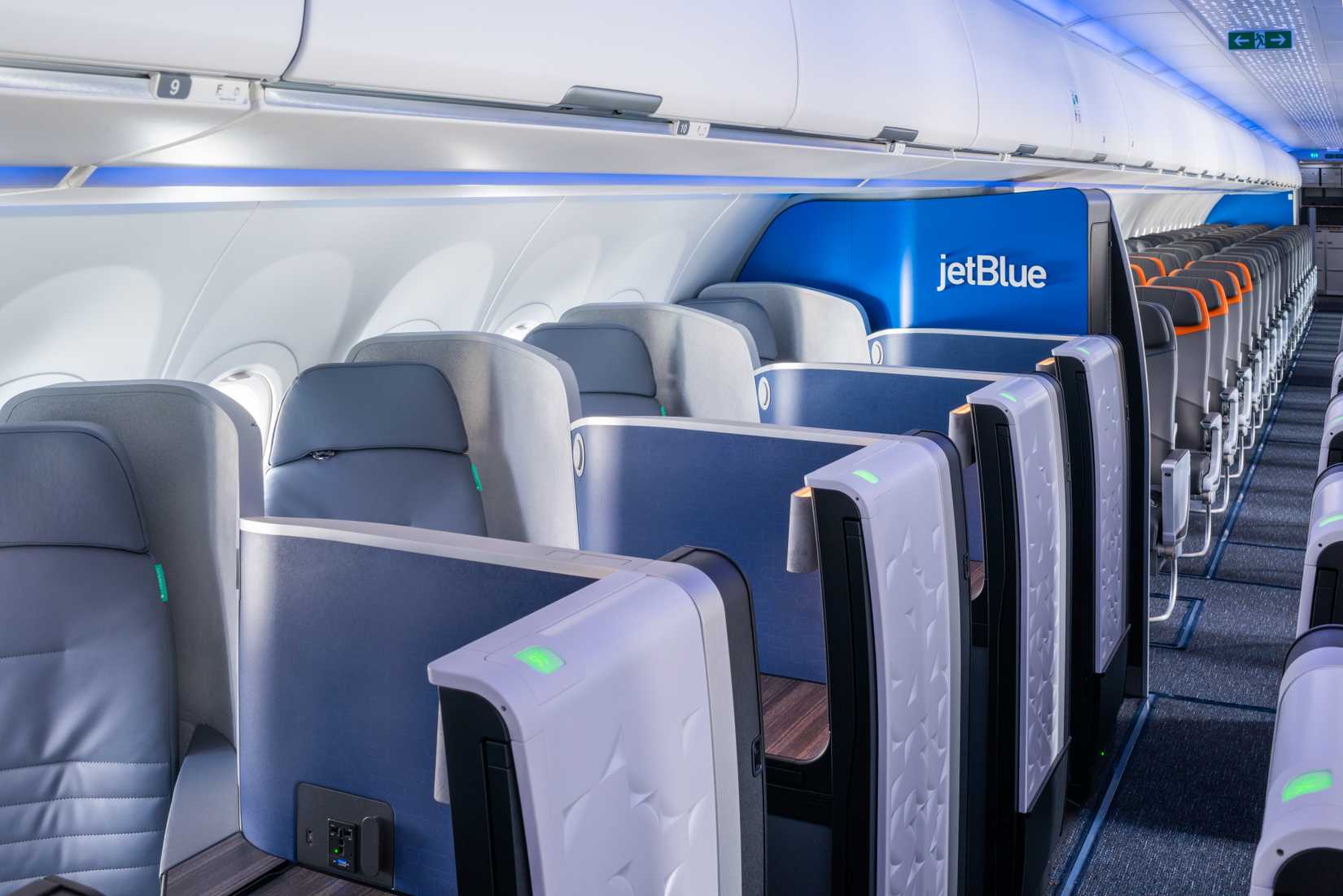
The modern onboard product found on JetBlue’s A321neo represents a significant leap forward from the original 2014 configuration. The aircraft accommodates 16 Mint seats, consisting of 14 Mint Suites and two Mint Studios, laid out in a 1-1 configuration that guarantees direct aisle access for every traveler. JetBlue has emphasized that every Mint seat on its A321neo fleet operates as a private suite equipped with a closing door and converts into a fully lie-flat bed. These beds feature Tuft & Needle adaptive foam cushions complemented by custom-designed pillows and comforters.

The two Mint Studios located at the very front of the cabin offer an even more expansive experience. JetBlue highlights that the Studio features what is believed to be the largest television screen offered by any US carrier at 22 inches, along with a mirrored vanity, supplementary storage space, and an accompanying guest seat and table configuration that allows a second Mint passenger to visit during flight. Industry reviews have measured the Studio bed at just over 82 inches in length when fully extended into lie-flat mode, making it one of the longest beds available on any domestic US airline service. When booking, passengers must pay close attention to the specific aircraft type, as JetBlue’s older A321 Classic aircraft equipped with Mint also feature 16 premium seats, but utilize a different layout that includes only four suites with doors alongside alternating rows in a 2-2 configuration.
New York-JFK – London Heathrow: The Same Seat, 3,000 Miles Further
The Airbus A321LR serves as a long-range derivative of the A321neo, providing carriers like JetBlue with the aerodynamic capability to reliably operate a narrowbody aircraft across the Atlantic Ocean. In this transatlantic configuration, the aircraft carries 24 Mint seats, comprising 22 Mint Suites and two Mint Studios, maintaining the same spacious 1-1 layout found on the domestic variant. Because JetBlue utilizes the Thompson VantageSOLO seat across both fleets, a passenger traveling from New York to Los Angeles experiences virtually the same physical product as a traveler flying from JFK to London Heathrow Airport.
JetBlue maintains a robust schedule across the Atlantic, serving Heathrow multiple times daily from JFK during the winter season, alongside services linking JFK to Paris and Boston Logan International Airport to both London and Paris. The airline’s broader European network also reaches cities such as Amsterdam, Dublin, and Edinburgh from New York and Boston, complemented by seasonal additions like Madrid and Milan from Boston. This footprint represents a larger portfolio of A321LR transatlantic routes than any other competing airline operates—a remarkable achievement for a carrier that did not operate a single transatlantic flight prior to 2021.

This aircraft fundamentally alters the economics of route planning. A widebody airliner crossing the Atlantic typically requires robust passenger demand capable of filling 250 or more seats to turn a profit. In contrast, an A321LR in JetBlue’s layout carries 138 passengers total, with 24 in the premium cabin, significantly lowering the financial threshold required for route profitability. This reduction in capacity explains why the aircraft type has successfully opened nonstop city pairs connecting secondary European markets with the US East Coast that airlines previously ignored. For travelers, this shift also means that a business class cabin on a transatlantic flight may house only 24 seats rather than 60, directly impacting seat availability and frequent flyer award space.
Newark – Paris Orly: 76 Lie-Flat Seats and Nothing Else
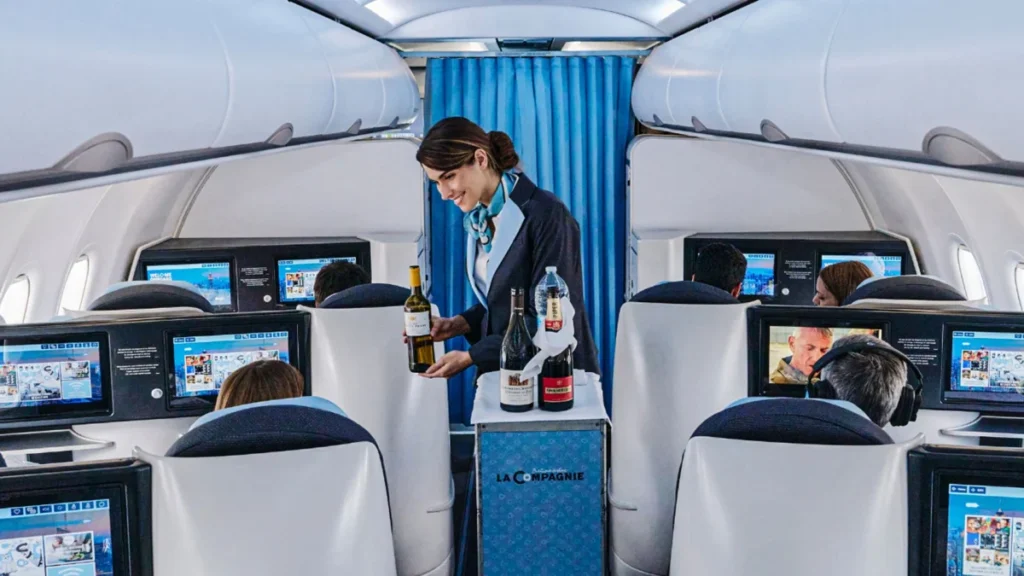
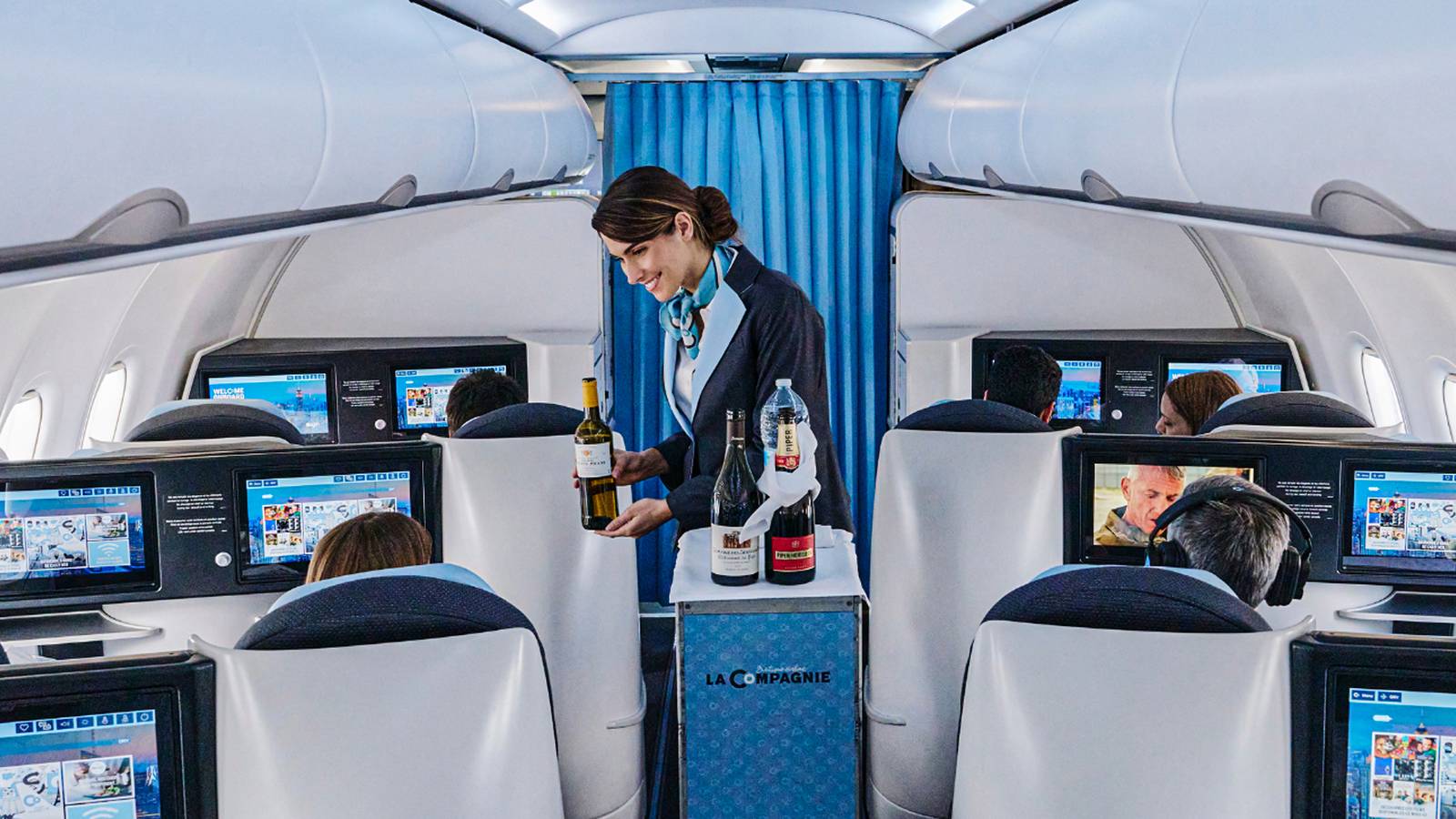
La Compagnie approaches single-aisle transatlantic travel from a completely different commercial angle, operating an all-business-class model using Airbus A321neo aircraft configured with 76 lie-flat business class seats and no other cabin classes onboard. The boutique carrier connects Newark Liberty International Airport with Paris Orly Airport as its primary route. Unlike JetBlue’s private suite layout, La Compagnie arranges its seats in a 2-2 configuration. While this layout means not every passenger enjoys direct aisle access, it represents the physical trade-off required to fit 76 full-length flat beds inside the confines of a narrowbody fuselage.
These A321neo aircraft successfully replaced the airline’s older Boeing 757 fleet, delivering a substantial upgrade to the passenger experience. The legacy 757s featured angled-flat seats that reclined to a sloped position rather than a true horizontal surface, whereas the A321neo introduced genuine horizontal flat beds tailored to an airline whose entire business model relies on the premium segment. For an all-business-class carrier, the seat is not simply one cabin among many; it constitutes the entire aircraft and the entirety of the enterprise.

The underlying economic model is what makes this niche operation uniquely sustainable. Industry observers frequently highlight La Compagnie as offering one of the most consistently accessible ways to purchase business class travel across the Atlantic, an approach made viable because the carrier maintains no economy cabin to subsidize and no complex connecting hub network to feed. Every ticket sold represents a premium fare, while the foundational operating costs of a single-aisle narrowbody remain far lower than those of a large widebody aircraft running three or four distinct service tiers. La Compagnie applies this same strategy to seasonal markets, connecting Newark to Milan and Nice during peak travel months when premium leisure demand concentrates heavily.
Lisbon – North America: The Thompson Vantage on the Atlantic
TAP Air Portugal deploys its Airbus A321LR fleet primarily on routes connecting Lisbon Humberto Delgado Airport with various destinations across North America, serving cities in both the United States and Canada. The business class product installed by the Portuguese flag carrier is the Thompson Vantage seat, differing from the VantageSOLO used by JetBlue by utilizing a staggered configuration rather than a strict 1-1 layout where every seat sits directly against the window.
This deployment aligns closely with TAP’s geographical advantages. Situated at the westernmost edge of mainland Europe, Lisbon sits closer to North America than major northern hubs, effectively shortening the Atlantic crossing and bringing several North American markets comfortably within the operational range of the A321LR. This strategic positioning allows TAP to service secondary North American destinations that could never economically support widebody service from deeper interior European bases. This capability underpins the airline’s broader network strategy of positioning its Lisbon hub as an efficient transfer gateway linking the Americas with Europe and beyond.
TAP also utilizes the A321LR on medium- and long-haul routes extending outside North America, operating the aircraft to select destinations in Africa and South America. In these regions, historical and cultural ties generate steady demand that is often too thin to justify deploying a widebody aircraft on a year-round basis. Utilizing a single versatile aircraft family across North American, African, and South American routes from a centralized hub provides TAP with operational flexibility that larger aircraft simply cannot match. For passengers, this means long-haul flights across multiple continents may be operated by narrowbody aircraft featuring intimate business class cabins compared to the carrier’s high-density widebody fleet.
Scandinavia – North America: Three Aircraft Doing Transatlantic Work
Scandinavian Airlines operates a very limited fleet of three Airbus A321LRs equipped with Thompson Vantage business class seats, deploying them selectively on routes connecting Scandinavia with North America. Representing the smallest fleet subset on the transatlantic narrowbody market, this scarcity heavily dictates how the aircraft are utilized. Three airframes cannot sustain a comprehensive network schedule, meaning the aircraft appear on specific routes and schedules rather than forming a widespread operational standard across the airline’s long-haul network.
The strategic rationale driving SAS closely mirrors the approach taken by TAP Air Portugal. Scandinavian population centers generate consistent demand for direct transatlantic connectivity to North America, but individual city pairs frequently lack the sustained volume required to fill a widebody airliner throughout the entire year. The A321LR effectively lowers the economic viability threshold for a nonstop route, allowing SAS to serve specific markets that would otherwise force travelers to connect through larger European hub airports. The inclusion of a lie-flat business cabin ensures these thinner routes remain commercially attractive to premium corporate and leisure travelers, who drive the financial viability of long-haul aviation.
The modest fleet size also mirrors the corporate transitions experienced by SAS in recent years, including restructuring proceedings and a shift in alliance partnerships that brought Air France-KLM in as a major shareholder. Maintaining just three A321LRs represents a targeted commitment rather than a wholesale bet on narrowbody long-haul operations, with the aircraft serving as specialized tools for specific regional routes. For passengers booking travel to North America with SAS, itineraries may feature either a spacious widebody with a large premium cabin or a narrowbody featuring a much smaller business section, varying by the specific route and day of operation.
Related News