FAA Orders Nationwide Ground Stop for All Departing U.S. Flights Following Critical Communication Failure
Article Editorial Team
The Federal Aviation Administration halted all departing flights nationwide Friday after a widespread communication issue crippled the country’s Air Route Traffic Control Centers, the vital high-altitude air traffic control facilities that manage commercial and private aviation between metropolitan airports.
Transportation Secretary Sean Duffy announced the sweeping emergency measure in a public statement posted to social media, confirming that the federal government was forced to take immediate action to protect the safety of the national airspace. The disruption rapidly rippled through every major commercial aviation hub across the United States, bringing operations to a sudden and unexpected standstill during one of the busiest travel periods of the week.
The Federal Aviation Administration “issued a nationwide ground stop for all U.S. airports following a communication issue impacting all Air Route Traffic Control Centers,” Duffy said in a post on X. “FAA technicians are investigating the issue. We will provide immediate updates as we have them.”
According to the aviation regulatory agency, the directive meant that all departing flights across the country would be immediately grounded at their gates, while inbound international flights already en route to the United States would be managed on a case-by-case basis by regional air traffic controllers working to safely vector them to their destinations.
The emergency command center alert issued to aviation operators underscored the gravity of the situation, leaving no room for operational ambiguity. “Due to extraordinary circumstances and for reasons of safety. Attention all aircraft operators by order of the Federal Aviation Administration command center all airports are ground stopped,” the official agency alert stated.
The sudden nationwide freeze highlights the immense technological reliance of the modern American transportation network, particularly the complex web of communication systems that allows high-altitude control centers to coordinate high-speed air traffic safely across multiple state lines and aviation sectors. Air Route Traffic Control Centers serve as the backbone of the National Airspace System, handling flights once they climb out of the immediate terminal airspace surrounding individual airports and cruise at higher altitudes toward their destinations. When communication links within these critical nerve centers fail, the fundamental ability of controllers to track aircraft positions, issue safety advisories, and maintain safe separation standards is severely compromised.
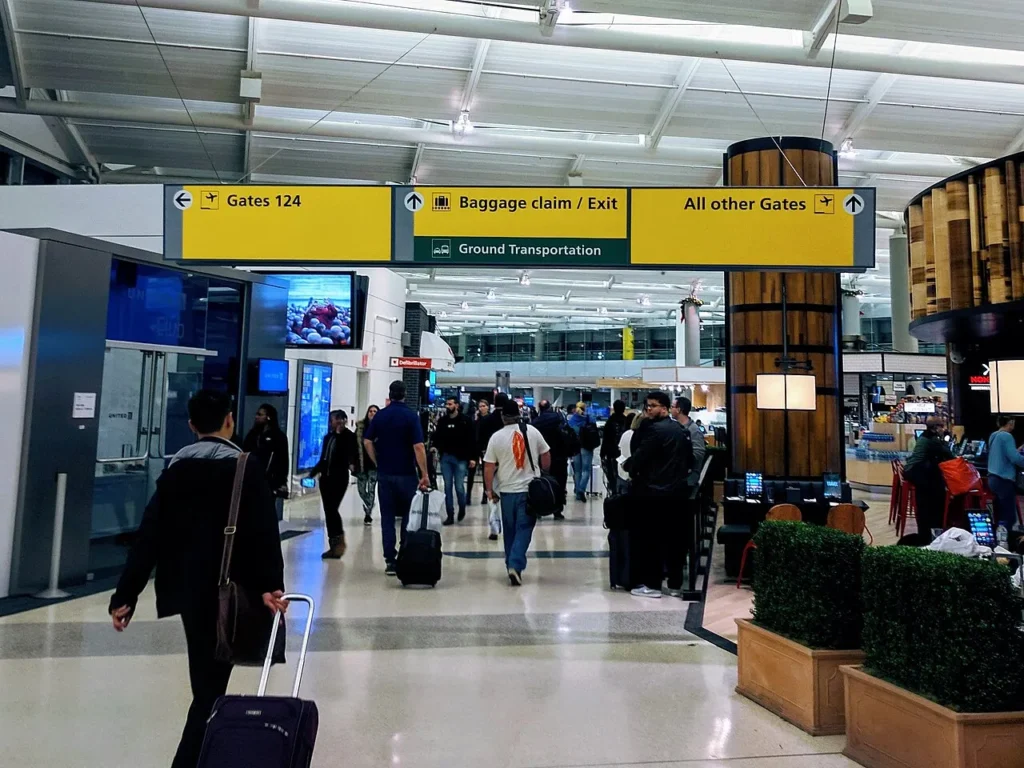
In the immediate wake of the announcement, chaos and confusion gripped terminals from coast to coast, including major facilities like Newark Liberty International Airport, where travelers encountered sudden informational blackouts on departure boards, grounded aircraft sitting idly on tarmacs, and rapidly growing queues stretching across ticketing and customer service counters. Passengers were left waiting for further guidance as gate agents and airline representatives scrambled to interpret the rapidly evolving federal orders and coordinate with airline operations centers headquartered across the country.
Aviation experts and safety analysts noted that a nationwide ground stop of this magnitude is an extraordinarily rare event, typically reserved for catastrophic national security emergencies, unprecedented weather phenomena, or critical infrastructure failures affecting core federal networks. Because the communication failure impacted all Air Route Traffic Control Centers simultaneously rather than being isolated to a single regional facility, the Federal Aviation Administration was left with virtually no alternative but to order a complete standstill to prevent any potential safety gaps while technical teams worked to isolate the root cause of the system failure.
As technical specialists worked around the clock to diagnose and resolve the underlying communication anomaly, federal transportation officials emphasized that safety remained the absolute priority guiding every decision. Airlines braced for massive cascading scheduling delays that would inevitably impact domestic and international flight networks for hours, if not days, even after the ground stop was eventually lifted and communication systems were restored to full operational capacity.
Related News