NASA’s Voyager 1 Space Probe Officially Reaches One Light-Day Away From Earth
Article Editorial Team
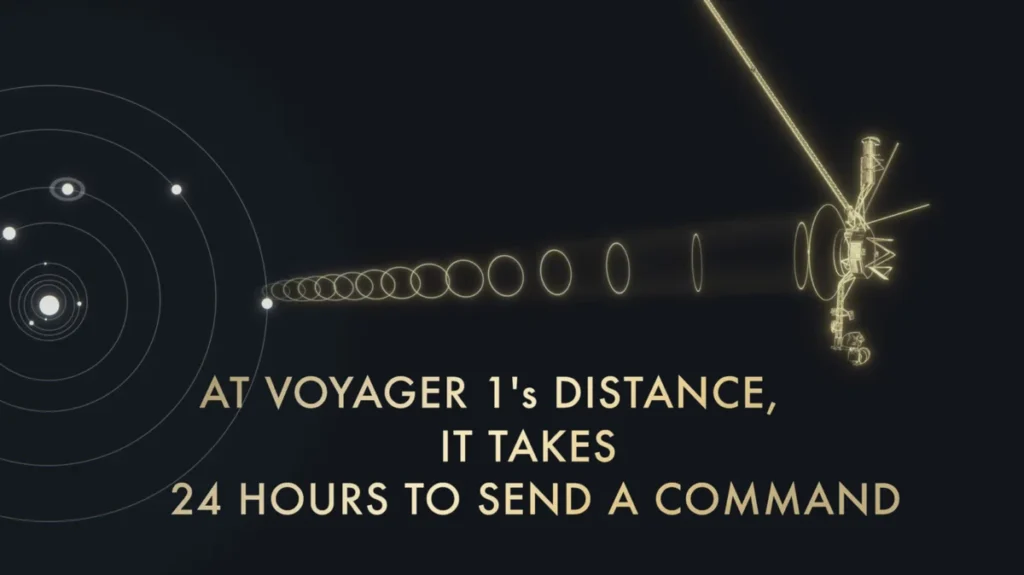
After traveling continuously for more than 49 years, NASA’s legendary Voyager 1 space probe has achieved yet another staggering milestone in its historic journey through the cosmos. According to calculations and estimates from the United States space agency, Voyager 1 has reached a distance of precisely one light-day away from Earth, cementing its status as the most distant human-made object in history.
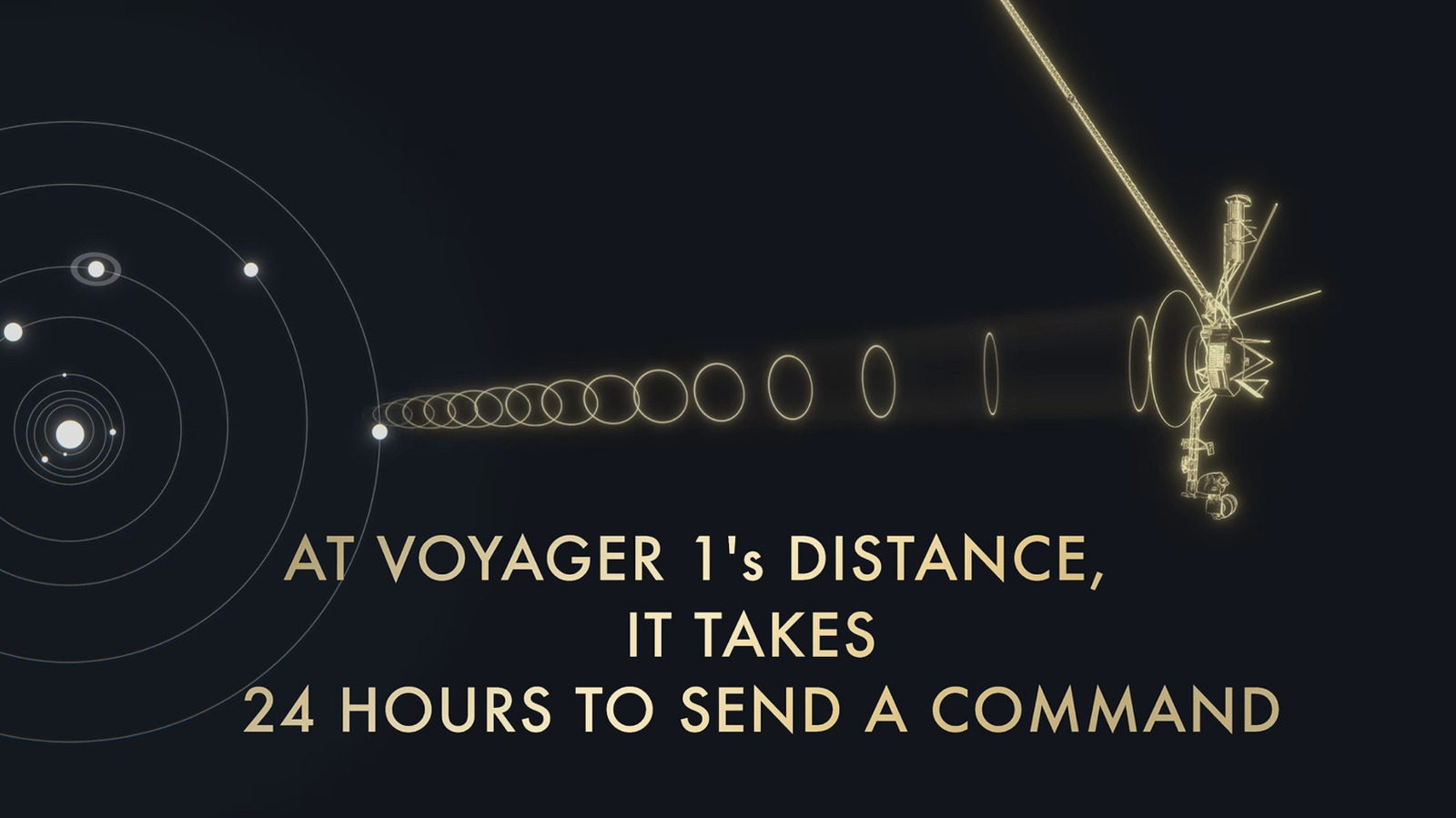
NASA expected the spacecraft to officially hit this monumental threshold at 5:16:07 AM Eastern time. In the vast architecture of space measurement, one light-day represents the absolute distance that a single particle of light can travel through a vacuum within a span of twenty-four hours. Because radio waves and communication signals travel at the speed of light, this milestone carries profound operational implications for the mission control team on Earth. It now takes a full twenty-four hours for a command sent from our planet to reach the aging probe, and another twenty-four hours for any acknowledgment or telemetry message to travel back. Consequently, NASA engineers and mission managers must wait until the return signal arrives to verify the exact timing of the milestone.
"It’s never happened before, and it may never happen again—it’s that kind of extraordinary," remarked Voyager mission manager Kareem Badaruddin, capturing the awe surrounding the achievement.
The saga of Voyager 1 began in the late summer of 1977, an era when the space program was aggressively expanding humanity’s reach to study not only our immediate solar system but also the mysterious realms of interstellar space. Launched on September 5, 1977—just sixteen days after its twin spacecraft, Voyager 2—Voyager 1 quickly surpassed expectations. While both probes were designed primarily to explore the outer gas giants of our solar system, their trajectories and ultimate fates diverged, with Voyager 1 pushing further and faster into the great unknown.
Over the decades, Voyager 1 has rewritten textbooks and shattered records. In 2012, the spacecraft officially crossed the heliopause, leaving behind the protective bubble of the Sun’s magnetic field and solar wind to enter interstellar space, the vast region residing between star systems. That monumental transition made it the first human-made object to venture into the space between the stars, a feat that Voyager 2 would not replicate until years later.
Maintaining a spacecraft that has been operational for nearly five decades is no small feat, and Voyager 1’s journey has been fraught with challenges. The probe has faced various technical glitches as its hardware ages in the harsh, radiation-filled environment of deep space. To keep the mission alive despite diminishing supplies of plutonium in its nuclear-powered generators, NASA engineers have had to make difficult choices, systematically shutting down several secondary instruments and non-essential features over the years. Yet, despite these hardships, the resilient probe has repeatedly bounced back from technical crises, continuing its relentless voyage across the void.
Following its progression through space for 49 years, two months, and eleven days, Voyager 1 is now calculated to be approximately 16 billion miles away from our home planet. Yet, despite covering a distance that boggles the human imagination, its journey is far from over. The spacecraft is currently carving a trajectory that will eventually lead it in the general direction of Gliese 445, a red dwarf star located roughly 17 light-years away from Earth within the constellation Ursa Minor.
In the grand scale of interstellar distances, a gap of 17 light-years is considered relatively close, but the human timeline is vastly different from the timeline of the cosmos. None of the scientists, engineers, or enthusiasts alive today will be around to witness the encounter. Current projections indicate that Voyager 1 will pass within roughly 1.7 light-years of Gliese 445, continuing its silent drift through the galaxy long after all trace of human civilization on Earth has evolved into something entirely unrecognizable.
Related News