Apple Launches Health AI Study App to Make Medical Tools More User-Friendly
Article Editorial Team
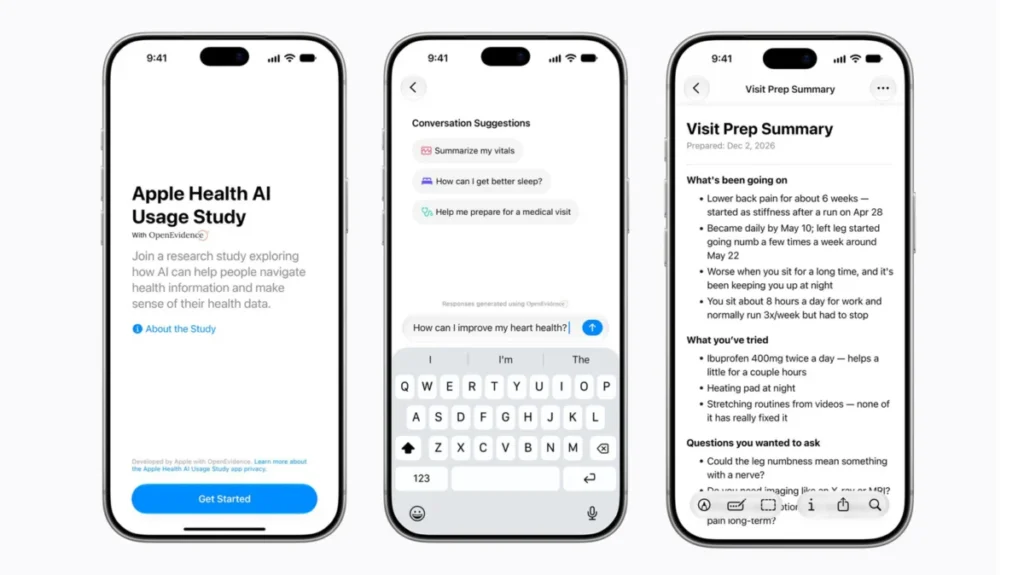
Apple has officially unveiled a significant new research initiative aimed at understanding how everyday people interact with artificial intelligence-driven health tools, with the ultimate objective of making these technologies more effective, accessible, and user-friendly. In a major step toward expanding its presence in digital health and clinical technology, the company is launching the Health AI Usage Study. This comprehensive research undertaking is being conducted in close partnership with OpenEvidence, a sophisticated clinical AI platform widely utilized by healthcare professionals to draw reliable medical data from authoritative, peer-reviewed sources such as The New England Journal of Medicine.
At the core of this new research effort is a dedicated application that is now available for download on the App Store. Apple has set an ambitious participation target, aiming to recruit up to 200,000 individuals to take part in the study. To ensure the integrity of the data and compliance with study parameters, prospective participants must meet specific eligibility requirements: they must reside within the United States, be at least 21 years of age, and own an iPhone 15 Pro or a later device operating on iOS 26 or higher. Furthermore, participants are given the agency to choose whether or not they wish to share specific Apple HealthKit data—including metrics related to daily activity levels, overall sleep quality, and clinical lab results—to provide additional contextual background regarding their personal health profiles.
Once enrolled in the study, participants will use the specialized application to pose various medical and wellness questions through text-based prompts. Examples of these queries include questions such as "how can I improve my heart health," mirroring the user experience illustrated in promotional screenshots released by the company. In return, users will receive comprehensive responses designed to be clear, digestible, and free of overly dense clinical jargon. Crucially, these answers will be accompanied by direct links to authoritative, peer-reviewed clinical sources, ensuring transparency and reliability. Apple’s primary goal in collecting this user interaction data is to better understand how individuals interpret medical information, allowing the company and its collaborators to develop future AI health tools that deliver relevant, easy-to-understand, and genuinely actionable health insights.
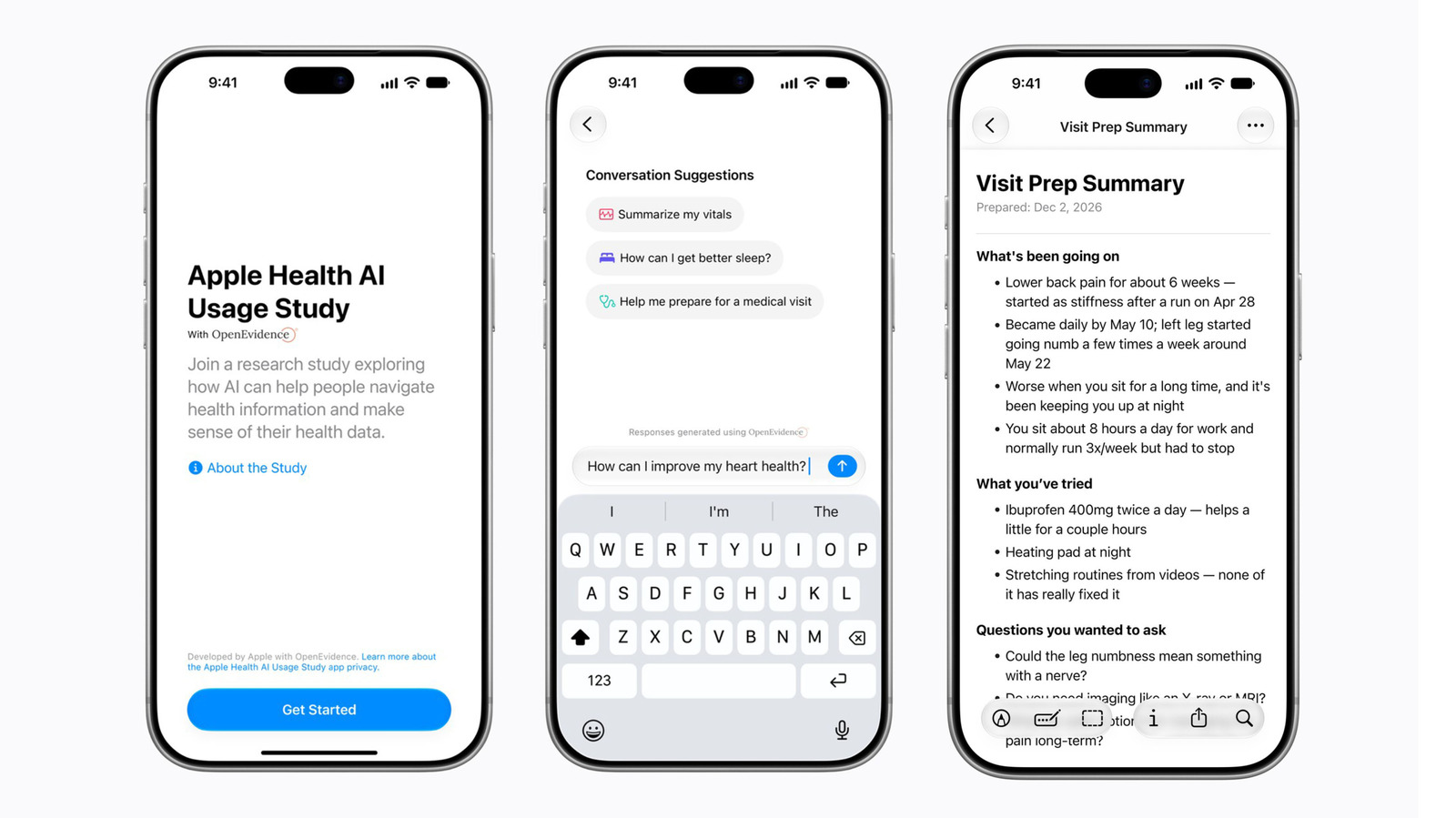
Addressing potential privacy concerns that frequently accompany health-related technologies, Apple has emphasized that the new research application operates entirely independently from the company’s broader ecosystem features. The app is not integrated with Siri or Apple Intelligence. Additionally, Apple has firmly stated that all participant data collected through the study will remain strictly confidential and will not be utilized to train the company’s artificial intelligence models. This separation highlights Apple’s emphasis on user privacy as it explores the intersection of consumer technology and clinical research.
The initiative has also drawn commentary from Apple’s executive leadership regarding the philosophy guiding the company’s health technology ventures. Sumbul Desai, MD, Apple’s Vice President of Health and Fitness, emphasized the necessity of balancing technological advancement with medical integrity in a formal statement. Responsible innovation must be rooted firmly in scientific rigor and clinical grounding, according to Dr. Desai. She noted that the insights gathered from this extensive research study will contribute
meaningfully to the broader scientific conversation surrounding digital health. Furthermore, she expressed confidence that as technological capabilities continue to evolve, initiatives of this nature will help ensure that developers consistently build trusted tools capable of genuinely supporting individuals at every stage of their personal health journeys.
Related News