Beyond the Pink Wave: Why Sommeliers Are Championing Provence’s Hidden Reds and Whites
Article Editorial Team
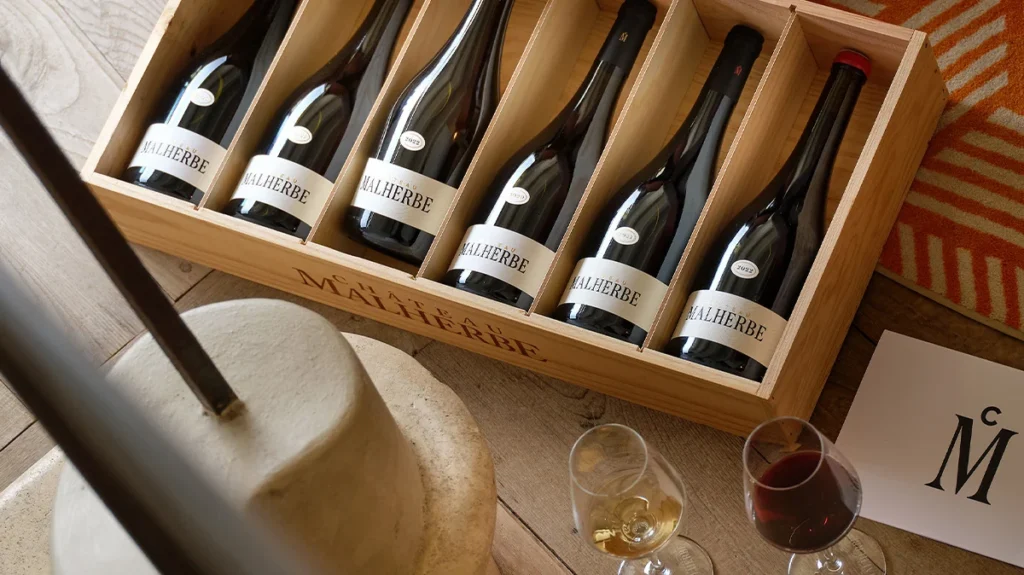
When wine enthusiasts and diners gather around a table to discuss preferences, the conversation almost invariably follows a predictable path. According to Tracy Latimer, lead sommelier at Fleurette, a celebrated Mediterranean-French restaurant in San Diego, visitors rarely kick off the dialogue with an eager request for a bottle from the south of France.
“Almost no one begins the conversation with, ‘Let’s drink a wine from Provence!’ when I start asking what guests like about wine,” Latimer says. In her experience, unless a sommelier actively recommends selections from off-the-beaten-path regions, guests simply do not purchase them.
The subject at hand is the red and white wine of Provence—a surprisingly diverse wine-growing region that has long suffered from its own immense commercial success. To the global market, Provence is synonymous with pale, sun-drenched rosé, and virtually nothing else. Yet, making rosé inherently requires red grapes, and in some instances, a minor infusion of white varieties. Despite this, the overwhelming economic realities of the marketplace make it exceedingly difficult for many regional wineries to produce anything other than the exact style being bottled in massive quantities next door.
Even amid the ongoing, worldwide rosé boom, a select handful of dedicated wineries scattered across various Provençal AOCs have steadfastly maintained a commitment to crafting high-quality red and white wines. These bottles are quietly prized by discerning collectors and top-tier sommeliers who recognize the region’s deeper viticultural identity. Out of a sprawling list comprising more than 600 selections at Fleurette, Latimer proudly pours 30 distinct options that are explicitly not rosé from Provençal appellations.
Among those standouts is Domaine Hauvette Cornaline Rouge, an Alpilles IGP Grenache blend sourced from the sun-drenched stretch of land nestled between Avignon and Arles.
“The most important thing about the Cornaline is its deliciousness factor,” Latimer explains, breaking down its complex profile. “Take all of the pretty parts of southern Rhône wines—the garrigue, the flowers, and the deep ripe fruit—and add a touch of baked clay and the dustiness of a gravel drive in summer.”
Describing the pour as “focused and precise like a violin solo,” she emphasizes that it is a wine substantial enough to satisfy drinkers who instinctively crave big, bold reds, yet lithe and lifted enough to pair seamlessly with coastal cuisine.
When asked whether it would simply be easier to surrender to market pressures and pivot entirely toward profitable rosé production, Adélie Ferrari, business development manager of Château Malherbe in Côtes de Provence, offers a pragmatic perspective.

“Economically, it would make sense,” Ferrari admits. “Rosé sells quickly and within a season. Our whites and reds need months in barrel, time in bottle, and wine lovers willing to be curious. For a family estate, that is a real commitment.”
While rosé accounts for a staggering 90 percent of the total production within the AOC Côtes de Provence, it makes up a modest 20 percent of the wines crafted at Château Malherbe. The remainder is divided evenly between crisp whites fashioned from Rolle—the local designation for Vermentino—Sémillon, and Ugni Blanc, alongside structured reds crafted from Grenache, Cinsault, Mourvèdre, and Syrah.
“When one style is that successful, it ends up defining the whole region,” Ferrari observes. “But Provence has always made white and red wines, especially along the coast, where these varieties have been grown for generations. They never disappeared. They were just overshadowed.”
As a proud member of Malherbe’s fifth generation, Ferrari holds a deep affection for the estate’s premier cuvées. Among them are Château Malherbe Louis Ferrari, a white wine named in honor of her grandfather, and Château Malherbe Madame Ferrari, a structured red dedicated to her grandmother, Mireille, who successfully transitioned the family enterprise from simple grape-growing to estate winemaking.
The Louis Ferrari is a sophisticated blend of Rolle and Sémillon harvested from one of the estate’s finest plots, where both grape varieties are planted side by side. Meanwhile, Madame Ferrari draws its character from ancient vines, including Grenache planted around 1940 and Mourvèdre vines that have flourished for more than 60 years. Older vines naturally produce smaller yields and inherent balance, meaning the wine’s rich concentration is born directly in the vineyard rather than through heavy-handed extraction techniques in the cellar.
Rory Pugh, senior wine and beverage director for Jean-Georges Management—which operates high-end restaurants globally, including the famed Jean-Georges in New York City—features both of these remarkable estate wines on his list. His broader program includes roughly a dozen red and white wines from Provence, a region he notes carries significant culinary weight with his clientele.
“While they associate it with rosé, they are thrilled to explore new styles,” Pugh notes.
This sentiment is echoed across the winemaking community in southern France. Daniel Ravier, director and winemaker at the renowned Domaine Tempier in Bandol, believes that limiting the region’s output would stifle its true voice.
“Making only rosé would be boring, and both white and red have so much to say,” Ravier asserts.

While nearly half of Domaine Tempier’s total production is dedicated to rosé and a small fraction to white, the balance is divided among three highly sought-after reds: La Migoua, La Tourtine, and Lulu & Lucien. Named in honor of the domain’s late proprietors, Lulu and Lucien Peyraud—whose sons now own and operate the estate—these bottles are crafted from Mourvèdre, Grenache, Cinsault, Carignan, and Syrah grown across organically and biodynamically farmed vineyards. Today, they stand firmly among the most coveted wines in the entire region.
Other benchmark producers well worth watching include Château Simone from the tiny AOC Palette, Château Pradeaux in Bandol, Domaine de Trevallon in the IGP Alpilles, and its esteemed neighbor, Domaine Fontchâteau, where René Milan is rapidly emerging as one of the most celebrated winemakers in the south of France.
At Bavel, an upscale Middle Eastern restaurant located in Los Angeles, wine director Claudia Rosellini curates an eclectic, thoughtfully selected assortment of Provençal whites and reds. Her list features selections like Domaine Hauvette Clairette, a white wine crafted from an ancient, historic local variety. An ardent admirer of winemaker Dominique Hauvette’s strict biodynamic farming methods and unwavering dedication to land health, Rosellini points to the deep sense of place found in the glass.
“Her wines are rooted in the wild garrigue and limestone landscape of the Alpilles, which feels closely connected to our cooking, with its aromatic seeds, spices, and fresh green herbs,” Rosellini says. “I love the idea that the wine and food speak the same Mediterranean language.”
Rosellini observes that despite the relentless cultural emphasis on Provençal rosé, restaurant guests are routinely surprised and delighted to encounter a serious, structured white wine from the exact same terroir. That single discovery, she notes, frequently sparks a broader curiosity about what else Provence has to offer beyond the standard summer pour.
Ultimately, the most compelling takeaway for wine lovers is that these overlooked bottles are not merely interesting footnotes to a regional trend—they are exceptional wines in their own right. While no wine drinker requires convincing that the red and white offerings of the nearby Rhône Valley rank among the finest in the world, crossing southward shifts the conversation in ways that reward the adventurous palate.
Even for producers deeply rooted in the region’s dominant trade, personal habits reveal a telling preference. Ferrari and her family certainly appreciate a fine glass of rosé, but when it comes to their day-to-day appreciation of wine, she notes a different reality.
“It would feel strange to devote our lives to wines we don’t open ourselves,” Ferrari says. “Most evenings, we drink white or red.”
Related News