Beyond the Generation Phase: Why Commercial Marketing Demands More Than Just AI Output
Article Editorial Team
Artificial intelligence has fundamentally changed the speed at which modern marketing teams can conceive and produce visual ideas. Where campaign concepts once required days or weeks of manual brainstorming, sketching, and coordination, designers can now explore multiple directions in a matter of minutes. For organizations operating under constant pressure to publish more content across a growing array of digital channels, this acceleration represents a substantial operational advantage.
However, the rapid and widespread expansion of AI-generated imagery has also exposed a critical distinction in contemporary media production: an image can be visually impressive, highly relevant, and technically sophisticated without necessarily being ready for commercial deployment. Once a graphic moves out of the safe space of internal experimentation and enters a real, public-facing campaign, an entirely new set of strategic questions immediately comes into play. Marketing teams must ask whether the asset can be used with absolute confidence, whether it truly aligns with established brand guidelines, how easily it can be adapted across a multitude of formats, whether its origin is sufficiently clear, and how seamlessly it will sit alongside dozens of other assets in a live campaign.
As visual creation becomes frictionless, these evaluation steps are rapidly becoming the most vital part of the creative pipeline. The overall value of a marketing image is increasingly determined not simply by how quickly it can be synthesized, but by how effectively it can integrate into a rigorous professional workflow.
The Supply of Visual Content Is No Longer the Main Problem
For many years, marketing departments struggled primarily with the sheer constraints of production capacity. Crafting enough imagery to support a robust campaign historically required complex arrangements involving professional photography, graphic design, post-production work, location planning, casting models, and extensive cross-departmental coordination. Even relatively modest promotional pushes consumed significant time and financial resources before a reliable, usable library of assets was finally available.
Traditional stock media libraries reduced part of this heavy burden by giving brands instant access to professional content without forcing them to commission a dedicated production for every minor marketing need. Generative AI has now advanced far beyond that model, empowering teams to produce infinite concepts, variations, and stylistic directions at unprecedented speeds.
The ultimate result of this technological shift is a dramatic reversal of the industry’s historical bottleneck. In many modern enterprises, companies no longer suffer from a shortage of visual options; instead, they suffer from a severe excess of them.
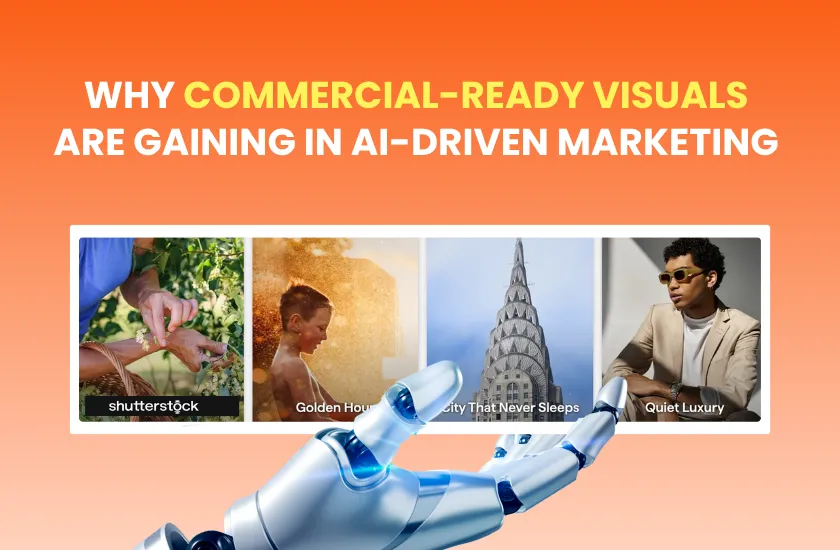
A creative team can now generate dozens of distinct visual concepts for a single campaign in the time it once took to prepare a single preliminary draft. This sudden abundance creates a brand-new operational challenge: deciding which specific assets genuinely deserve to move forward into production. The greater the volume of options a team has at its disposal, the more critical rigorous evaluation, curation, and internal governance become.
Commercial Marketing Has a Higher Threshold Than Experimentation
Internal experimentation within a creative agency or corporate marketing department is inherently forgiving. A concept image only needs to communicate an underlying idea clearly enough for colleagues or stakeholders to understand the general direction. It can be imperfect, temporary, or entirely unsuitable for final public publication.
Commercial campaigns, by contrast, operate under entirely different conditions and face much stricter thresholds.
A visual deployed publicly may appear simultaneously across programmatic advertising networks, global social media platforms, corporate websites, physical sales materials, and regional localization campaigns. Furthermore, it may remain visible to the public eye for months or even years. Consequently, an organization requires far more than basic aesthetic appeal before signing off on an asset.
Before any visual asset enters active production or public distribution, professional teams must assess a variety of underlying factors. These considerations are not arguments against the use of AI-generated content; rather, they simply illustrate why internal visual production and public commercial deployment should never be treated as the exact same phase of work. The ability to create quickly is undeniably valuable, but the ability to deploy assets with absolute confidence is equally important to the health of a brand.
The Meaning of Creative Efficiency Is Changing
Creative efficiency has traditionally been measured primarily through the lens of production time. If an image could be generated or designed in one hour instead of a full day, the workflow was widely assumed to be more efficient.

Generative AI significantly complicates that straightforward calculation.
A modern marketing team might easily generate fifty possible campaign images within a very short operational window. However, the true economic and time cost often emerges much later if those assets require extensive manual review, color correction, format adjustments, or complete replacement due to unforeseen inconsistencies. High output volume does not automatically equate to high operational efficiency.
A far more useful definition of creative efficiency considers the entire path from initial concept all the way through to final commercial deployment. The strongest workflow is not necessarily the one that produces the largest volume of raw assets at the lowest initial cost. Instead, it is the workflow that successfully shepherds suitable, high-quality assets into the market with the least amount of unnecessary friction.
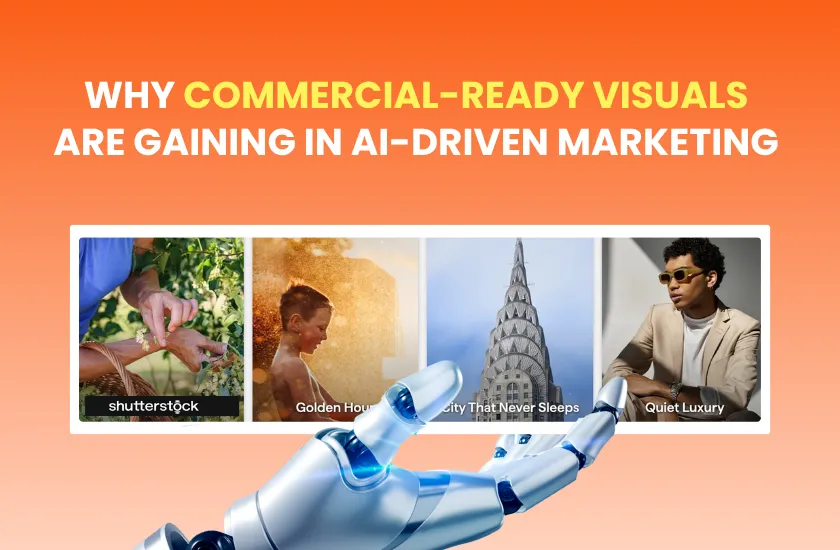
This reality explains why professional stock platforms continue to play an essential role in modern media strategies. Services such as Shutterstock provide massive, carefully managed collections of professional photography, illustrations, vector graphics, and video content built explicitly for commercial use. This grants marketing teams immediate access to source material that can move into a professional workflow much more directly, while AI tools are deployed to accelerate peripheral adaptation and experimentation around that trusted foundation.
AI and Stock Media Are Becoming More Complementary
The rapid rise of generative AI has frequently been framed in industry discourse as a direct and existential challenge to traditional stock photography. Skeptics often ask: if a marketer can generate a custom visual on demand with a simple text prompt, why spend time searching for one that already exists?
That comparison fundamentally overlooks how real creative teams operate in professional environments.

Modern marketing production increasingly relies on a hybrid approach that combines several distinct content sources. A comprehensive global campaign might utilize raw AI-generated concepts during the early planning stages, professional studio photography for core brand visuals, curated stock content for supporting background assets, and AI-assisted editing tools to rapidly format everything for different channels.
This blended methodology reflects the distinct strengths of each production method. Artificial intelligence is exceptionally powerful when teams require rapid ideation, endless iteration, and fast experimentation. Conversely, professional stock content provides pre-vetted, high-quality source material that already exists within a structured, legally sound commercial environment.
The resulting reality is not a binary choice between old tools and new technologies. Instead, it is a sophisticated production model where both elements actively strengthen one another.
Professional Content Can Become a Starting Point Rather Than an Endpoint
The fundamental role of stock content within the creative industry is also undergoing a quiet transformation.
Traditionally, a stock image was treated as the definitive final visual of a campaign. A marketer would select an image, purchase a license, overlay promotional text or corporate branding, and immediately publish it across chosen channels.
Today’s digital production landscape is vastly more flexible and demanding.

A single professionally produced image can now serve as the launching pad for an entire family of derivative marketing assets. It can be reframed dynamically for social media feeds, optimized for vertical mobile placements, integrated seamlessly into video sequences, combined with custom illustrations, or used as the foundational visual style for several different localized campaign formats.
AI-assisted editing expands this creative potential even further. Instead of asking whether an acquired image is already completely perfect for a final placement, creative teams can evaluate whether it provides the correct subject matter, mood, and visual fidelity to serve as a reliable foundation.
This strategic shift grants existing professional content a much longer, more versatile, and far more productive lifecycle within corporate media libraries.
Provenance Becomes a Strategic Consideration
The sheer speed of generative AI has thrust another critical issue into the spotlight: content provenance.
As visual material increasingly originates from a fragmented mix of internal design desks, freelance creators, external agencies, automated AI tools, and commercial stock platforms, organizations desperately need clearer internal processes. Teams must understand precisely where assets came from, how they were created, and what specific licensing or usage conditions apply to them.
This transparency matters immensely when operating at scale. A large enterprise might collaborate with multiple internal creative divisions, external agencies, and software platforms simultaneously. A single major marketing campaign can easily contain hundreds of individual visual assets moving through various multi-layered approval stages.

Without clear, traceable sourcing, even simple operational questions become remarkably difficult to answer down the line. Teams may struggle to determine the exact origin of a file, which specific iteration was formally approved, what legal conditions govern its public display, or whether it can legally be reused in a secondary international market.
Established stock platforms like Shutterstock have long been structured around meticulous sourcing, model releases, and clear licensing frameworks, giving them a uniquely valuable position within increasingly complex digital content ecosystems.
Brand Consistency Is Harder to Maintain With Unlimited Creation
While artificial intelligence has dramatically lowered the financial and temporal cost of visual variation, unlimited variation can quickly introduce a severe branding problem.
A marketing team can easily produce a massive volume of visually attractive images that ultimately fail to feel cohesive or related to one another. Subtle, creeping differences in lighting styles, compositional realism, color palettes, and overall visual tone can accumulate rapidly across a large campaign.
Viewed entirely in isolation, each individual image may look striking. Collectively, however, a disjointed set of assets can actively dilute and weaken the core brand identity.
Strong visual identity relies heavily on repetition and recognition. Brands become memorable to consumers because audiences repeatedly encounter consistent creative signals, such as signature colorways, specific types of photography, deliberate framing choices, and reliable emotional tones.

This dynamic makes curated source material increasingly valuable. Rather than generating every single asset completely from scratch in isolation, marketing teams can establish a strong, unified visual foundation and utilize AI to produce controlled adaptations that remain strictly within those established stylistic boundaries. In this context, AI functions effectively as a tool to scale consistency rather than accelerate creative fragmentation.
More Channels Put Immense Pressure on Every Asset
The relentless growth of digital channels has exponentially increased the number of distinct jobs a single campaign visual must perform to be considered successful.
A single creative concept may need to appear simultaneously as a wide desktop banner, a vertical mobile story, an in-feed social media square, an interactive display ad, and a localized print asset. These digital formats are fundamentally not interchangeable.
A visual composition that performs brilliantly in a wide desktop environment can easily fail completely when forced into a vertical mobile placement. Text requirements shift, aspect ratios change, and critical focal points move out of frame.
This technical reality places an enormous premium on assets that can be adapted efficiently and reliably. High-quality stock content provides teams with a rock-solid structural base from which to build, while modern AI-assisted tools help extend that content smoothly into the diverse array of formats demanded by contemporary multi-channel campaigns.
Creative Fatigue and International Complexity
Performance marketing introduces yet another persistent hurdle: creative fatigue. Even highly successful ad campaigns inevitably lose their edge and decline in effectiveness when target audiences are exposed to the exact same imagery repeatedly over time. Marketing teams are consequently forced to maintain a steady, reliable supply of fresh creative variations without constantly having to rebuild entire campaigns from the ground up.
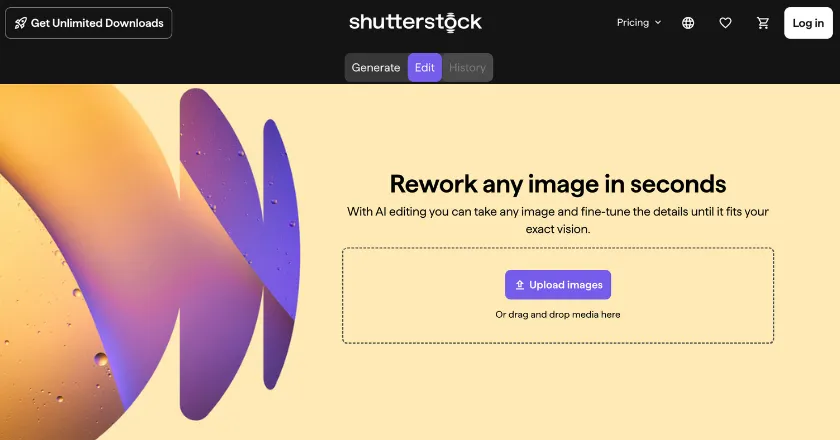
The standard industry solution is controlled variation, where a team preserves the underlying visual direction while subtly shifting background elements, crops, or subject placement. Professional stock libraries excel in this environment by enabling marketers to pull from cohesive groups of related imagery rather than relying on isolated assets.
Global brands face a parallel challenge through localization. A single campaign often needs to communicate an identical strategic message across multiple countries while incorporating different people, settings, or cultural cues that resonate locally. Generating every regional market entirely independently risks severe brand inconsistency, while shooting dedicated photography for every country is financially prohibitive.
Professional stock catalogues offer a practical middle ground, allowing global teams to source imagery suited to specific regional demographics while retaining a unified overarching style. AI-assisted editing tools then help adapt those foundational assets for local channels, enabling modular localization without requiring teams to reinvent the campaign at every border.
As visual creation continues to evolve, the ultimate challenge for marketing departments will not be generating enough content, but exercising the human judgment required to decide what is genuinely worth publishing.
Related News