You Don’t Have to Fly Alaska to Love This 80K Bonus
Article Editorial Team
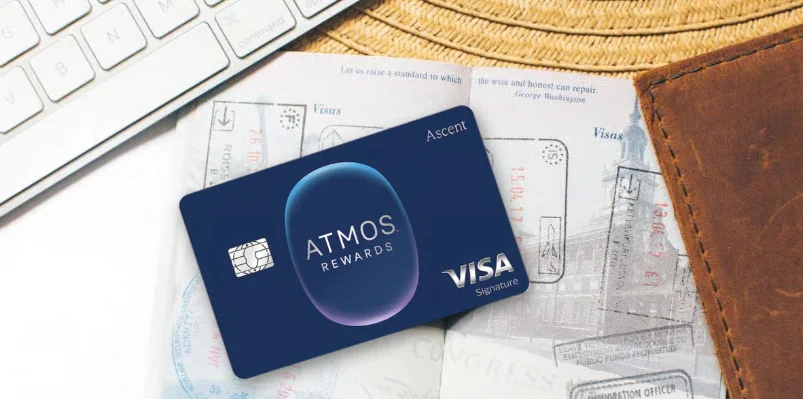
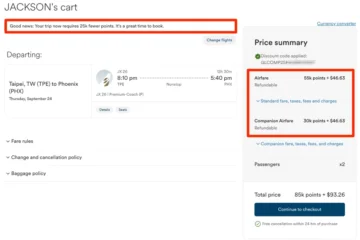
If you have been thinking about adding the Atmos Rewards Ascent Visa Signature credit card to your wallet, now is the time to act. For a limited time, new cardholders can earn up to 80,000 Atmos points plus a $99 Companion Fare, starting from $122 total once taxes and fees are factored in, through a lucrative two-part bonus structure. When you factor in the additional points you will naturally accumulate on that required initial spending threshold of $5,000, you will walk away with an impressive 85,000 points in total. Considering all of this comes attached to a card with a modest $95 annual fee, it represents an exceptional value proposition in the current credit card rewards landscape. While travel rewards analysts note that exact expiration timelines for these heightened limited-time bonuses remain fluid, offers of this magnitude rarely stick around for long.
Most importantly, cardholders do not need to be frequent flyers on Alaska Airlines to extract massive value from these points. Atmos Rewards maintains partnerships with more than 30 different airlines and utilizes a distance-based award chart that features some truly remarkable sweet spots for international and domestic travel alike. After the initial sign-up bonus is secured, the card continues paying for itself year after year through ongoing perks and benefits tailored to frequent travelers.
For those seeking an even more elevated travel experience, the Atmos Rewards Summit Visa Infinite credit card is well worth a hard look. With its current limited-time bonus structure, applicants can earn 100,000 points alongside a 25,000-point Global Companion Award after meeting a spending requirement of $6,000 within the first 90 days of account opening. While the Atmos Summit carries a steeper annual fee of $395, the inclusion of an annual Global Companion Award—which functions seamlessly across partner airlines as well—can help offset a substantial portion of that cost. Furthermore, cardholders receive eight annual Alaska Lounge passes, earn triple points on dining and foreign purchases, enjoy waived partner award booking fees, and net 10,000 status points upon every card anniversary. For anyone who takes to the skies even a few times a year, the mathematical equation works out remarkably fast. Whichever product you ultimately choose, securing a massive rewards bonus that can be leveraged far beyond a single carrier’s native network makes these two of the most versatile airline credit cards to recommend in the current market.
Deal of the Day: EVA Air Business Class to Southeast Asia for 75K Miles
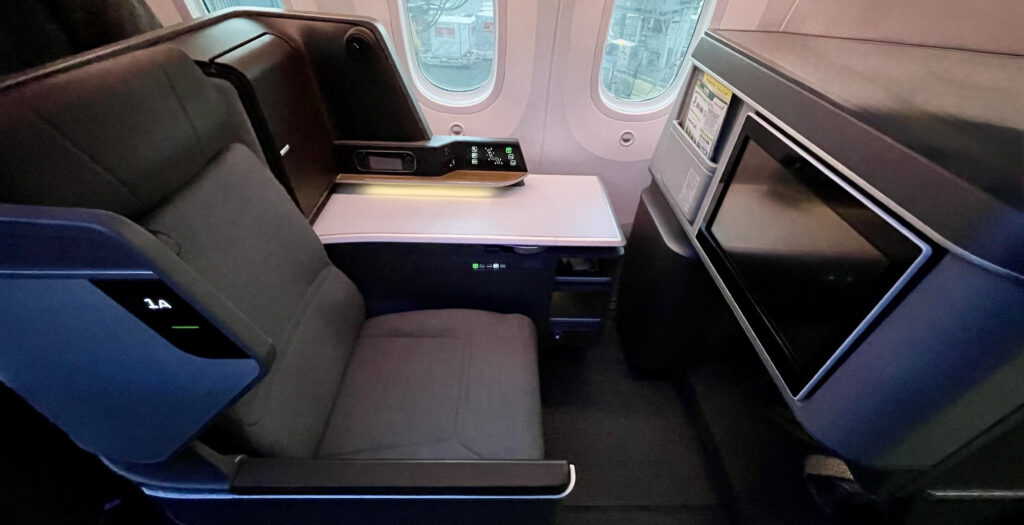
Travelers looking to indulge in luxury on their next journey across the Pacific have a compelling opportunity to book EVA Air Business Class to Southeast Asia for just 75,000 miles. Travel analysts have rated this particular redemption opportunity with high enthusiasm, highlighting the exceptional value it offers for premium cabin space.
The deal benefits from remarkably solid award availability spanning multiple major North American gateways. Passengers can find these redemption paths operating out of Chicago, Dallas, Houston, Los Angeles, New York, San Francisco, Seattle, Toronto, Vancouver, and Washington, D.C. To secure the itinerary, travelers can seamlessly transfer points from major transferable currency programs including Citi and Capital One directly to the participating airline loyalty program, making it an accessible redemption for those who have built up diversified points balances over time.
Android Users Finally Get Their Own ‘AirTag’
For years, iPhone users have enjoyed a seamless method for keeping tabs on their checked luggage and personal belongings using Apple’s popular AirTags. Meanwhile, Android users have historically had to rely on a fragmented patchwork of third-party tracking devices—with varying degrees of reliability—or simply cross their fingers and put blind faith in airline baggage systems to keep their property secure from departure to destination.

That dynamic has officially shifted with the retail debut of Google’s new Pixel Tag, which went on sale recently and immediately establishes itself as the premier option for Android ecosystem users seeking reliable luggage tracking. While attaching a smart tracker to your suitcase cannot physically stop an airline from mishandling a bag, it provides travelers with unprecedented visibility when baggage goes astray. Instead of sitting helplessly at a baggage carousel or waiting for lagging airline tracking databases to update, passengers can pinpoint their bag’s exact physical coordinates and inform airline personnel precisely where their property is located.
The Pixel Tag handles all the fundamental tracking essentials with ease. Furthermore, it incorporates a clever hardware trick that Apple’s current generation of AirTags lacks entirely: pressing the physical button on the Pixel Tag twice causes your paired smartphone to ring loudly, even if the device has been switched to silent mode. This functionality effectively allows users to utilize the tracker in reverse, making it remarkably simple to locate a misplaced phone buried inside a couch cushion or hotel room.

Priced at $29.99 for a single unit or $99.99 for a four-pack, the Pixel Tag matches the pricing structure of Apple’s AirTag lineup. While shoppers can occasionally unearth discounted deals on older, first-generation Apple trackers that offer slightly fewer capabilities while still accomplishing basic luggage tracking, the arrival of Google’s proprietary tracking hardware means there is little reason for Android users to check a bag unprotected moving forward.
On Our Radar: Traverse City, Michigan
Traverse City, Michigan, continues to capture the attention of aviation analysts, and the intrigue extends far beyond regional tourism draws like the Sleeping Bear Dunes National Lakeshore or historic Mackinac Island. The real story lies in the remarkable trajectory of Cherry Capital Airport.
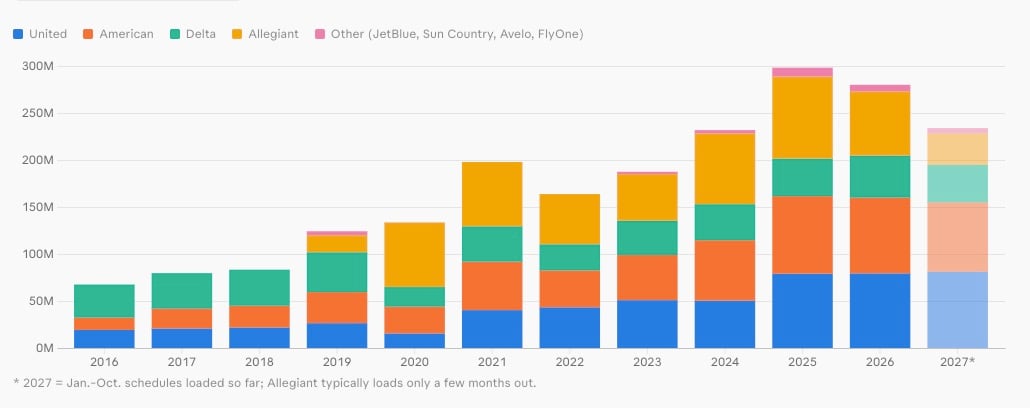
According to comprehensive schedule data from aviation analytics firm Cirium, the airport is slated to receive surprising, long-haul domestic connections operating once weekly from Los Angeles and San Francisco utilizing Boeing 737-800 aircraft. These forthcoming routes will integrate into an already robust roster of existing service provided by major network carriers including United, American, Delta, Allegiant, and JetBlue. The growing interest in this Northern Michigan municipality—which boasts a metropolitan area population of approximately 156,000 residents—stems from a staggering surge in aviation metrics. Over the past decade, Traverse City has experienced more than four times the airline seating capacity it saw ten years ago, even as the local permanent population grew by a modest 6% over the exact same timeframe.
Historical scheduling charts detailing available seat miles—the industry standard for calculating true airline capacity—illustrate that major network carriers have steadily scaled up their operational footprint at the airport. While traditional regional feeder flights connecting through major hubs like Chicago and Detroit still account for a substantial volume of aircraft movements, they represent a shrinking percentage of total available capacity because airlines are deploying increasingly larger aircraft to meet surging demand.

United Airlines, for instance, has repeatedly swapped out smaller 50-to-70-seat regional jets on its Denver route in favor of mainline Boeing 737-MAX8 and 737-800 aircraft seating between 150 and 180 passengers during peak summer travel windows. Propelled by these high-capacity planes, local passenger volumes have shattered historical records. Airport data indicates that the facility handled 935,816 passengers—representing a 19% year-over-year increase—inside a terminal building originally engineered to comfortably accommodate roughly 350,000 travelers.
To cope with this dramatic influx of traffic and seat capacity, airport authorities have already broken ground on a comprehensive terminal expansion project scheduled to open its doors. For visitors, the expansion translates to more flight options than ever before when planning a getaway to Northern Michigan, while local residents benefit from the natural economic pressures of increased airline competition and expanded capacity.

On the Pod: How to Earn Points for the Whole Family
Earning points and miles to fund travel for an entire household requires deliberate, multifaceted strategy—a discipline masterminded by experienced rewards experts. Recently, guest contributors joined industry discussions to break down the distinct triumphs and logistical hurdles inherent in orchestrating family vacations using travel rewards. Navigating award chart rules, pooling transferable points across family accounts, and managing multiple credit card sign-up bonuses were central themes in exploring how everyday travelers can stretch their points balances to cover spouse and children’s tickets alike. Industry observers note that adopting a cohesive family points strategy can fundamentally transform household travel budgets, opening up premium cabin redemptions and extended vacations that might otherwise remain financially out of reach.
Related News