Navigating the Carbon Offset Market: A Comprehensive Look at Project Types, Quality, and Pricing
Article Editorial Team
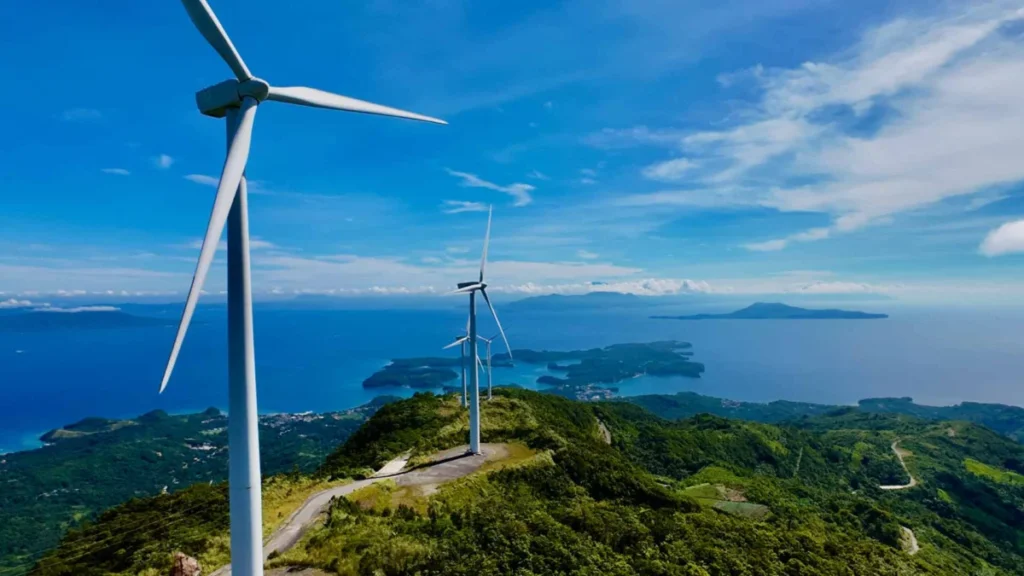
Not all carbon offsets operate in the same way. While some initiatives focus on protecting existing forests or constructing modern wind farms, others work to restore vital coastal mangroves or pull carbon dioxide directly out of the atmosphere using advanced technology. Understanding these mechanisms is increasingly vital as organizations and individuals seek effective ways to neutralize their environmental footprints and address the ongoing realities of global climate change.
Carbon offset projects fundamentally serve as climate interventions designed to either reduce or entirely remove the greenhouse gas emissions driving global climate disruption. Manifesting in diverse forms—ranging from the restoration of fragile wetlands to the conversion of municipal waste into usable energy—these projects span the globe, operating everywhere from tropical rainforests and rural farmlands to densely populated urban centers.
The emissions reductions or removals generated by these initiatives are meticulously measured and verified by independent experts. Once validated, a single carbon credit is issued for every metric ton of carbon dioxide equivalent addressed. When buyers purchase these credits, their financial contributions directly support the implementation, maintenance, and expansion of the project’s vital work. The broad landscape of carbon offset projects is typically categorized into several distinct sectors: forest initiatives, energy solutions, waste and industrial processes, blue and teal carbon ecosystems, agricultural practices, and technological carbon removal.
Avoidance Versus Removal Projects
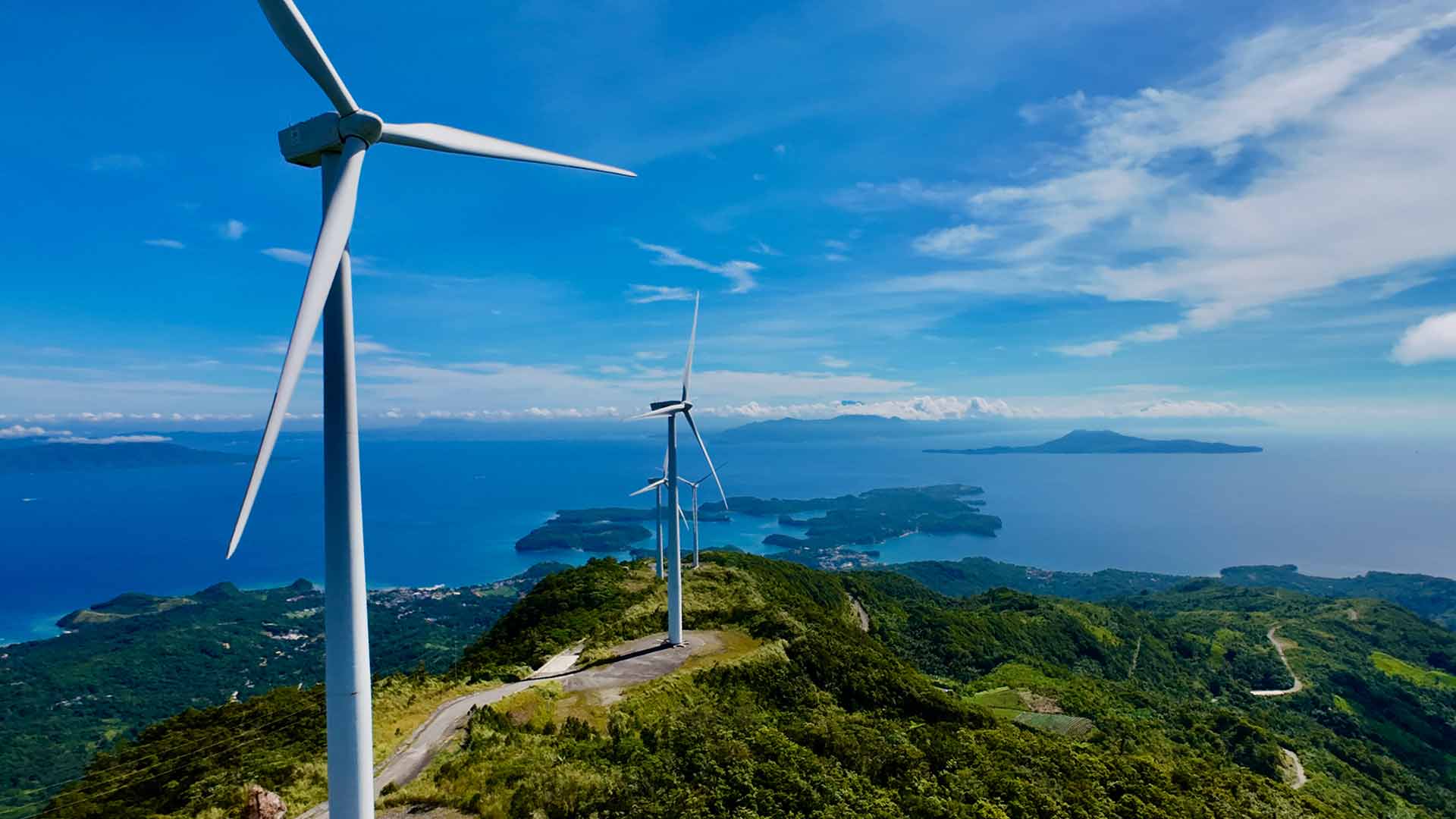
At their core, carbon offset projects generally fall into two broad classifications: avoidance and removal. Avoidance projects are designed to prevent future greenhouse gas emissions from entering the atmosphere in the first place. Examples include constructing a commercial wind farm to displace the need for fossil fuel-based energy generation or enacting legal and community protections to stop forests from being cleared.
Conversely, removal projects actively draw down carbon dioxide that is already present in the atmosphere. This is achieved through biological methods, such as large-scale reforestation, or through engineered solutions like direct air capture. Many contemporary portfolios incorporate a strategic blend of both categories to achieve comprehensive climate goals.
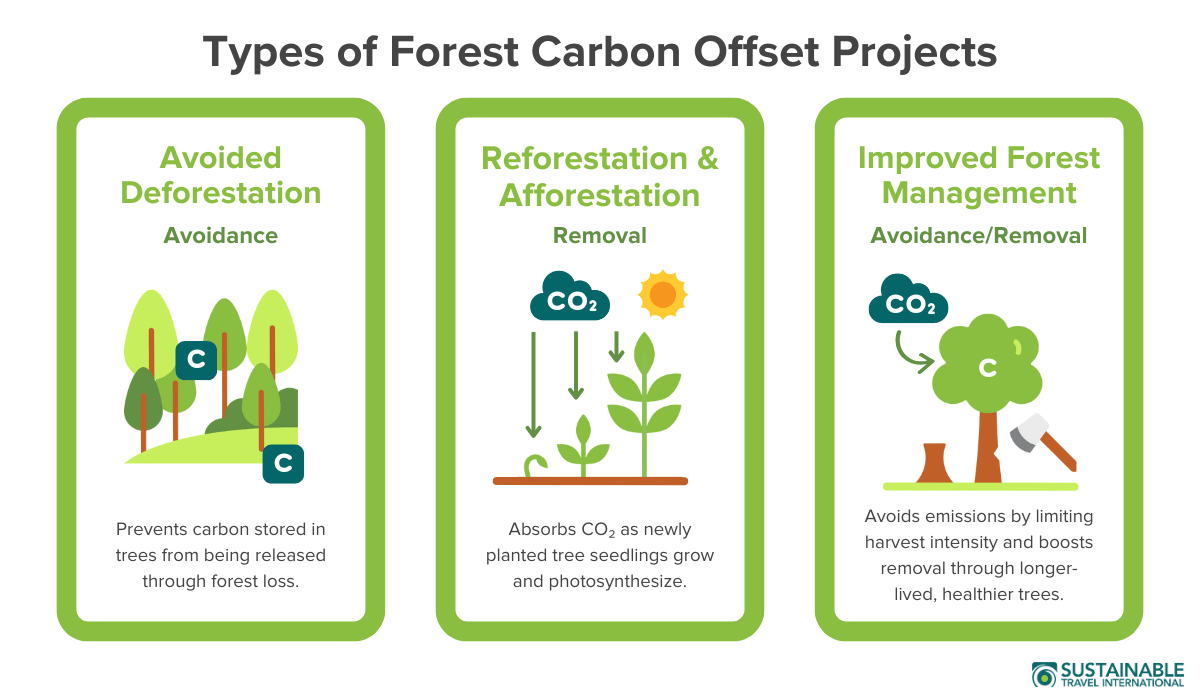
Forests play a crucial role in combating climate change by naturally absorbing and storing atmospheric carbon through the biological process of photosynthesis. Forest-based carbon offset projects leverage this natural capability by protecting existing woodland ecosystems, restoring degraded tracts, or implementing improved management techniques designed to maximize long-term climate benefits.
To put the scale of these emissions into perspective, the carbon footprint generated by a standard round-trip flight between New York and London is roughly comparable to the amount of carbon that twenty-five tree seedlings would absorb over a ten-year growing period. Alternatively, that same volume of flight emissions equates to the carbon sequestered by protecting approximately 1.5 acres of forest from deforestation over the course of a single year.
Transforming Energy Systems and Managing Industrial Waste
Energy-focused carbon offset projects drive significant reductions in greenhouse gas emissions by fundamentally transforming how power is produced, consumed, and sourced across global markets. These initiatives actively replace carbon-intensive fossil fuel power generation with clean, renewable alternatives, recover usable energy from organic waste streams, and curb overall energy demand through the deployment of highly efficient appliances and industrial systems.
For comparison, the emissions produced by the aforementioned New York-to-London round-trip flight are roughly equivalent to the greenhouse gases avoided by leaving 1,666 pounds of coal unburned, or by saving 147 gallons of diesel fuel.
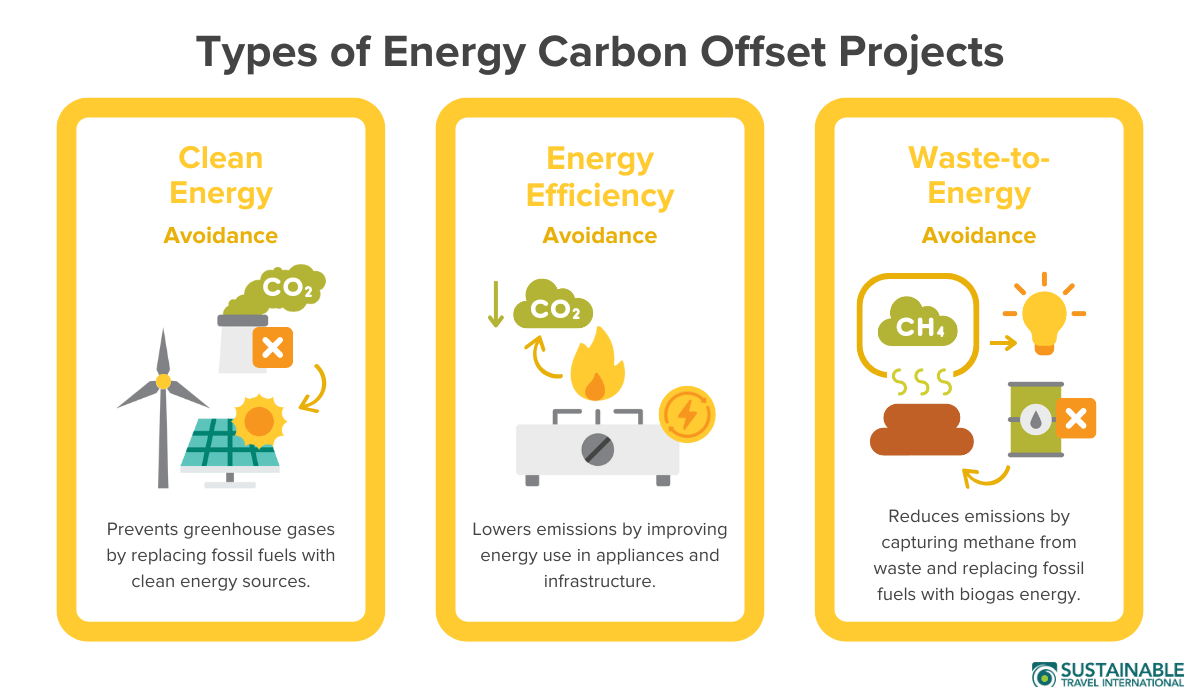
Beyond standard energy transitions, a significant portion of the offset market addresses waste management and industrial byproducts. Waste disposal projects typically focus on capturing and destroying potent methane gas released by rotting organic material in landfills, promoting recycling to avoid the emissions tied to manufacturing virgin materials, and implementing community composting programs to prevent methane from forming initially. Industrial process projects, meanwhile, tackle complex pollution generated by manufacturing and chemical synthesis. These operations might capture fugitive methane leaks escaping from active coal mines, destroy nitrous oxide produced as a byproduct during chemical manufacturing, or successfully replace high-emission industrial refrigerants with environmentally safer alternatives.
The Power of Blue, Teal, and Agricultural Carbon
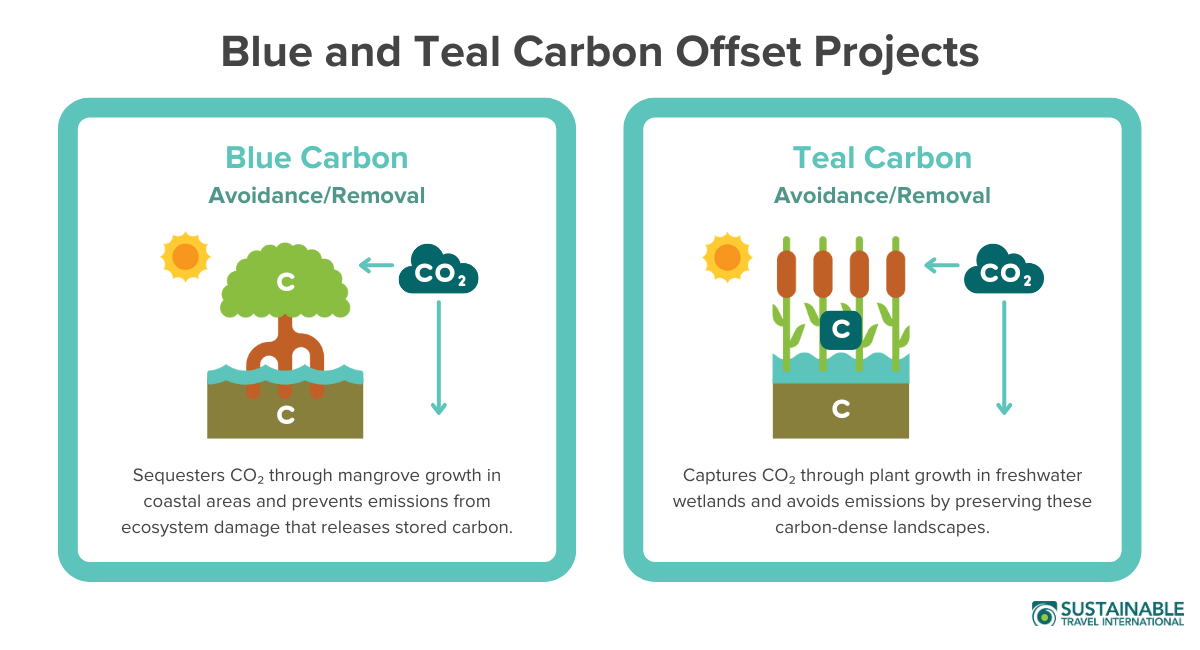
Emerging as critical tools in the global climate toolkit, blue and teal carbon offset projects protect and restore vital aquatic and wetland ecosystems. Blue carbon initiatives center on coastal environments such as mangroves, salt marshes, and seagrasses, while teal carbon projects focus primarily on freshwater wetlands and peatlands. Although these ecosystems cover a vastly smaller geographic area than terrestrial forests, they possess an extraordinary capacity for carbon sequestration, absorbing carbon up to ten times faster than land-based trees. Furthermore, they can store up to twice as much carbon per equivalent area, predominantly within deep, waterlogged soils where extremely slow decomposition rates trap the carbon safely away for thousands of years.
Agricultural carbon offset projects tackle emissions through targeted land and livestock management strategies. These approaches are designed to mitigate high-emission farming practices while simultaneously enhancing the natural capacity of agricultural soils and perennial vegetation to store carbon securely over the long term.
Technological Carbon Removal and Market Trends
Technological carbon removal represents a rapidly evolving frontier, utilizing highly engineered systems to capture and sequester carbon in permanent, stable forms. Direct air capture technology, for instance, employs specialized machinery and chemical processes to scrub carbon dioxide directly out of ambient air. Once captured, the gas can be permanently stored deep underground in geological formations or repurposed for commercial applications, such as synthetic low-carbon fuels and durable building materials. Beyond purely mechanical setups, technology is also increasingly deployed to accelerate and optimize natural carbon removal pathways, enhancing the earth’s innate sequestration capabilities.
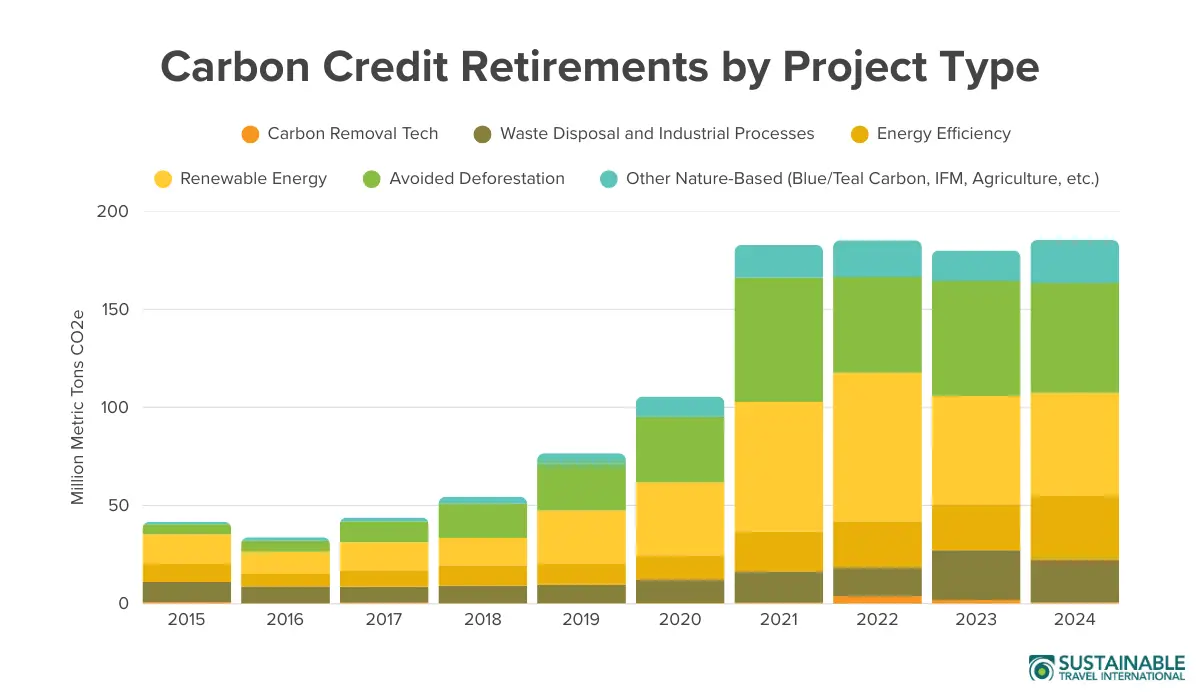
An examination of annual carbon credit retirements reveals shifting trends in how the global market supports various offset activities. For many years, avoided deforestation and traditional renewable energy projects have accounted for the vast majority of retired credits. However, newer categories—including blue carbon initiatives and advanced technological removal solutions—are experiencing notable growth. Together, this diverse suite of approaches provides a comprehensive toolkit capable of reducing and removing emissions at scale, including hard-to-abate emissions that cannot yet be eliminated directly at their source.
Evaluating Quality and Pricing in the Carbon Market
The ultimate climate impact of a carbon offset project depends heavily on its underlying quality. High-quality projects undergo rigorous verification against recognized independent standards and must satisfy several fundamental criteria. Most importantly, they must demonstrate additionality—meaning the emissions reductions or removals would not have occurred without the financial backing of carbon credit sales. Furthermore, the sequestered carbon must remain stored for the long term without reversing, and the project must not inadvertently cause emissions to shift elsewhere. Many leading projects also generate substantial co-benefits for neighboring local communities and native biodiversity.
Pricing within the voluntary and compliance carbon markets varies dramatically, with individual credits ranging from roughly one dollar to upwards of one thousand dollars per metric ton. This pricing variance is dictated by factors such as project type, geographic location, scale, and prevailing market demand. Projects that feature rigorous independent verification and deliver verified community or ecological co-benefits command higher prices.
While large-scale wind and solar installations can generate credits more economically due to established efficiencies, smaller projects often entail higher operational costs relative to their output. Simultaneously, emerging technological removal solutions, such as direct air capture facilities, remain notably more expensive as the industry scales its infrastructure and refines its engineering processes.
Organizations like Sustainable Travel International curate diverse climate portfolios that blend forestry, renewable energy, blue and teal carbon, and innovative removal technologies, allowing contributors to support multifaceted climate action through a single, rigorously vetted channel.
Related News