Supermoon Season Kicks Off Thanksgiving Week: Where and When to Watch Across All 50 States
Article Editorial Team
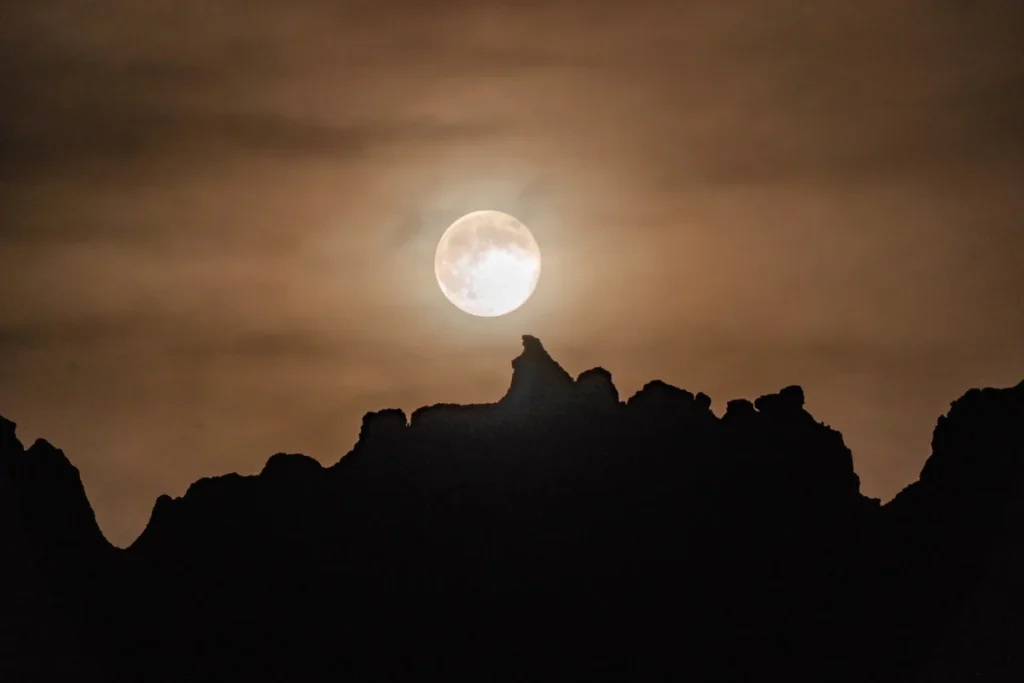
Skyswatchers and astronomy enthusiasts are preparing for a rare celestial alignment as a sequence of oversized full moons gets underway during Thanksgiving week. Marking the first supermoon since January, the upcoming lunar event on Tuesday, November 24, will launch a remarkable consecutive series of four supermoons stretching into early 2027.
Astrophotographers and night-sky tourism experts emphasize that while the illuminated sphere remains a striking sight throughout the night, the optimal viewing window occurs precisely at moonrise and moonset. During these transition periods, an optical phenomenon known as the moon illusion causes the lunar body to appear up to 30 percent brighter and 14 percent larger than an ordinary full moon. When positioned near the horizon against the backdrop of golden hour hues, the glowing orb frequently takes on a distinct tangerine hue, offering ideal conditions for both casual observers and photographers.
The sequence of lunar events closely aligns with the winter holiday calendar. Following the Thanksgiving-week display, a second full supermoon will appear just before Christmas on December 23. Astronomers note that the December event will be the closest full moon of the decade thus far, measuring approximately 221,667 miles from Earth. The progression will conclude with two additional supermoons early next year, occurring on January 22 and February 20, 2027.
While moonset offers an equally impressive view, experts often favor moonrise because it coincides directly with sunset, eliminating the need for an early morning wake-up call and allowing observers to easily spot early constellations as darkness settles. Because the geographical coordinates for moonrise and moonset remain relatively consistent throughout the year, sky-watchers across the United States can utilize specific regional vantage points for this season’s events and future lunar alignments.
Regional Viewing Locations Across the United States
Observing the lunar ascension effectively requires scouting a location with an unobstructed view toward the eastern horizon, where the evening moon first appears. Across the country, state parks, national parks, and urban green spaces offer prime environments for taking in the celestial display.
In Alabama, Cheaha State Park provides expansive forest overlooks situated approximately 70 miles east of Birmingham. Observers can watch the cratered surface of the moon rise from Bunker Tower, the state’s highest elevation at roughly 2,400 feet, while the setting sun paints the surrounding hardwood landscapes in shades of peach and pink. Farther north in Alaska, the east-facing side of the Homer Spit cuts 4.5 miles into glacier-carved Kachemak Bay, offering simultaneous views of the sunset to the west and the moonrise to the east, with occasional displays of the northern lights following shortly after.
Arizona visitors frequently turn to the Grand Canyon for striking vistas, utilizing east-facing lookouts such as Mather Point, Yaki Point, and Shoshone Point along the South Rim. In Arkansas, Pinnacle Mountain State Park, located just west of Little Rock, offers elevated vantage points near its visitor center, mirroring popular locations traditionally used for sunrise viewing. California’s Death Valley National Park delivers an otherworldly setting, allowing visitors to watch the lunar sphere rise above the badlands from Zabriskie Point or inch over the Grapevine peaks from the Mesquite Flat Sand Dunes.

Colorado provides scenic backdrops at the Colorado Chautauqua above Boulder, where the Chautauqua Trail overlook and park grounds offer clear eastern views alongside snowy western views of the Flatirons. In Connecticut, Hammonasset Beach State Park features panoramic shoreline perspectives of the Long Island Sound from Meigs Point, while Delaware’s Cape Henlopen State Park presents a 360-degree environment where the Atlantic Ocean meets the Delaware Bay at The Point.
Florida residents can visit Key Biscayne’s Cape Florida Beach within Bill Baggs Cape Florida State Park to watch the moon ascend over the Atlantic within ten miles of downtown Miami. Georgia offers a surreal foreground on Jekyll Island, where the gnarled oaks and pines of Driftwood Beach frame the rising lunar orb. In Hawaii, the elevated overlooks and coastal trails of Pololū Valley on the Island of Hawaii present sweeping vistas over scenic eastern coastlines.
Idaho visitors can stroll the pedestrian walkways of the Perrine Memorial Bridge in Twin Falls, positioning themselves on the east side to observe the moon above the Snake River. In Illinois, Chicago’s 18-mile Lakefront Trail provides numerous urban viewing platforms, including North Avenue Beach, Navy Pier, and the area behind the Adler Planetarium. Indiana’s Brown County State Park, often called the Little Smokies, features the Hesitation Point overlook, while Iowa’s Pikes Peak State Park overlooks the convergence of the Wisconsin and Mississippi rivers from elevated scenic overlooks.
Kansas highlights vast horizons at the Tallgrass Prairie National Preserve, where the Southwind Nature Trail places the low-lying moon against expansive prairie landscapes. Kentucky features rugged Appalachian scenery along Pine Mountain State Resort Park’s Chained Rock Trail, and Louisiana’s Lake Martin offers enchanting reflections of the orange orb across cypress-studded waters along the Levee Trail.
Maine’s historic Portland Head Light provides craggy coastal vistas six miles outside Portland, while Maryland’s North Point State Park looks out over the Chesapeake Bay from Crystal Pier and nearby beaches. Massachusetts visitors can experience the sensory environment of Halibut Point State Park in Rockport, utilizing its northern tip to view both the Atlantic moonrise and the western sunset. Michigan offers open waterfront views along the Driker Trail on Detroit’s Belle Isle, and Minnesota showcases cliffside perspectives from Split Rock Lighthouse and adjacent Pebble Beach along Lake Superior.
Mississippi provides fishing and water-based vistas at Sardis Lake through John W. Kyle State Park and Pats Bluff, while Missouri utilizes the Gateway Arch National Park in St. Louis to frame the rising moon beneath the 630-foot monument. Montana offers quiet winter views along the west side of Flathead Lake near the Mission Mountains, and Nebraska features urban lakefront trails around Standing Bear Lake and Glenn Cunningham Lake near Omaha.
Nevada’s Valley of Fire State Park displays the moon rising above crimson sandstone formations along the Fire Wave and White Dome trails. New Hampshire provides lake and mountain perspectives from Lake Winnipesaukee’s Lincoln Park or the summit of Mount Major. New Jersey’s Liberty State Park features a waterfront walkway that scales the moon against the Manhattan skyline and the Statue of Liberty.

New Mexico’s White Sands National Park transforms during golden hour along the Alkali Flat Trail, offering blush and tangerine desert hues beneath a supermoon. New York highlights festive winter scenery around Lake Placid, where observers can watch the moon reflect off Mirror Lake from Mid’s Park. North Carolina features coastal lookouts along the Cape Hatteras National Seashore, including Cape Point near the historic lighthouses of the Outer Banks.
North Dakota presents badlands terrain and expansive horizons at Theodore Roosevelt National Park along scenic overlooks like Skyline Vista. Ohio pairs maritime history with lunar viewing at Marblehead Lighthouse State Park along Lake Erie, while Oklahoma utilizes the Bert Cooper Trail and Lakeshore Park around Lake Hefner near Oklahoma City. Oregon’s Pittock Mansion grounds remain open into the evening, providing elevated eastern views of Portland with Mount Hood in the distance.
Pennsylvania’s Presque Isle State Park extends into Lake Erie, offering expansive beach vistas and views from the Gull Point Observation Deck. Rhode Island’s Cliff Walk in Newport guides visitors past historic mansions with persistent eastern ocean views. South Carolina offers coastal access via Folly Beach County Park on Folly Island near Charleston, and South Dakota presents striated badlands landscapes from Bigfoot Pass Overlook and the Door Trail in Badlands National Park.
Tennessee observers utilize the Kuwohi Observation Deck in the Great Smoky Mountains National Park, though winter road closures may require supplementary hikes from Newfound Gap. Texas highlights remote desert landscapes along the Ross Maxwell Scenic Drive in Big Bend National Park and neighboring stargazing retreats. Utah’s Zion National Park features winter canyon views along the Pa’rus Trail and near Checkerboard Mesa, while Vermont provides serene lakeside perspectives along the Colchester Causeway Trail near Malletts Bay.
Virginia offers coastal shorelines along Virginia Beach and Fort Story near the Cape Henry Lighthouse, and Washington features elevated forest vistas from Rattlesnake Ledge in the Snoqualmie region. West Virginia highlights the horseshoe bend of the New River from the Grandview Overlook within New River Gorge National Park and Preserve. Wisconsin provides freshwater lakefront lookouts across Sheboygan’s parks and piers, and Wyoming concludes the nationwide regional options with vast prairie horizons stretching across Thunder Basin National Grassland.
Related News