Lawmakers Move to Block AI Data Centers on National Forests and Public Lands Amid Growing Environmental Backlash
Article Editorial Team
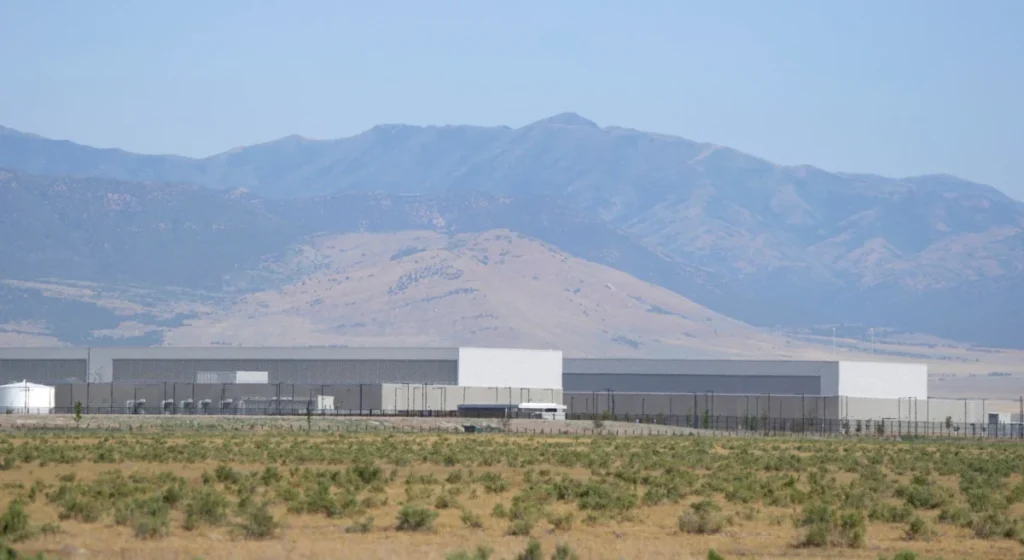
WASHINGTON — Amid a mounting national debate over the footprint of the artificial intelligence boom, federal lawmakers in Washington are advancing new legislative proposals aimed at halting the construction of resource-heavy tech hubs on America’s shared public landscapes.
On November 11, Oregon Representative Maxine Dexter introduced the Protecting Our Public Lands from Data Centers Act, a measure designed to explicitly prohibit the establishment of new data centers on national forests and lands managed by the U.S. Department of the Interior. The legislation arrives as
federal agencies increasingly eye the nation’s vast public acreage to satisfy the insatiable energy and physical space demands of modern cloud computing and artificial intelligence infrastructure.
Backed by 13 Democratic cosponsors in the House, Dexter’s bill seeks to establish strict federal safeguards against industrial creep. Under the proposed legislation, any federal public lands that are sold or transferred would be legally mandated to return to government ownership if they are subsequently utilized for data center operations without direct congressional authorization.
The introduction of the bill underscores a widening philosophical and political battle over the future stewardship of millions of acres of federally managed property. For decades, these lands have served as multiple-use domains designated for public recreation, conservation, and local industry.
"Public lands belong in public hands, and Oregonians must have a say before the federal government hands over millions of acres of public land managed by the Bureau of Land Management for data centers," Representative Dexter said in a statement released following the bill’s introduction. "These treasured lands are where people hunt, fish, hike, and graze livestock. They are where wildlife habitat and our critical watersheds are protected. My bill keeps these lands safe from data centers now, and for the generations who come after us."
The legislative push coincides with broader federal policy shifts regarding land management. Just one day before Dexter introduced the bill, the Department of the Interior published its comprehensive strategic plan for fiscal years 2026 through 2030. The document outlines agency proposals to facilitate the transfer of certain federal parcels to state governments, local municipalities, and Native American tribes, while simultaneously expanding energy production and infrastructure corridors to accommodate the soaring energy requirements of the tech sector.
The strategic vision has drawn sharp rebuke from environmental advocates and former federal land managers who argue that the shift undermines the core principles of public stewardship. Tracy Stone-Manning, who directed the Bureau of Land Management under President Joe Biden and currently serves as the president of The Wilderness Society, voiced strong opposition to the administration’s direction in media interviews following the policy release.
"They want to sell it off for data centers. They want to sell it off to oil and gas companies," Stone-Manning stated during a broadcast interview. "They want to sell it off because they don’t like the idea of the American public owning these lands."
Data Centers Are Already Eyeing Public Lands
The policy debate is rooted in rapidly evolving real estate and energy pressures across the American West. Throughout 2026, the administration has actively explored pathways to site data centers on public domains. According to an investigative report published in early November by ProPublica, the Bureau of Land Management has been actively reviewing permit applications for approximately 15 commercial data centers and 17 associated infrastructure projects distributed across six Western states. In its five-year strategic blueprint, the Department of the Interior explicitly noted its intention to find administrative mechanisms to address the burgeoning demand driven by "Super Intelligence data centers."
The practical implications of these policies have already sparked localized conflicts. In July, reporting from environmental and outdoor journalism outlets highlighted that the Bureau of Land Management had approved plans for an expansive 86-acre artificial intelligence data center situated roughly ten miles from the boundaries of the Lake Mead National Recreation Area in Nevada. That particular approval has since faced procedural hurdles, with an Interior Department appeals board temporarily pausing the project for deeper environmental and regulatory review.
The proliferation of these massive computational warehouses is directly tied to the exponential rise of generative artificial intelligence, machine learning, and widespread cloud computing. However, the physical reality of these facilities has created severe public relations and environmental challenges. Modern data centers require immense quantities of electrical power to run servers and complex cooling systems, frequently straining regional electrical grids. Furthermore, many facilities consume millions of gallons of water daily for evaporative cooling, placing local watersheds under severe stress.
Public sentiment regarding the massive industrial facilities has shifted notably over the course of the year. A comprehensive public opinion survey published by Pew Research in September revealed that 54 percent of American adults now view data centers as detrimental to the environment, a marked increase from just 39 percent who held that view in January.
As suburban and urban municipalities increasingly enact local moratoriums, zoning restrictions, and outright bans on data center construction to protect residential quiet and local resources, developers and government officials have looked increasingly toward rural, remote, and backcountry settings. Conservation groups argue that pushing these industrial installations into less-developed regions threatens fragile ecosystems, fragments critical wildlife migration corridors, and curtails traditional public access to lands that have historically remained open and undeveloped.
"Data centers have no place on public lands," said Randi Spivak, a representative of the Center for Biological Diversity, in a statement responding to the land use proposals. "They’re water-guzzling, pollution-spewing facilities that turn lands meant for wildlife and recreation into corporate industrial sites."
The footprint of the tech industry’s expansion is not limited to remote Bureau of Land Management tracts. Recent geographic analyses and interactive mapping projects have identified at least 14 proposed data center projects situated within a ten-mile radius of national park boundaries across the country, raising concerns among conservationists about light pollution, noise, water usage, and the degradation of viewsheds in some of the nation’s most protected natural sanctuaries.
Representative Dexter’s proposed legislation faces a challenging path forward in Congress. The bill has been formally referred to the House Committee on Natural Resources and the Committee on Agriculture for initial review. However, the measure currently lacks Republican cosponsors, reflecting deep partisan divisions over federal land use policies and energy infrastructure development.
Similar legislative efforts have already encountered roadblocks in the legislative branch. In September, a parallel measure introduced in the upper chamber by Oregon Senator Ron Wyden was blocked on the Senate floor by Republican Senator Rand Paul. With no comprehensive federal restrictions currently enacted into law, the debate over how to balance the technological demands of the artificial intelligence revolution with the preservation of America’s public lands remains intensely contested in Washington and across the Western states.
Related News