Conquering the Burn: Why Skiers of All Levels Suffer From Sore Quads—and How to Recover
Article Editorial Team
Published November 21, 2026 03:04AM
Stepping off the mountain after a long day of carving turns often brings a familiar, burning sensation to the front of the legs. While waking up with stiff, throbbing quads after skiing might initially seem like an exclusive rite of passage for beginners struggling down the slopes with a clumsy snowplow, the reality is that athletes of all experience levels regularly fall victim to the exact same post-ski discomfort.
Even for seasoned skiers who boast immaculate form and exceptional mountain conditioning, the quadriceps remain the dominant muscle group utilized throughout the sport. According to James Spencer, a physical therapist based in Aspen, Colorado, the lateral quad—scientifically known as the vastus lateralis—bears the brunt of the physical demand, working overtime to stabilize and drive the body through every sharp turn and high-speed descent. Ironically, the better and more aggressive a skier you are, the harder you are able to push your muscles against the mountain terrain. This means that fierce leg fatigue and post-slope tenderness can find a way to impact virtually anyone, regardless of their proficiency level on the slopes.
The underlying physiological cause behind this widespread winter sports soreness is identical to the mechanism that leaves runners tender after an arduous trail marathon or weightlifters sore following a heavy lower-body gym session. When an individual intensely and repeatedly loads their quadriceps through eccentric muscle contractions—the braking action required to control speed and absorb impacts while skiing downhill—they actually create microscopic tears within the muscle fibers. While hearing about tissue damage might sound alarming or inherently negative, Spencer notes that this microscopic trauma is actually a vital and normal part of athletic conditioning. It serves as one of the primary biological triggers that signals the body to repair, adapt, and ultimately strengthen that muscle group over time.
Despite its long-term benefits for athletic development, the immediate side effects of this muscle damage can be decidedly unpleasant. Much like any other minor bodily injury, these microscopic tears immediately provoke a localized inflammatory response, triggering swelling that significantly amplifies the pain felt after exercise and produces that distinct, debilitating sore sensation. Officially recognized in medical and athletic circles as delayed onset muscle soreness, or DOMS, this phenomenon typically does not strike immediately while the physical activity is underway. Instead, DOMS sets in hours after the workout concludes and can steadily worsen, frequently peaking as late as two to three days after the initial exertion. Consequently, a skier might feel entirely fine, energetic, and pain-free while boarding the resort shuttle at the conclusion of a grueling day on the mountain, only to find themselves hobbling painfully toward the restroom the following morning. In these scenarios, DOMS is almost certainly the primary culprit.
When it comes to treating the condition once it has set in, the true and ultimate cure remains simply a matter of time. According to Spencer, individuals really just have to wait for those microscopic tissue tears to fully heal and remodel. However, that does not mean sufferers are entirely powerless during the interim. There are proactive steps individuals can take in the days following a heavy ski session to ease their discomfort and manage pain levels more effectively.
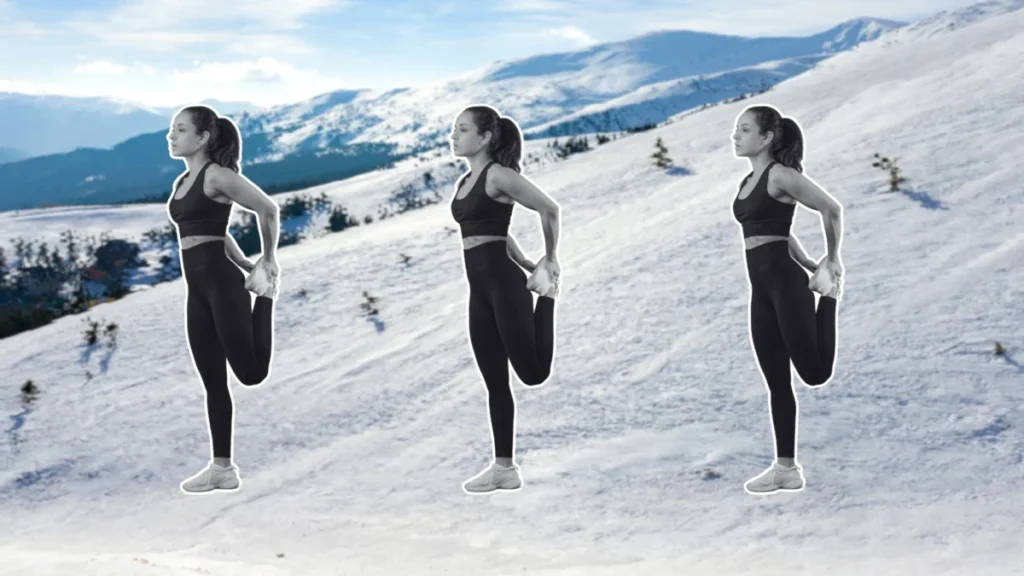
Among the most accessible and immediate remedies are targeted quad stretches. By gently and consistently stretching the quadriceps following a hard day of tackling the mountain, skiers can noticeably decrease the overall intensity of their soreness by helping to flush out some of the trapped inflammation and fluid accumulating within the overworked muscles. While stretching is by no means a magical cure-all that will instantly erase all physical consequences of a massive ski day, Spencer emphasizes that it can tangibly help individuals move more fluidly and feel significantly better in the short term.
Essential Quad Stretches to Reduce Soreness and Pain After Skiing
Finding meaningful physical relief from post-ski soreness does not require an elaborate, time-consuming routine of dozens of different movements. In fact, Spencer notes that just two primary stretches are more than enough to target the affected area effectively. While these movements may feel familiar and lack novelty, their simplicity is precisely what makes them practical and reliably effective for tired athletes looking for quick relief.
The first essential movement is the classic standing quad stretch, which directly isolates the front of the thigh. By pulling the heel toward the glutes while maintaining an upright posture and an engaged core, skiers can safely lengthen the quadriceps fibers that endured hours of constant contraction on the slopes.
The second recommended movement is the lunging quad stretch, which offers a deeper and more comprehensive extension through the front of the hip and thigh. For skiers seeking an added layer of muscle relaxation, Spencer offers a comforting optional tip: performing this specific stretch while soaking in a hot tub. The ambient heat from the water can work in tandem with the physical stretch to further reduce feelings of stiffness and soreness in the lower body.
More Ways to Ease Sore Quads After Skiing
While dedicating a few minutes to basic quad stretches can often be sufficient to dull the sharpest edges of post-ski muscle soreness, athletes looking for a more comprehensive recovery protocol have several other scientifically supported methods at their disposal.
Spencer suggests dedicating a couple of minutes to thorough foam rolling across the quadriceps. This self-myofascial release should cover the entire front of the thigh, stretching all the way from the kneecap up to the hip joint, as well as the outer edges of the leg to directly target the vastus lateralis and the adjacent IT band. Much like traditional stretching, dedicated foam rolling can bring noticeable relief to exhausted quads by assisting the body in reducing localized swelling and improving tissue mobility in the affected regions.
Another highly effective, low-impact recovery strategy involves hopping onto a stationary bicycle and engaging in very gentle, easy spinning for roughly ten to fifteen minutes. This light, repetitive movement can significantly alleviate soreness by actively pumping stubborn inflammation out of the quadriceps tissues, according to Spencer. The critical factor with this recovery ride is maintaining extremely low resistance and keeping the overall personal effort level minimal. It is meant strictly as a flushing recovery tool rather than an actual cardiovascular workout.
How to Prevent—or Mostly Prevent—Sore Quads in the First Place
While post-activity stretching, foam rolling, and active recovery rides can successfully ease the symptoms of DOMS in the short term, individuals who wish to prevent intense muscle soreness altogether must look toward proactive preparation. Building robust baseline strength within the quadriceps before hitting the slopes is the most reliable ticket to a pain-free ski trip.
Spencer stresses that arriving at the resort with a modest foundation of pre-built strength will dramatically decrease how sore a skier feels after a day of aggressive turns, while simultaneously reducing their overall risk of sustaining a physical injury on the mountain. Effective conditioning exercises to achieve this goal include targeted quad sets, steady wall sits, and virtually any variation of squats—ranging from traditional bodyweight and weighted squats to demanding Bulgarian split squats and single-leg squat progressions.
Addressing a common misconception prevalent among winter sports enthusiasts, Spencer pushes back against the frequently repeated notion that the only way to genuinely prepare the body for skiing is simply to go skiing. He emphasizes that this idea is a total myth, noting that there is an extensive array of proactive conditioning work individuals can accomplish both during the off-season and consistently throughout the winter months to adequately prime their physical frame for the unique mechanical demands of downhill skiing. Beyond fundamental quad-strengthening routines, Spencer advises incorporating specific hamstring, glute, and core stability movements into fitness regimens, alongside dynamic jumping exercises that train the neuromuscular system to react swiftly and safely to unexpected terrain changes and bumps on the mountain.
Related News