Ancient Bronze Age Shipwreck Discovered Off Turkey’s Coast Sheds New Light on Early Mediterranean Trade
Article Editorial Team
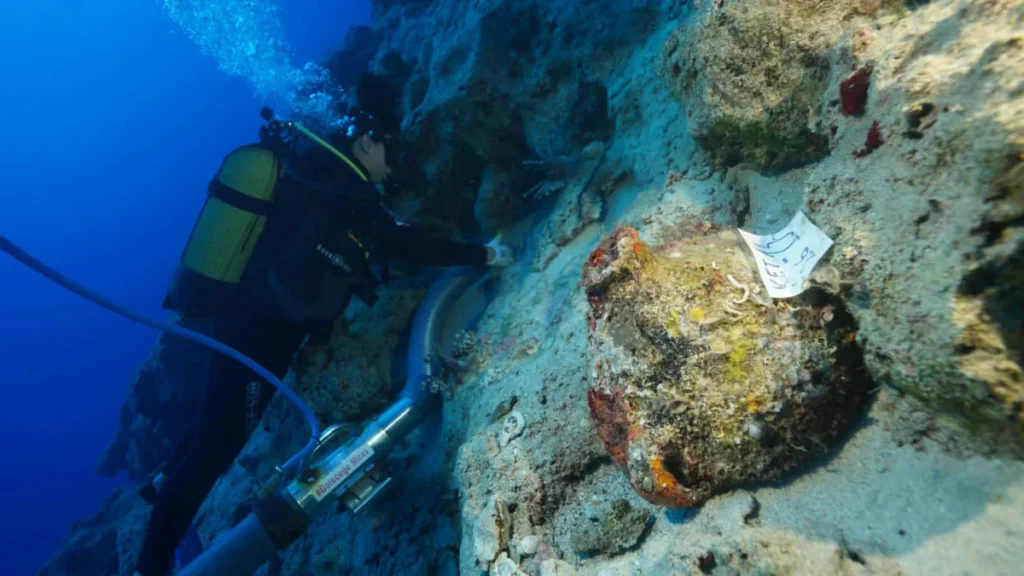
ANTALYA, TURKEY — Marine archaeologists and researchers operating off the scenic southern coast of Turkey have announced the discovery of a remarkably old Bronze Age shipwreck. Resting quietly on the seafloor under roughly 100 feet of water near the rugged and historic shores of Kekova Island, the vessel has been dated to an astonishing 4,400 to 4,700 years ago. While the passage of millennia has claimed every physical trace of the wooden hull itself, the ship’s enduring cargo remains remarkably intact, offering an exceptionally rare window into the maritime commerce, seafaring capabilities, and geopolitical interactions of the early Bronze Age in the eastern Mediterranean.
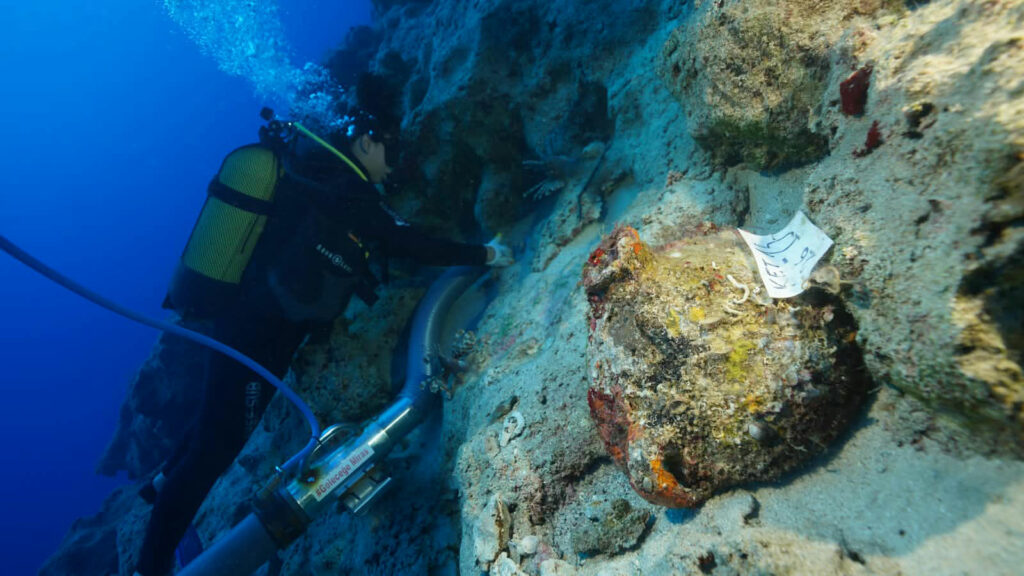
The breathtaking underwater site was brought to light through ongoing archaeological surveys in the region, which is renowned for its rich maritime history and hidden underwater cultural heritage. According to Hakan Öniz of Akdeniz University, who has been closely involved in the research and documentation of the site, the primary method used to date the wreckage relies on the distinct typology and manufacturing style of the artifacts scattered across the ocean floor. More than 30 ceramic amphoras rest in their ancient resting place, their unique design matching that of similar vessels previously unearthed during land-based and underwater excavations in Egypt and various regions of the Middle East.
Although the wooden structure of the ship dissolved away long ago, the footprint left by its preserved cargo allows maritime historians to reconstruct the vessel’s approximate dimensions and capacity. Based on the distribution and sheer volume of the amphoras discovered on the seabed, researchers estimate that the ship was originally around 30 feet in length. Despite its relatively modest size for a commercial transport vessel of that era, the ship was capable of hauling a substantial and economically valuable load across treacherous open waters. Furthermore, the discovery of three large stone anchors near the amphoras provides vital clues regarding the ship’s anchoring technology, navigational gear, and the frantic final moments before the vessel ultimately met its watery fate.
To extract every possible ounce of historical data from the find, an international team of scientists is currently employing advanced analytical techniques. Karin Sowada of Macquarie University explained that her research team is actively analyzing organic residues detected inside some of the water-sealed, intact amphoras recovered from the site. Because these large ceramic jars were the universal shipping containers of the ancient world, determining their original contents is crucial to understanding the mechanics of early maritime trade networks. "It could be olive oil, it could be wine, it could be tree resins," Sowada noted, emphasizing the wide range of high-value commodities that moved across the ancient Mediterranean basin during the third millennium BCE.
Based on the cargo composition, the geographical distribution of the amphoras, and the prevailing maritime routes of the period, researchers have begun piecing together the likely itinerary of the doomed vessel. The prevailing hypothesis among the archaeological team is that the trade ship had recently departed from a bustling port located in the eastern Mediterranean. From there, it was traveling northward along established coastal and open-sea trade corridors, bound for a destination in northwestern Turkey or the island of Crete, when it tragically sank in the notoriously dangerous, current-swept waters surrounding Kekova Island.
The discovery of the Kekova shipwreck adds a critical piece to the puzzle of early maritime archaeology in the eastern Mediterranean, a region already famous for preserving some of history’s most significant ancient wrecks, such as the legendary Bronze Age sites at Cape Gelidonya and Uluburun off the Turkish coast. As conservationists and scientists continue to analyze the residues and map the seafloor site, this extraordinary underwater time capsule promises to deepen our understanding of how ancient mariners navigated the perilous seas to connect distant civilizations thousands of years ago.
Related News