Boeing 777X Cabin Redefines Widebody Travel with Advanced Architecture and Customization
Article Editorial Team
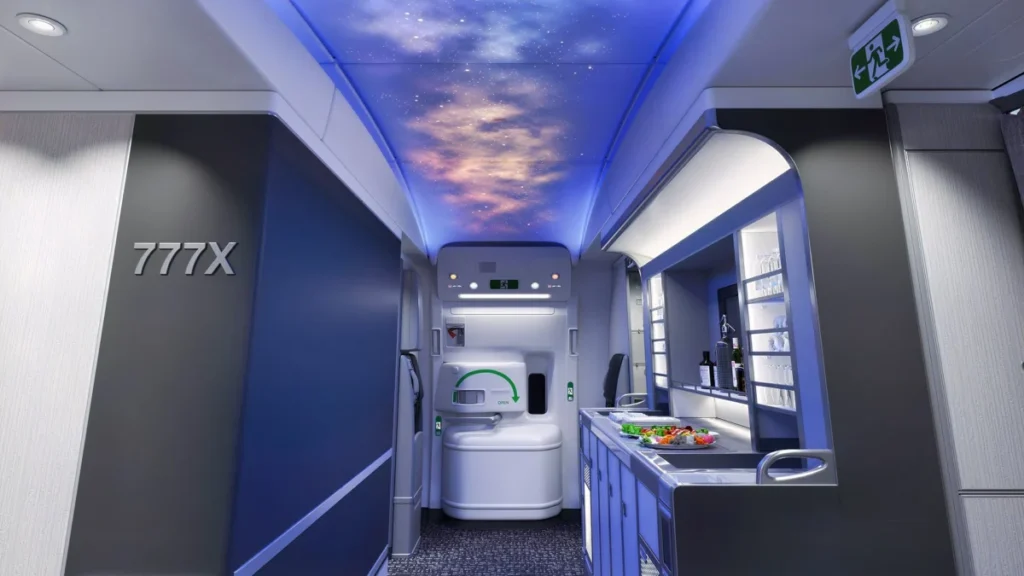
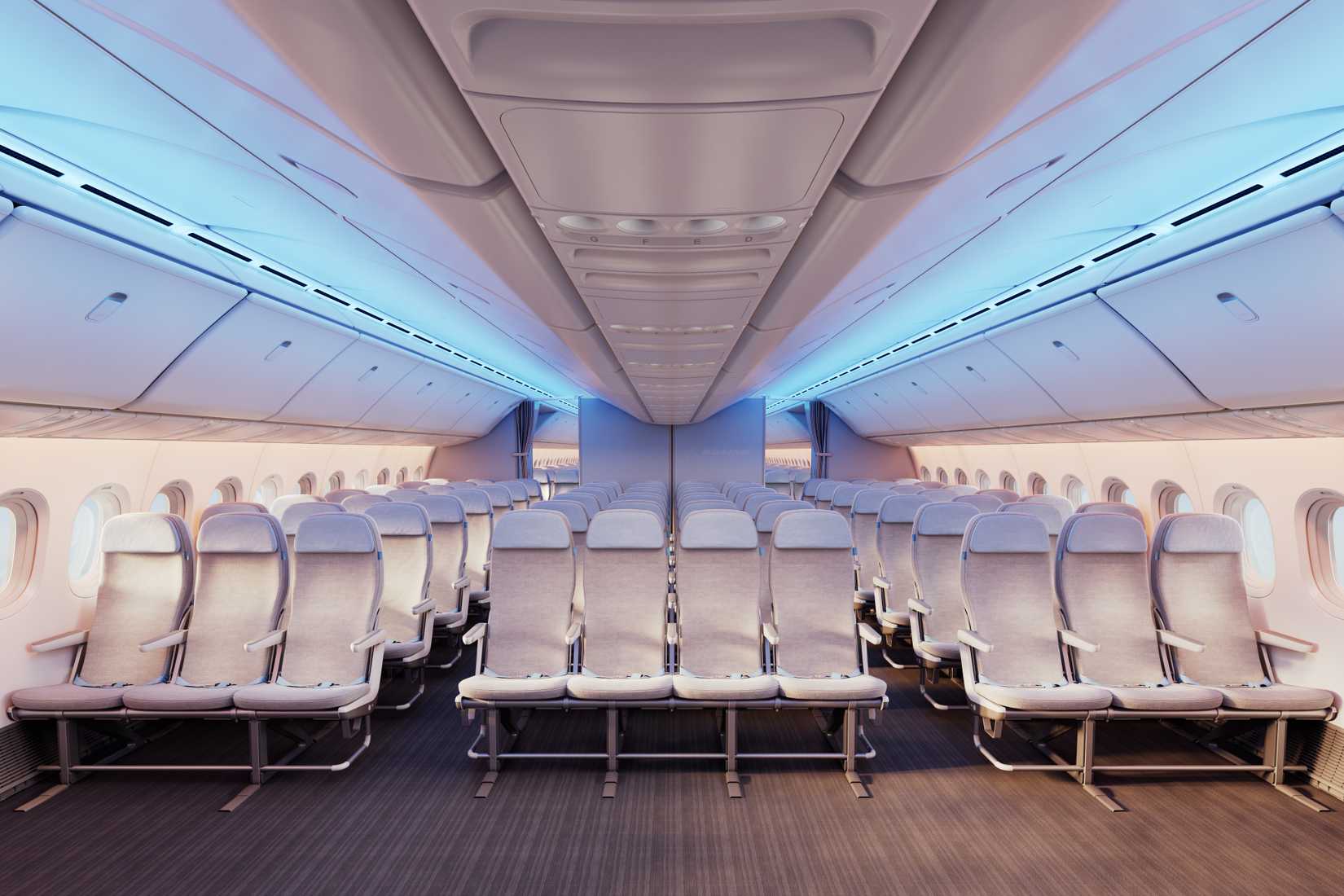
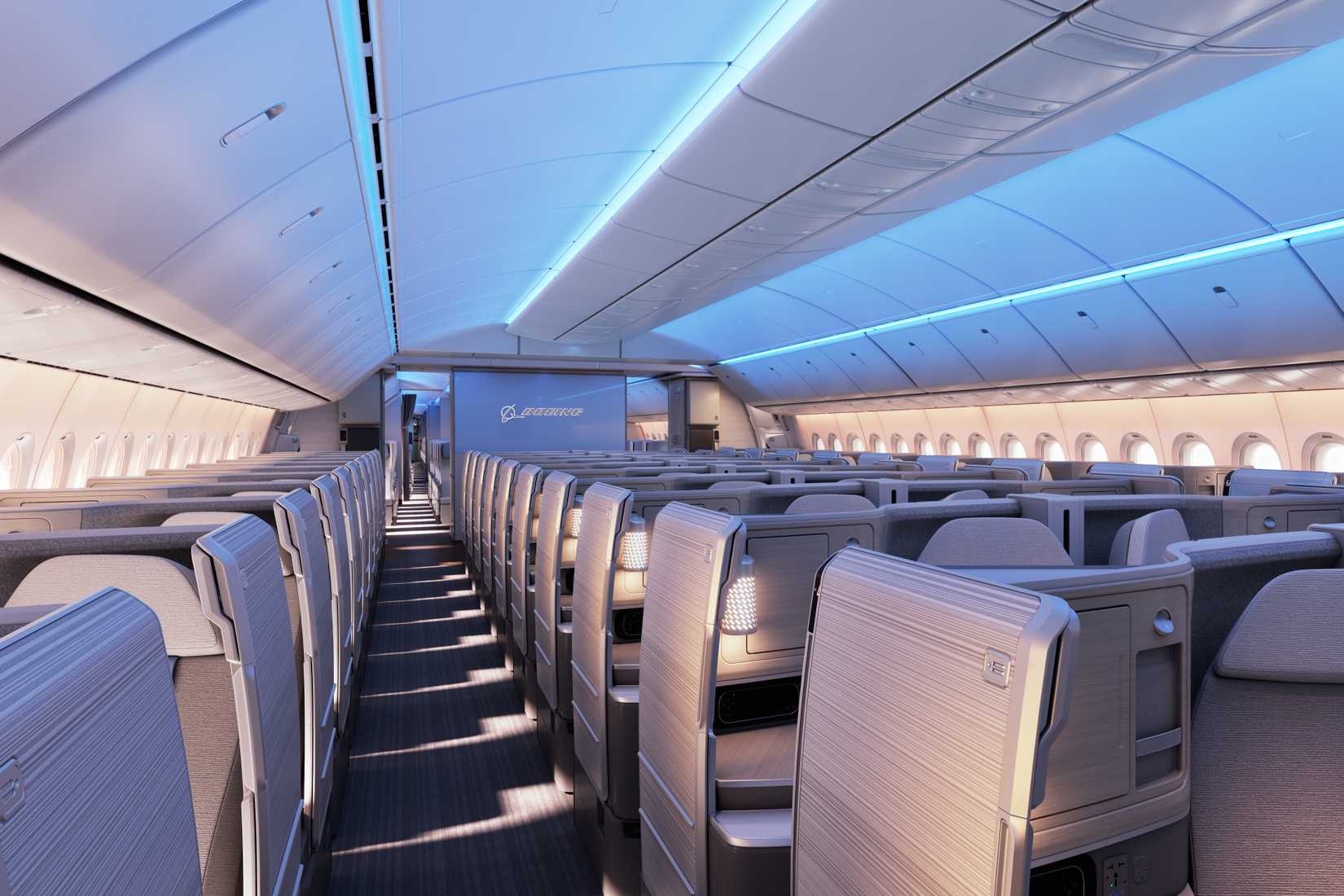
Passengers stepping aboard a Boeing 777X for the first time will immediately notice a distinct departure from the legacy widebody jets they have flown on for decades. Rather than a standard, uniform tube, the next-generation aircraft introduces an arched ceiling that eliminates the center overhead bins in premium zones, creating an immediate and striking impression of open space. The cabin also gains a slightly broader feel thanks to thinner fuselage walls, while physiological comfort is enhanced through a lower cabin altitude pressurization and increased humidity that allows passengers to breathe more easily. Furthermore, the windows are substantially larger and do not feature traditional pull-down blinds, though airlines retain the option to install them if they prefer.
Rather than relying on isolated features—many of which have already been introduced across the widebody industry, such as the dimming windows seen on the Boeing 787—Boeing’s engineers have combined a comprehensive suite of technological and architectural advances to redefine what passengers should expect from modern long-haul travel.
Created Through Pressure From Airlines
The Boeing 777 family has always occupied a unique space in commercial aviation because the manufacturer originally designed its cabin with significant, direct input from major airlines. This collaborative dynamic meant that airline customers continued to push Boeing for further enhancements in subsequent 777 variants, a trend that has heavily influenced the development of the 777X.
Kent Craver, Boeing’s regional director of cabin experience and revenue analysis, spoke with industry publication Aircraft Interiors International regarding the intensity of this customer pressure and the new impetus it provided to the engineering teams. Craver recalled airline feedback emphasizing that after the breakthrough success of the Dreamliner cabin interior, Boeing needed to replicate that leap forward for its larger sibling, noting that while the standard 777 cabin was good and the 787 cabin was great, the 777X needed to raise the bar even higher.
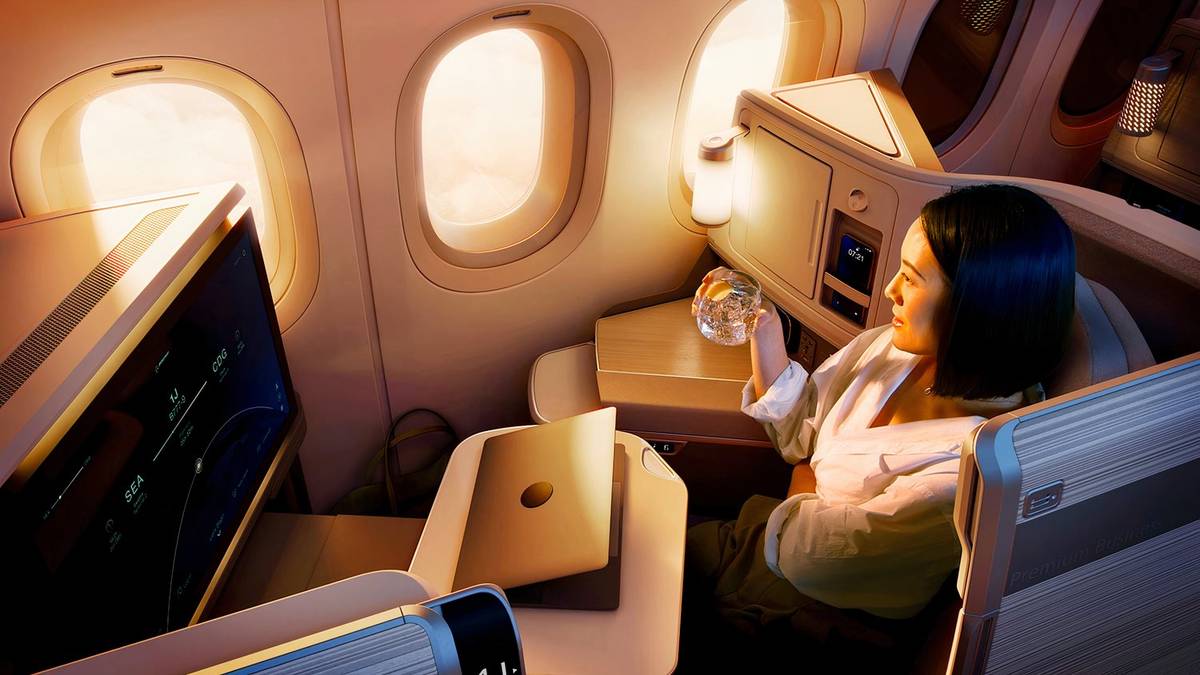
PJ Wilcynski, payloads chief architect at Boeing, acknowledged that the original 777 cabin is a tough benchmark to beat. However, the manufacturer is betting that airlines and passengers alike will find the 777X interior vastly superior due to improvements in cabin width, natural light, aesthetic appeal, and cutting-edge technological development.
The 777X Features Updated Cabin Architecture
Every aircraft cabin begins as a hollow tube that manufacturers and airlines must furnish and configure. For the 777X, Boeing completely redesigned this foundational architecture under its comprehensive "Sky Interior" philosophy. This design framework governs everything from dynamic LED lighting and intelligent stowage to ceiling treatments, sidewalls, advanced air filtration, cabin pressure, and atmospheric humidity. The result is a dramatically improved architectural environment, even though the 777X retains the same fundamental cabin cross-section as its predecessors.
Boeing’s engineers achieved this by leveraging advanced composite and lightweight materials in the construction of the interior sidewalls, allowing them to be made significantly thinner. This engineering feat expands the interior cabin width from 231 inches, or 587 centimeters, found on the Boeing 777-300ER up to 235 inches, or 597 centimeters, on the 777X. These four extra inches of width provide airline customers with unprecedented flexibility when configuring seating layouts and cabin classes.
According to technical data provided by Boeing for the flagship 777-9 aircraft, the cabin boasts an optimized width of 235 inches and a comfortable pressurization altitude equivalent to 6,000 feet, which significantly reduces passenger fatigue on ultra-long-haul routes. Typical two-class seating configurations span between 375 and 450 passengers, depending entirely on the specific layout chosen by the airline.
In line with modern interior design trends seen across top-tier carriers, the 777X features the removal of central stowage bins in the first-class and business-class zones. By clearing out these central overhead compartments, Boeing has created a much higher, sweeping ceiling that makes premium cabins feel vastly more spacious. By alleviating the traditional claustrophobic pressures associated with commercial air travel, airlines are positioned to command higher price points for premium tickets.

Giving 777X Customers a Huge Amount of Customization
Beyond passenger-facing comfort, Boeing’s design team has built an extensive framework of customization options for airline clients. Carriers now have a wide array of choices regarding sidewall finishes, stowage bin configurations, ceiling treatments, and even whether to include overhead bins in specific zones. This modular approach means airlines will no longer need to engineer and certify as many custom interior components from scratch, a process that historically added substantial costs and administrative complexity.
Airlines will also be able to configure these customizable presets in sophisticated ways to create distinct zones within a single aircraft. As Kent Craver explains, airlines can implement one ceiling treatment in a specific part of the aircraft and transition smoothly to an entirely different ceiling treatment in another section, maintaining a high level of design cohesion that allows the spaces to transition from one to the other with elegance.
Boeing anticipates that these varied customization options will resonate well with frequent long-haul travelers, ensuring that the ambiance aboard a 777X can vary noticeably depending on the airline operating the flight and the specific zones within the aircraft.
Larger Windows Create More Natural Light Than Previous 777s
Another major leap in passenger comfort aboard the 777X is found in its redesigned windows. Significantly larger than those on previous iterations of the 777 family, these windows flood the cabin with natural light, helping to reduce eye strain and establish a more open, connected travel experience. While older variants like the 777-300ER feature windows measuring approximately 140 square inches, or 903 square centimeters, every window on the 777X measures an impressive 162 square inches, or 1,045 square centimeters. This represents a roughly 16% increase in viewing area per window.
These windows are not merely larger; they also incorporate advanced technology. Rather than relying on traditional mechanical pull-down window blinds—though airlines retain the option to install them—the 777X utilizes Gentex Electronically Dimmable Windows. This technology features a specialized gel layer sandwiched between panes of glass. When an electrical charge is applied, a chemical reaction darkens the gel, blocking out up to 99.999% of visible light while darkening at twice the speed of earlier iterations.
Regular long-haul travelers who experienced similar systems on early Boeing 787 flights over a decade ago will find the technology familiar, but Boeing has refined the system for the 777X. Furthermore, Boeing has positioned the windows higher up on the fuselage and given them a more rounded shape, ensuring that passengers can comfortably look outside regardless of their height.
The Interiors of the "Terrible Teens" May Never See Operational Use
Despite the advanced design of the 777X cabin, commercial hurdles remain. Boeing currently holds a "shadow fleet" of early-build Boeing 777-9 aircraft, a group of test and prototype airframes affectionately or derisively nicknamed the "Terrible Teens." There is a very real possibility that the interiors installed in these early aircraft may never see active commercial service. Stored across facilities in Everett, Moses Lake, and Victorville, these jets require extensive modifications to meet modern certification standards and enter airline fleets.
Negotiations have stalled with launch customers such as Emirates and Lufthansa, both of which have expressed reluctance to accept these early airframes, arguing that the aging pre-built jets are structurally obsolete and inferior to fresh aircraft rolling directly off the active production line.
One of these early-build aircraft, Line Number 1611, has already been dismantled. Boeing stated that the airframe was used primarily for structural testing and never flew, noting that attempting to rebuild the aging prototype would have been financially unviable and forced the manufacturer to sell the completed jet at a severe loss.
Earlier in the year, industry rumors suggested that United Airlines might acquire some of the 777X airframes rejected by Emirates at a discounted rate, potentially bringing these early interior designs into active airline circulation. However, United Airlines has since confirmed that it has no interest in purchasing these pre-built jets.
A Strike Could Have Caused Delays for 777X’s Interiors Across the Entire Family
Beyond certification complexities and questions surrounding the fate of early prototype airframes, labor relations have threatened to disrupt Boeing’s timeline for bringing the 777X widebody to market. The manufacturer recently avoided a potentially crippling disruption by securing a new four-year pay deal with its unionized engineers, safeguarding the ongoing certification campaign.
Under the terms of the new labor agreement, engineers received an immediate 10% pay raise, with additional salary increases scheduled annually through 2030, alongside various perks and contract adjustments. Although the ratification vote was not unanimous, enough union members voted in favor to avert a strike that could have brought the widebody’s regulatory path to an abrupt halt.
Speaking earlier in the year, Boeing Chief Executive Kelly Ortberg emphasized the severity of the threat, noting that a strike would have immediately shut down the 777X certification program until engineers returned to work. While that immediate industrial action has been successfully averted, historical tensions between Boeing and its workforce leave room for ongoing vigilance as the aircraft program moves closer to operational service.
Related News