From Cold War Interceptors to Suborbital Rockets: Inside Starfighters Space’s Historic Flightline
Article Editorial Team
By Luke Diaz
Published Oct 23, 2026, 7:00 PM EDT
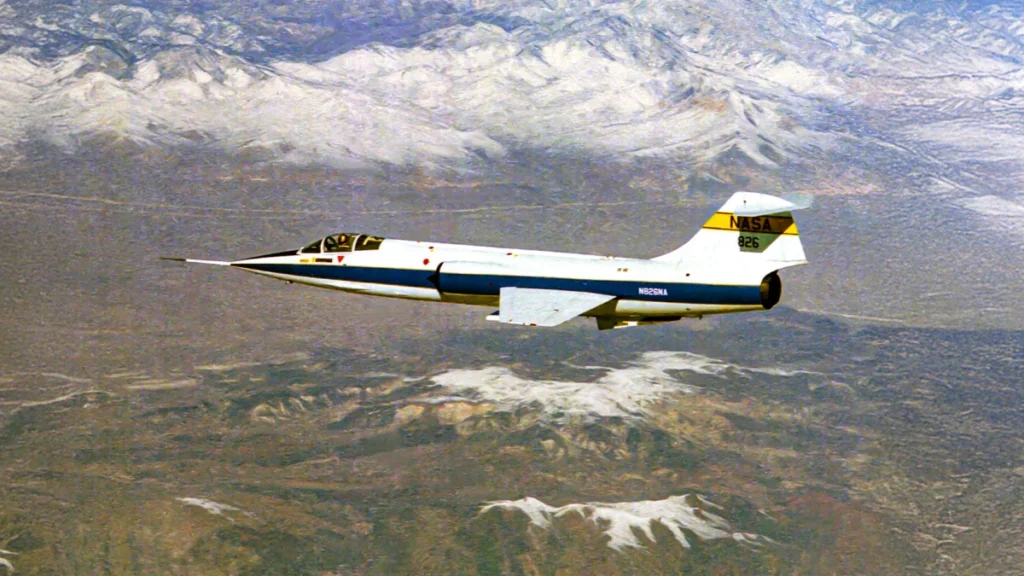
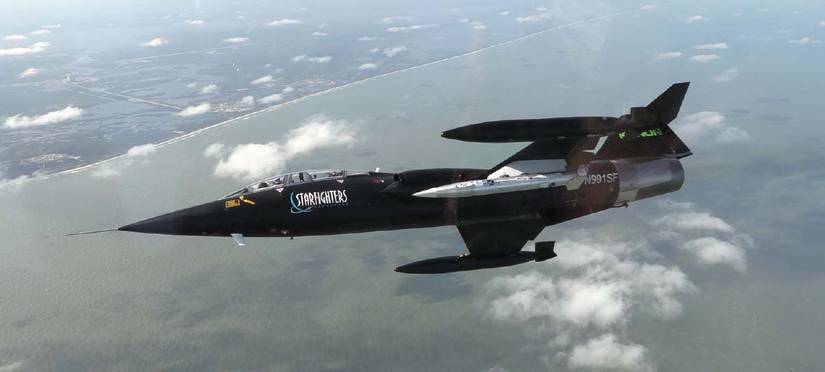
Starfighters Space holds a singular distinction in modern aviation: it is the proud owner and operator of the world’s only civilian fleet of flight-ready Lockheed F-104 Starfighters. Based out of a high-security hangar situated right beside the historic Space Shuttle runway at the Kennedy Space Center (KSC) in Florida, the company has spent more than two decades preserving, maintaining, and flying these legendary Cold War interceptors. Founded in 1995 by commercial pilot and former US Navy aviator Rick Svetkoff, the enterprise has evolved far beyond its initial vision as an airshow precision demonstration team, transforming into a vital commercial aerospace testbed, government contractor, and ambitious suborbital launch provider.
Svetkoff’s original intent for the iconic aircraft was straightforward: to showcase the sheer power and aerodynamic grace of the F-104 on the civilian air show circuit using a three-ship formation team. However, as the entertainment landscape shifted and the commercial space race began to surge around Cape Canaveral, Svetkoff recognized a far more lucrative and technologically significant application for the jets. Because of the F-104’s legendary thrust-to-weight ratio and its capacity for rapid, rocket-like vertical climbs, the supersonic aircraft essentially function as a reusable first-stage booster.
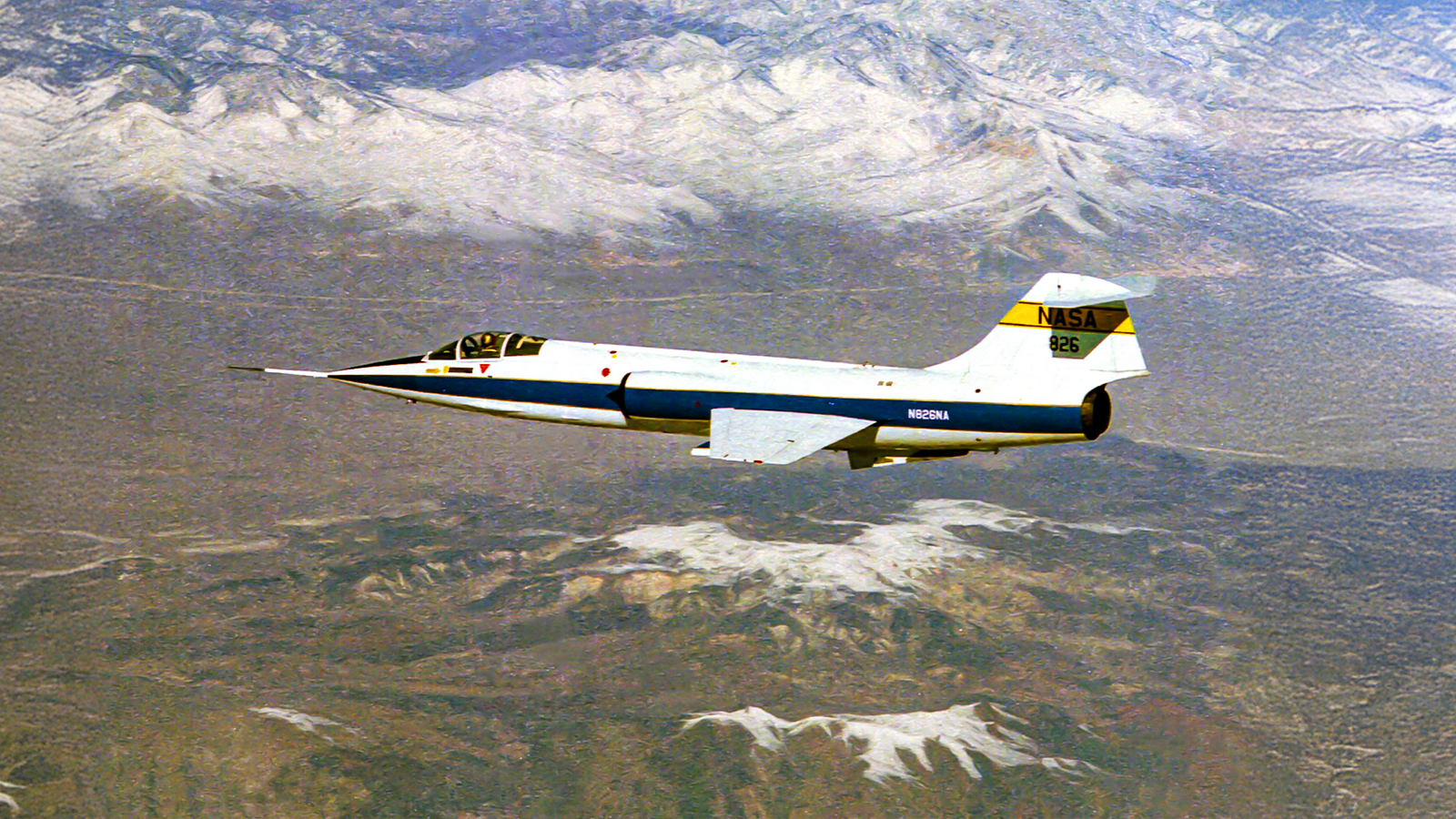
This realization steered the company toward lucrative government and private aerospace defense contracts. Beginning in 2011, the nimble fleet began serving as high-speed photo chase planes, specialized training targets for military exercises, and real-world technology testbeds for cutting-edge defense applications. This strategic pivot eventually culminated in an initial public offering that garnered $40 million, though it also triggered corporate friction that led to Svetkoff’s departure from the firm. While the company’s ultimate goal of conducting powered air-launch operations remains on the horizon, this winter marks a monumental milestone toward its first suborbital launch. In a high-stakes partnership with Vaya Space, the group is scheduled to conduct a critical captive-carry flight this winter, with the ultimate objective of completing a full suborbital rocket launch by 2027.
A Private Tenant On The Shuttle Runway
Rick Svetkoff’s journey into the cockpit began long before the creation of Starfighters Space. After joining the US Navy in 1978, he learned to fly and piloted A-4 Skyhawk attack jets before leaving active duty in 1984 to pursue an airline career. In 1996, he officially founded the Starfighters organization, initially performing airshows in former Royal Canadian Air Force CF-104s. The pivotal relocation to the Kennedy Space Center took place in 2007, and Starfighters Space made its inaugural flight from the legendary Shuttle Landing Facility that very same year.
Recognizing the unique capabilities of the operation, NASA signed a Space Act Agreement with the company. NASA invited Svetkoff’s team to KSC and contracted the F-104s to fly simulated suborbital profiles from the runway to help measure sonic boom effects, gathering critical data for future commercial spaceflight operations. NASA officials repeatedly described the arrangement as a vital pathfinder for the routine, multi-use commercial future of the site.

Today, the Kennedy Space Center features one of the longest runways in the entire world, making it an ideal primary operating base for Starfighters Space, which has also established a secondary base at Midland International Air & Space Port in Texas. The massive tarmac at KSC offers more than mere operational convenience; it provides the supersonic F-104s with the expansive rollout space required when handling heavy, unusual, and highly specialized test payloads that routinely demand extended take-off and landing rolls.
How Five Italian Jets Became A Test Fleet
The modern shape of the Starfighters fleet solidified in 2011, when the company acquired five retired F-104s directly from the Italian Air Force. While the organization’s long-term corporate vision centers on launching commercial satellites into orbit via its proprietary Starlaunch program, its day-to-day revenue-generating operations have focused heavily on high-speed research missions commissioned by defense contractors and federal agencies alike.
To accommodate these demanding clients, the company engineered the "Wind Tunnel in the Sky" platform—a specialized, modular underwing pylon system designed to host external customer sensors, experimental materials, and advanced avionics. A typical F-104 mission can expose these test articles to continuous Mach 2+ conditions for up to ten minutes during a single flight. This capability allows institutional clients, such as the US Air Force Research Laboratory and Lockheed Martin, to gather invaluable streams of empirical flight-test data in real-world atmospheric conditions that cannot be fully replicated inside a sterile laboratory wind tunnel.
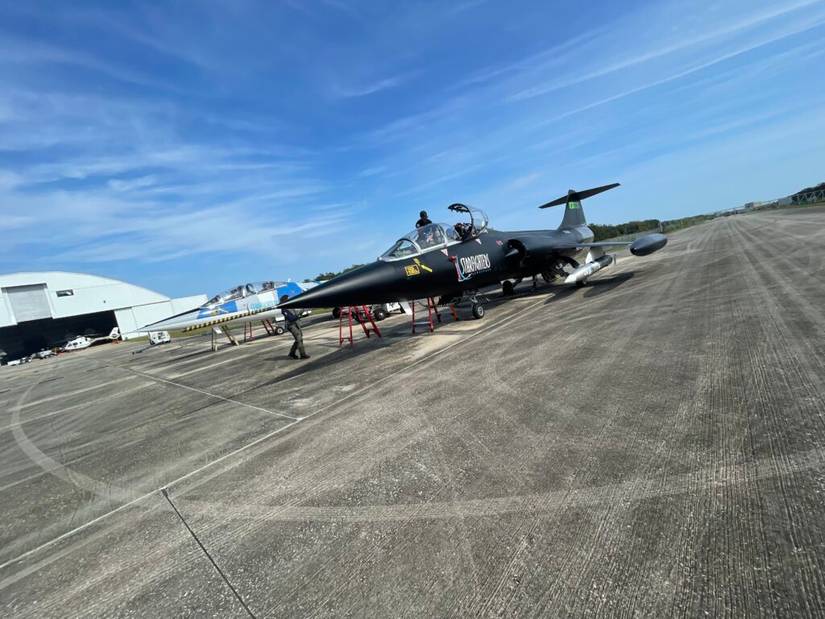
In 2025, a Starfighters Space F-104 carried GE Aerospace’s ATLAS test vehicle on three distinct supersonic flights from KSC. The Atmospheric Test of Launched Air-breathing System (ATLAS) program utilized one of the team’s modified Starfighters for a three-phase captive-carry flight series. The mission successfully flew an advanced propulsion test vehicle at supersonic speeds, validating the aerodynamic and thermal performance of next-generation solid-fuel ramjet technology earmarked for upcoming hypersonic defense programs.
The extraordinary thrust-to-weight ratio of the F-104 empowers the aircraft to climb and accelerate at pitch angles that closely mirror the vertical ascent stages of orbital spacecraft. Capitalizing on this, the company also offers its two-seat trainer variants to prepare civilian pilots and commercial astronauts for the intense physiological demands of high-altitude rocket travel. These specialized flights assist aerospace companies in validating human-machine interface devices within the cockpit and evaluating crew tolerance limits under punishing hyper-gravity maneuvers.
Adding Capabilities To The Starfighters Portfolio
Beyond high-speed aerodynamic testing, Starfighters Space has systematically expanded its flight portfolio to include dedicated microgravity research. During these specialized missions, the F-104s achieve 60 to 90 seconds of sustained microgravity per run by executing steep vertical climbs that culminate in parabolic arcs, effectively mimicking true spaceflight profiles. The jet’s superior power allows pilots to haul the aircraft into extreme vertical climbs before pushing the nose over into a controlled, weightless free-fall.
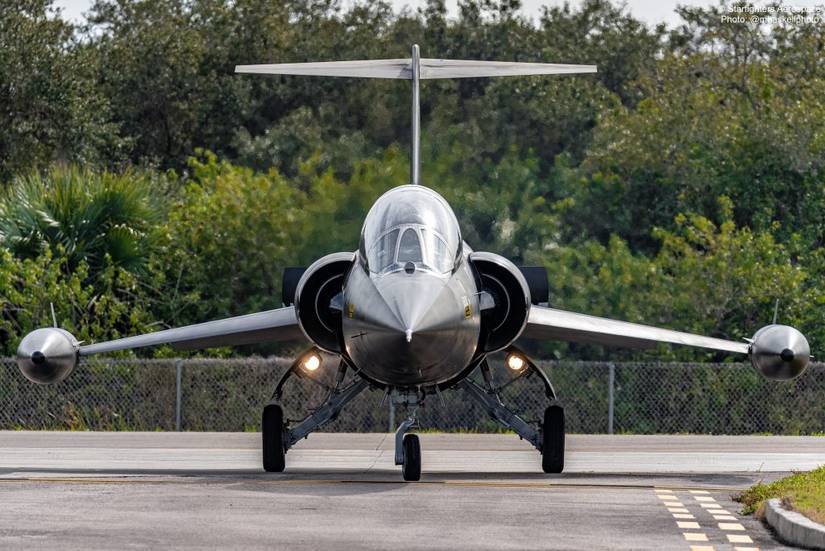
These parabolic flights are highly prized by researchers seeking to test ruggedized, space-bound hardware, sensitive sensors, and early-stage rocket components. This growing demand inspired a major strategic partnership with Mu-G Technologies, an enterprise that operates a specially modified Dassault Falcon 50 aircraft out of Midland International Air & Space Port. Under this cooperative arrangement, Starfighters provides the ground support, FAA flight certifications, and experienced test pilots, while Mu-G manages the sophisticated payload monitoring software.
Another core function fulfilled by the Starfighter fleet is serving as high-performance aggressor and target aircraft for military exercises, particularly across the Gulf region where numerous US Air Force, Navy, and Marine Corps squadrons regularly conduct training. Because the F-104 Starfighter possesses an exceptionally small frontal radar cross-section and can comfortably sustain speeds exceeding Mach 2, it can accurately replicate the flight profiles, radar signatures, and kinematic behaviors of modern supersonic cruise missiles or advanced foreign fighter jets.
Starfighters Space regularly flies these sorties against active-duty US military units to test advanced radar equipment, evaluate air-defense interception speeds, and verify tracking integration across the Joint Force. These unscripted tactical drills provide military radar operators and air-defense crews with genuine, real-world experience tracking a high-speed, supersonic threat—a specialized tactical support role that few civilian contractors in the world are equipped to provide.
From Wind Tunnel Models To A Landmark Test Flight
Despite the steady revenue generated through NASA contracts and military support work, the company remains singularly focused on achieving operational suborbital satellite delivery as its primary long-term mission. To prepare for this milestone, engineers tested the Starlaunch 1 configuration extensively in a wind tunnel facility operated by the joint engineering college of Florida A&M and Florida State universities. These exhaustive runs validated how a rocket separates cleanly from the host jet at trans-sonic speeds ranging from Mach 0.85 to Mach 1.3.
A formal critical design review previously confirmed that the vehicle architecture had achieved the maturity required to transition into fabrication and integration. The subsequent partnership with Vaya Space initiated the integration of the Vortex-Hybrid rocket engine technology designed to power the Starlaunch 1 suborbital vehicle. This propulsion system utilizes a solid 3D-printed plastic fuel mixed with a liquid oxidizer, making it remarkably stable, throttleable, restartable, and entirely non-explosive—qualities that render it safe enough to be bolted directly beneath the wing of a crewed F-104.
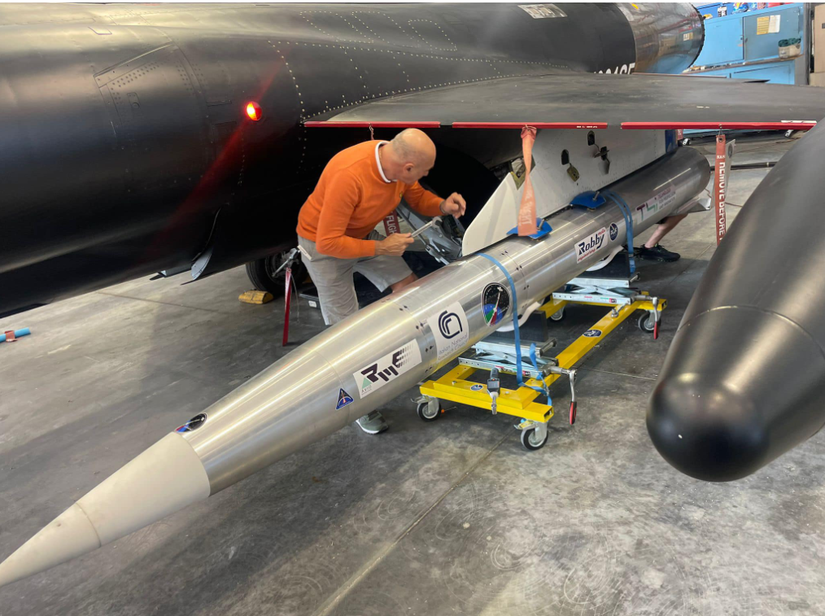
As part of their ongoing roadmap, the companies scheduled a December test flight to carry an inert rocket under one wing from Kennedy Space Center to the Cecil Spaceport in Jacksonville, Florida. A subsequent drop test over the Atlantic Ocean is planned, leading toward a comprehensive demonstration of the fully integrated propulsion system. The overarching objective of the suborbital program is to punch past the Kármán line at an altitude of approximately 100 kilometers, empirically proving that the air-launch system can reliably deliver small research payloads and microsatellites to the threshold of space.
What To Watch Before The Rocket Flies
Should the Starlaunch 1 campaign succeed, Starfighters Space intends to leverage the empirical data and operational lessons learned to initiate development on a more advanced Starlaunch 2 vehicle, continuing its collaborative research agreement with Vaya Space. However, a significant obstacle threatens to disrupt this carefully planned technical schedule: an ongoing corporate and legal dispute involving leadership and former founder Rick Svetkoff.
Starlaunch 2 is envisioned as the company’s definitive vehicle designed for full orbital satellite delivery, utilizing a sophisticated multi-stage configuration. This future architecture would likely pair a hybrid first stage capable of pushing payloads out of the dense lower atmosphere with an upper stage engineered to ignite in the vacuum of space, achieving the immense velocity required for permanent low Earth orbit insertion.
Yet, this technical progress unfolds against the backdrop of intense corporate governance battles and substantial legal expenses. Protracted litigation carries the potential to complicate ownership of underlying intellectual property or create friction regarding the physical fleet of F-104 aircraft that serve as the literal platform for the launch program. While current management continues pushing forward to ensure flight operations remain unhindered, resolving the boardroom conflict remains just as critical to reaching orbit as the successful ignition of the rocket propulsion system itself.
Related News