Getty Images Releases Mid-Year 2026 Creative Trends Check-In, Highlighting Shifts in AI, Authenticity, and Sports Culture
Article Editorial Team
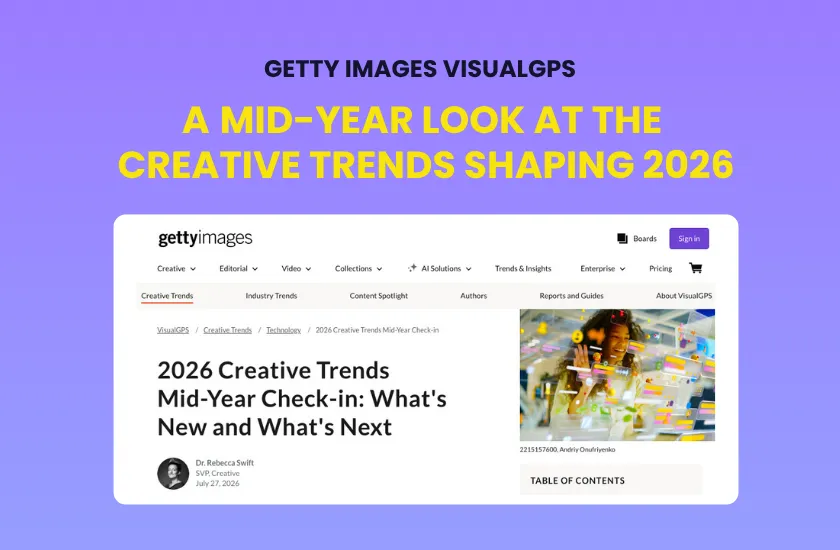
As the global creative industry crosses the halfway mark of the year, visual communications leader Getty Images has released a comprehensive look at how the visual landscape is shifting. Through its ongoing Visual GPS – Trends & Insights initiative, the latest report, titled “2026 Creative Trends Mid-Year Check-in: What’s New and What’s Next,” examines how the three primary creative movements of the year have matured across the Americas (AMER), Europe, the Middle East and Africa (EMEA), and the Asia-Pacific (APAC) regions.
Six months into 2026, the foundational messages driving these trends remain as potent and relevant as ever, yet their practical application in marketing, advertising, and editorial design continues to evolve. According to the insights gathered by Getty Images, contemporary audiences are growing increasingly sophisticated in how they consume visual media, prompting brands to adapt their strategies to maintain trust and relevance in a fast-moving cultural ecosystem.
AI in Imagery: Moving Beyond Sci-Fi Clichés to Everyday Integration
One of the most notable shifts documented in the mid-year check-in is the maturation of artificial intelligence as a visual motif. In the early stages of generative AI adoption, media and marketing campaigns frequently relied on heavy-handed, futuristic clichés—such as glowing digital neural networks, abstract humanoid robots, and floating binary code—to signify technological innovation.
However, Getty Images notes that brands are now moving away from these tired tropes. Instead, they are increasingly embracing imagery that captures the subtle, practical, and often mundane ways artificial intelligence is quietly weaving itself into everyday working life. Rather than framing AI as an ominous or hyper-futuristic external force, contemporary visual storytelling portrays it as an integrated tool that coexists with human labor and expertise.
Significantly, this visual language is not uniform across the globe; it manifests differently depending on regional cultural contexts. Across North and South America, the integration of AI is frequently depicted through the lens of skilled trades and hands-on professions, highlighting how technology augments traditional craftsmanship and labor-intensive industries. Meanwhile, Europe, the Middle East, and Africa have taken a more humorous and distinctly human counterpoint, using irony and relatable workplace scenarios to soften the narrative around automation. In the Asia-Pacific region, the visual approach tends to lean toward tightly focused close-ups of AI-powered applications, emphasizing precision, efficiency, and seamless integration into daily operations.
Authenticity: Redefining Perfection and Trust
The concept of authenticity has been a buzeword in the creative industry for years, but the Getty Images mid-year report suggests that the term is taking on a much deeper, more critical meaning. In the current visual landscape, polished perfection and immaculate production values are increasingly viewed with skepticism. Audiences are growing weary of heavily filtered, frictionless realities that fail to reflect the complexities of modern life.
Consequently, imperfections, genuine craftsmanship, and raw, everyday experiences are becoming powerful markers of trust and credibility. When brands embrace vulnerability and real human moments, they resonate more deeply with consumers who can instantly distinguish between manufactured narratives and genuine expression.
Much like the trends surrounding artificial intelligence, the expression of authenticity varies widely across geographic regions. In some markets, authenticity is visually communicated through a stronger sense of collective identity and community storytelling, emphasizing shared human experiences. In other regions, it manifests as a maximalist and deliberately chaotic aesthetic that mirrors the noisy, overlapping realities of modern existence. Elsewhere, the trend is deeply rooted in emotional and cultural expression, prioritizing local storytelling over homogenized global aesthetics.
Sports Culture: Shifting the Focus from the Field to the Fandom
The third major pillar of the 2026 creative landscape centers on sports, particularly in the wake of major global events such as the men’s World Cup. Traditionally, sports photography and advertising campaigns have maintained a hyper-focus on elite athletes, game-winning goals, and the immediate drama unfolding on the competitive field.
While athletic excellence remains captivating, the mid-year check-in highlights a distinct pivot in how sports are documented and commercialized. The spotlight is expanding to include the fans, who are increasingly recognized not merely as passive spectators, but as active, essential participants in shaping broader sports culture.
Rituals, community gatherings, and cultural expressions tied to fandom—ranging from fashion and streetwear to grassroots events and emotional supporter communities—are taking center stage. Brands are realizing that the cultural footprint of sports extends far beyond the final score. The shared emotional highs and lows experienced in living rooms, pubs, and packed stadiums offer a richer narrative terrain for creative storytelling than the game itself.
The Common Thread: The Imperative of Genuine Connection
Running through all these evolving trends is a singular, overarching theme: modern audiences possess an acute radar for insincerity. Whether evaluating a campaign that touches upon artificial intelligence, assessing the visual markers of authenticity, or observing how brands engage with sports fandom, consumers can spot manufactured narratives instantly.
As the creative industry looks toward the remainder of 2026 and beyond, the differentiator for brands will not be the novelty of the technology they use or the scale of their production budgets. Instead, success will belong to those that can convey authenticity in a genuine, meaningful, and culturally resonant way.
The full findings and visual insights can be explored through the original Getty Images report, 2026 Creative Trends Mid-Year Check-in: What’s New and What’s Next, available via their official platform.
Related News