Balancing Speed, Scale, and Identity: Why Modern Marketing Relies on a Hybrid Visual Strategy
Article Editorial Team
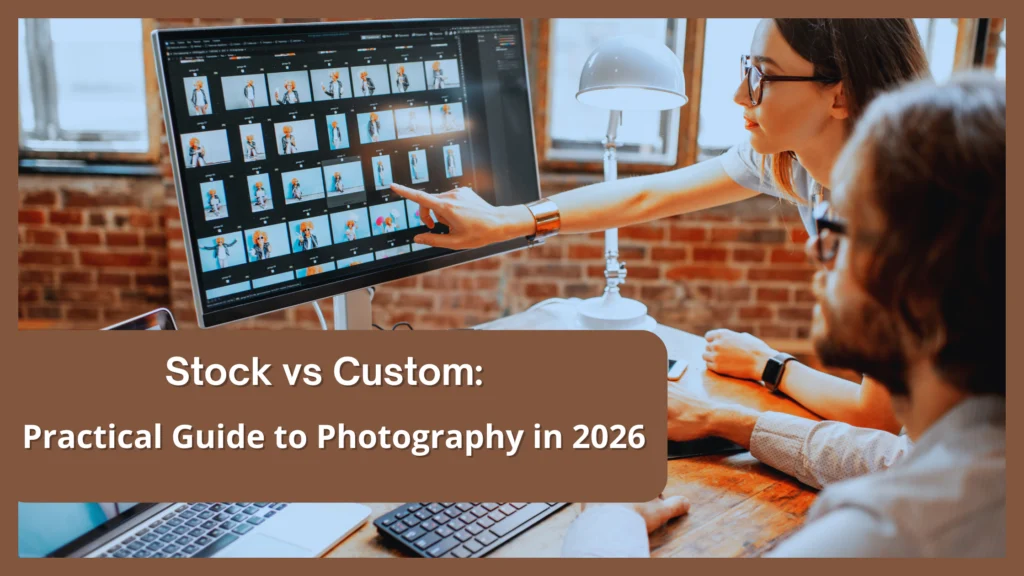
Marketing has evolved into a relentless, constant flow of content. Brands are no longer producing visuals occasionally—they are generating them continuously across digital channels, social media platforms, and advertising networks to keep pace with modern consumer demand. This fundamental shift has transformed how businesses approach imagery. What used to be a simple choice between basic stock photos and custom photography has transformed into a strategic decision directly tied to performance, financial scalability, and time-to-market speed. Both options carry distinct strengths, and understanding how they contribute to a broader content strategy has become essential for marketing teams navigating the digital economy.
At first glance, the difference in cost between stock photography and custom photography seems straightforward. However, the real distinction lies in how those financial investments behave over time. Stock photography is built entirely around efficiency. Through subscription models or prepaid download packs, businesses can access large volumes of images at predictable, decreasing per-download costs over time. Platforms like Shutterstock make it possible to sustain ongoing content production without running into unexpected expenses or budget overruns. This predictability allows marketing departments to forecast their annual visual expenditures with a high degree of accuracy.
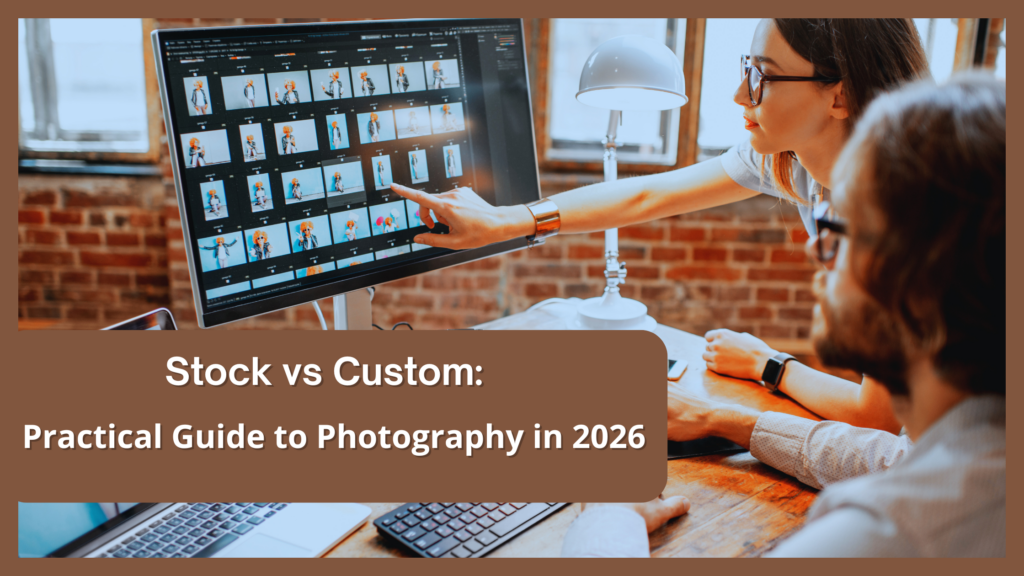
Custom photography operates under an entirely different economic model. Each project introduces a multitude of variable expenses, including location scouting, talent acquisition, professional styling, and extensive post-production editing. These cumulative elements add layers of cost that make budgeting significantly less predictable for businesses. While the final output of a custom shoot is entirely exclusive to the brand, the substantial financial investment required strictly limits how frequently this resource-heavy approach can be utilized at scale. Consequently, relying exclusively on custom shoots for daily marketing needs quickly becomes financially unsustainable for most organizations.
In today’s fast-moving digital environment, speed is often far more valuable than perfection. Time-to-market can make or break a digital campaign, and stock photography allows marketing teams to react instantly to unfolding market dynamics. Whether a company is launching an urgent campaign or responding swiftly to a viral social media trend, vast libraries of visuals are available on demand, ready to be deployed within minutes.

Conversely, custom photography introduces inherent delays by its very nature. The meticulous planning, execution, and editing required for a bespoke photoshoot necessitate extensive cross-departmental coordination, which extends project timelines from weeks to months. For brands operating rapidly across multiple channels simultaneously, the ability to publish content quickly can directly impact user engagement, click-through rates, and overall campaign performance. When a deadline is looming, waiting weeks for custom assets is rarely a viable option.
Modern marketing strategies fundamentally depend on consistency and high volume. Campaigns must continually adapt across various digital formats, diverse target audiences, and multiple geographic regions without losing brand cohesion. Stock photography natively supports this high-demand requirement by offering expansive content libraries that can be tailored to various contexts. Custom photography, while visually powerful for specific brand milestones, simply does not scale easily. Each additional market requirement or format change involves new production efforts, driving up both expenditure and turnaround time. This scalability challenge firmly establishes stock imagery as the operational backbone of modern content strategies.

The perception of visual quality has also experienced a notable shift. The historical gap between stock imagery and custom photography has narrowed significantly as the stock industry has evolved. Stock photos today are meticulously curated, trend-driven, and specifically designed for sophisticated commercial applications. Many modern stock images feel authentic and align seamlessly with contemporary consumer aesthetics, making them suitable for a wide range of corporate and creative applications.
Custom photography still excels, however, in creating hyper-specific brand visuals. It allows businesses to control every minute element in front of and behind the camera, producing imagery that reflects their corporate identity in a completely unique way. Interestingly, the recent surge of artificial intelligence in content creation has further shifted consumer perceptions. Audiences are increasingly drawn to visuals that feel genuinely real and trustworthy, regardless of whether they originated from a stock catalog or a bespoke photoshoot. The integration of advanced AI tools into platforms like Shutterstock further enhances stock imagery, enabling brands to adapt visual assets dynamically while maintaining authenticity and resonance with their audience.

Evaluating performance and return on investment requires a deep understanding of how specific visuals contribute to overarching business goals. Stock photography proves particularly effective for high-volume digital advertising, ongoing blog post illustrations, everyday social media management, and rapid creative testing where multiple iterations are tested against audiences. Meanwhile, custom photography delivers much stronger results when a business needs to establish high-impact hero images for a website homepage, showcase detailed product pages, or cement a core brand identity that competitors cannot replicate. Rather than comparing the two approaches as mutually exclusive adversaries, successful marketing organizations find it far more useful to evaluate precisely where each option generates the highest financial and creative return.
Because each approach serves a distinctly different function, the most effective modern marketing strategies combine both elements into a cohesive framework. Stock photography provides the operational flexibility and speed needed for continuous daily content production, while custom photography adds depth, exclusivity, and emotional weight where it matters most to the overarching brand identity. This dual-pronged combination allows brands to maintain a constant digital presence without compromising on moments that require bespoke visual storytelling. Major platforms play a key role in enabling this delicate balance, offering scalable licensing solutions that seamlessly complement custom production efforts.

Defining a successful visual strategy starts with a clear assessment of corporate priorities, budget constraints, and publishing frequencies. These foundational factors ultimately determine how stock and custom photography should be integrated into a daily workflow. Ultimately, the long-standing debate between stock and custom photography is no longer about trying to prove which method is inherently superior. Each serves a distinct and vital purpose within the modern content ecosystem. Stock images bring unmatched speed and scalability, while custom visuals provide unique identity and emotional impact. In today’s competitive landscape, the most successful brands are not choosing one approach over the other—they are leveraging both strategically to maximize their overall marketing results.
Related News