Shutterstock Reshapes the Digital Content Industry by Merging Human Creativity with Integrated Artificial Intelligence
Article Editorial Team
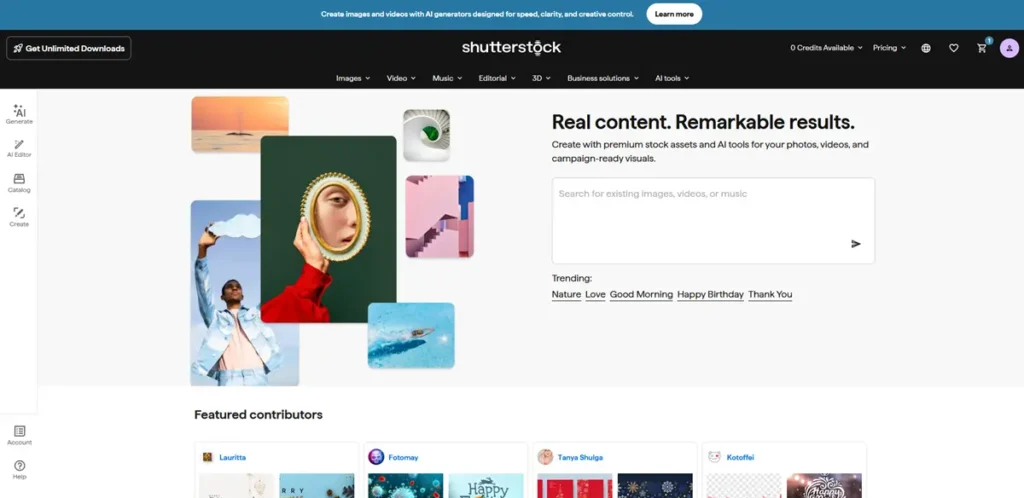
Shutterstock is fundamentally redefining the role of the traditional stock content library. Through a comprehensive platform evolution, the company is expanding far beyond simple asset discovery, positioning itself as a more complete, unified creative environment powered by a blend of authentic human-made content and advanced artificial intelligence.
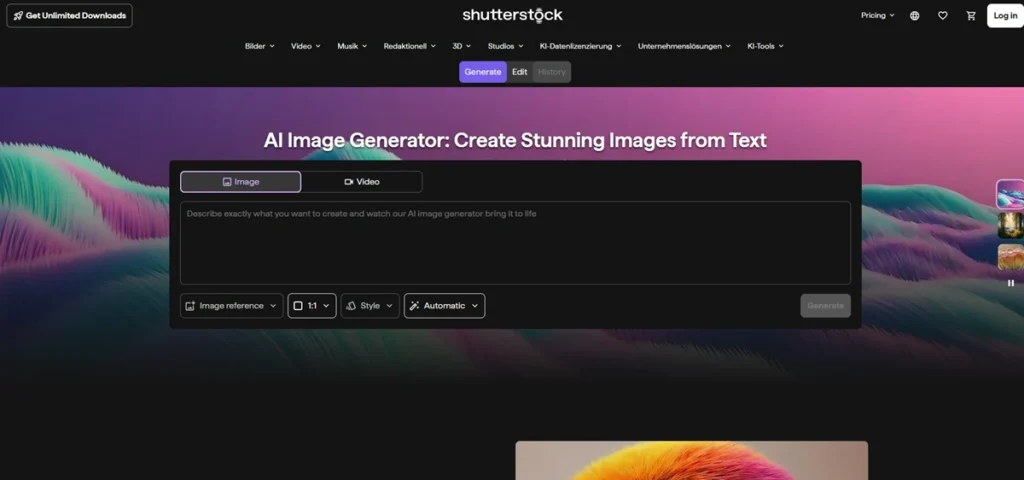
The updated Shutterstock platform has been meticulously designed for modern businesses, creative agencies, fast-paced marketers, and independent creators who must produce visual content at scale without sacrificing quality, licensing integrity, authenticity, or commercial usability. Rather than treating artificial intelligence as a separate, isolated tool or a mere novelty, Shutterstock is integrating generative capabilities directly into the core creative process. This seamless approach allows users to search, generate, edit, refine, and license rich multimedia content within one connected, frictionless workflow.
At the center of this strategic development is a clear foundational philosophy: professional creative work should always start with trusted, original human-made assets and be intelligently enhanced by artificial intelligence only when speed, flexibility, or precise customization is required. This philosophy addresses a growing tension in the modern digital economy, offering a middle ground between the boundless generation capabilities of pure AI systems and the reliable craftsmanship of traditional stock photography and videography.
A New Direction for Shutterstock’s Creative Ecosystem
For decades, Shutterstock has been widely recognized and relied upon for high-grade stock photographs, dynamic videos, detailed illustrations, professional music tracks, editorial content, and a vast array of other licensable assets. However, the operational needs of contemporary creative teams have shifted significantly. Modern brands no longer want to simply download finished assets from a static library and awkwardly adapt their marketing campaigns around pre-existing constraints. Instead, they demand highly adaptable content that can be dynamically shaped around specific messaging frameworks, distinct multimedia formats, targeted audience segments, and rigorous visual brand identities.
This evolving market demand is precisely where Shutterstock’s new platform direction gains its strategic importance. The company is actively transforming its massive content repository from a passive library into an active creative production system. While users can still begin their journeys by discovering premium, contributor-created assets, they can now take those assets much further by adapting and transforming them using native, built-in artificial intelligence capabilities.
This architectural shift makes the platform exceptionally useful for modern marketing workflows. Today’s campaigns frequently require multiple variations of the exact same visual, diverse aspect ratios for different social and digital channels, or subtle modifications that ensure a stock asset fits an exact creative brief. By housing these capabilities under one roof, Shutterstock is cutting down on the logistical friction that has traditionally slowed down creative production cycles.
Human-Made Content as the Starting Point
One of the most distinguishing aspects of Shutterstock’s strategic approach is its unwavering commitment to content created by real human contributors. While many standalone generative artificial intelligence platforms begin with a blank canvas and a text prompt to synthesize an output from thin air, Shutterstock’s model is firmly rooted in existing, pre-cleared, and licensable creative material produced by a global community of photographers, videographers, illustrators, and fine artists.
This robust human foundation gives the platform a unique and defensible position in a crowded AI market. Instead of attempting to replace original human creative work, Shutterstock is leveraging artificial intelligence to make that existing human work vastly more flexible and adaptable. For instance, a designer might find a stock photograph, video clip, or visual concept that is ninety percent right for a project, and then use integrated AI tools to seamlessly adjust the background, modify elements, or expand the layout for a specific campaign style or layout requirement.
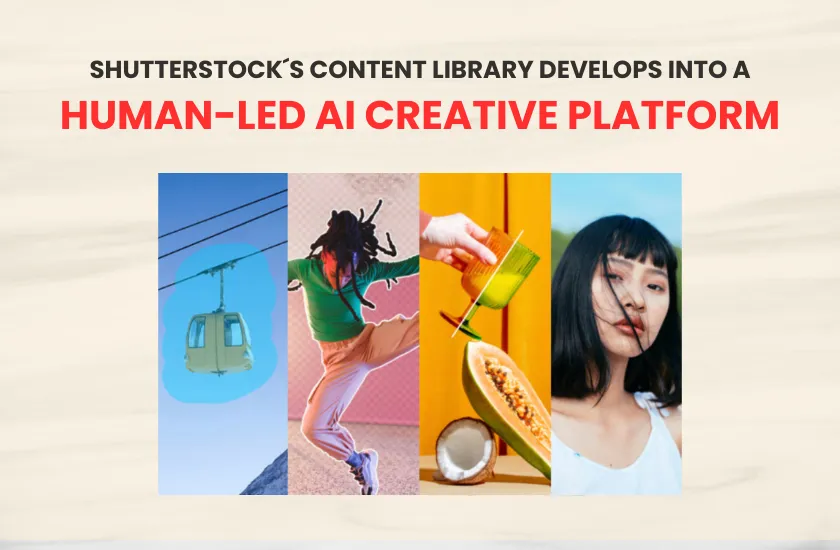
For corporate entities and risk-averse brands that remain cautious about the legal, ethical, and stylistic implications of pure, AI-generated visuals, this hybrid approach offers a far more practical and secure pathway. The creative journey begins safely with real content sourced from a trusted provider, while artificial intelligence acts strictly as a sophisticated instrument for refinement, personalization, and operational efficiency.
AI Features Designed for Practical Creative Work
To support this ambitious vision, the updated Shutterstock platform brings together a comprehensive suite of artificial intelligence features aimed directly at streamlining daily creative tasks. These capabilities encompass advanced AI image and video generation, inline editing tools, conversational search functions, intelligent prompt enhancement, and robust reference-based workflows.
The conversational search function represents a major leap forward for user experience, allowing creative teams to describe what they are looking for using natural, everyday language. Rather than forcing users to rely exclusively on rigid, short keyword combinations—a practice that often yields unpredictable results—the conversational interface enables teams to search in a manner that much more accurately reflects the actual mood, context, narrative, and visual direction of an upcoming project.
Reference-based features also play an integral role in maintaining visual integrity. Tools centered around content referencing and first-frame referencing help users guide artificial intelligence outputs with a high degree of precision, ensuring visual consistency across large batches of assets. This capability is exceptionally valuable for marketing teams working on extensive multi-channel campaigns where stylistic continuity, color grading, and brand alignment must remain strictly uniform.
Furthermore, Shutterstock has introduced its proprietary Model Match technology. This intelligent feature is engineered to automatically match a user’s specific text prompt with the most appropriate underlying artificial intelligence model for the designated task. By sparing users from the technical complexities of understanding and selecting between various underlying neural network architectures, the platform simplifies the workflow and makes advanced AI accessible to a broader range of professionals.
Reducing Friction in the Creative Process
In the contemporary media landscape, many creative teams are burdened by fragmented tech stacks. They typically search for stock media on one platform, pivot to a separate tool to generate AI-based concepts, switch to another application for editing and retouching, and then perform separate checks to verify whether the final output is legally clear for commercial deployment. This disconnected process inevitably introduces bottlenecks, dampens productivity, and creates unnecessary legal and operational uncertainty.
Shutterstock’s updated platform addresses this systemic industry problem by consolidating the most critical phases of the creative lifecycle. Asset discovery, generative AI production, granular editing, final refinement, commercial licensing, and customer support are now harmonized within a single, continuous ecosystem.
For enterprise marketers and agency professionals, this consolidation translates into profound operational efficiencies. Instead of constantly context-switching between disparate software packages, users can transition smoothly from initial inspiration and visual direction-setting to asset refinement and campaign-ready export from one unified dashboard.
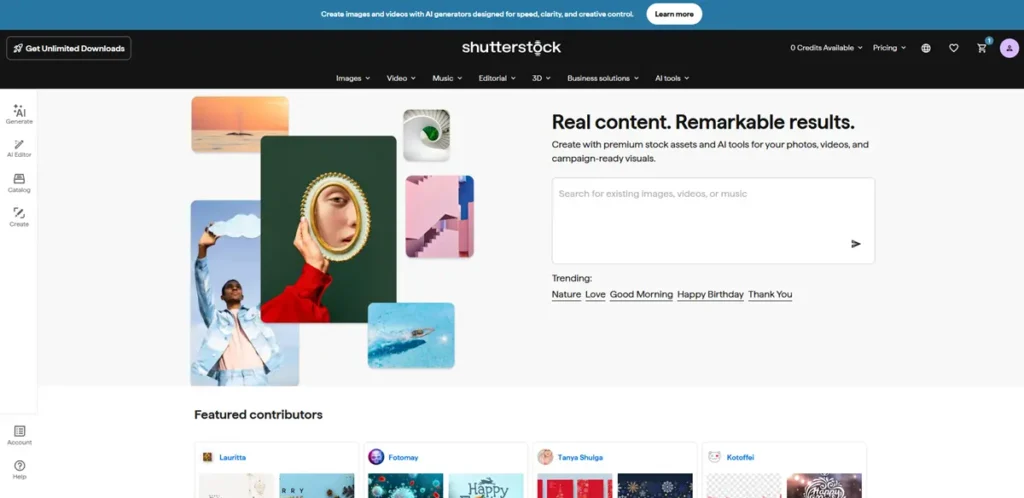
Moreover, the company’s expansion into AI-native environments—such as the official Shutterstock application integrated directly within ChatGPT—demonstrates a clear strategic intent to meet users precisely where they already brainstorm, plan, and execute their early-stage creative concepts.
Built for Commercial Use
For corporate buyers and enterprise-level businesses, the ability to rapidly generate or alter visual content is only one piece of a complex puzzle. Any utilized asset must also be fully cleared for public display, strictly brand-safe, legally bulletproof, and completely ready for high-stakes commercial campaigns.
Shutterstock is aggressively addressing these paramount concerns by embedding robust commercial-ready licensing, comprehensive legal indemnification, and diligent human review processes into its artificial intelligence offerings. This positioning is vital, given that many corporations remain hesitant to adopt generative tools due to unresolved questions surrounding copyright infringement and ownership rights.
By pairing AI-powered production capabilities with rigorous licensing support and verification procedures, Shutterstock is successfully marketing its platform as a dependable, enterprise-grade alternative for organizations seeking the productivity gains of artificial intelligence without the accompanying legal liabilities.
Contributors Remain Part of the Value Chain
A particularly notable element of Shutterstock’s platform transformation is its dedication to preserving the economic role of human contributors. Within this evolving framework, when content originally created by a human artist is subsequently edited using the platform’s AI tools and subsequently licensed to an end user, the original human contributor remains eligible to earn standard royalties.
This policy addresses a major point of contention within the broader creative community regarding the rise of artificial intelligence. Numerous photographers, designers, and illustrators have voiced legitimate concerns that generative technologies threaten to erode the economic value of original human craftsmanship. Shutterstock’s business model charts a different course, keeping human-authored content firmly at the center of the value chain while using AI strictly to extend the utility and longevity of that work.
Within this balanced ecosystem, human creativity establishes the core foundation, while artificial intelligence empowers users to adapt that foundation to meet diverse, hyper-specific project requirements.
Shutterstock’s Broader Role in the AI Economy
The recent platform update is also deeply intertwined with Shutterstock’s broader corporate evolution as a foundational player in the global artificial intelligence economy. Beyond serving the daily needs of marketers, creative directors, and brands, the company maintains a massive footprint in the AI infrastructure space through its dedicated Data Licensing and AI Services division.
This specialized business sector supplies major technology developers and artificial intelligence research labs with fully rights-cleared training data, meticulously curated datasets, model evaluation frameworks, fine-tuning benchmarks, human-in-the-loop validation workflows, and structured creative feedback. These essential services empower technology firms to build, train, and refine safer, more accurate AI models using responsibly sourced, licensed content and expert human oversight.
Consequently, Shutterstock is operating simultaneously on two distinct levels. It provides practical, everyday creative productivity tools for end-users while actively supporting the underlying technological development of the advanced AI systems that power the modern digital landscape.
A More Complete Platform for Modern Content Creation
Shutterstock’s strategic platform evolution reflects a structural shift in how visual media is conceived, produced, and deployed. Modern creative teams operate under constant pressure to deliver higher volumes of content with greater speed, flexibility, and scale, yet they simultaneously require absolute trust, brand consistency, and commercial confidence.
By harmonizing premium human-made assets with state-of-the-art AI generation, intuitive inline editing, conversational discovery, streamlined workflow tools, and comprehensive licensing protection, Shutterstock is effectively transcending the boundaries of the traditional stock library model.
The platform has matured into an interconnected creative ecosystem where professionals can discover inspiration, shape concepts, customize visuals, and prepare production-ready content for real-world campaigns with unprecedented efficiency. For brands, agencies, and independent creators alike, the core value proposition remains straightforward: begin with trusted, human-created content, utilize intelligent artificial intelligence to refine and personalize it, and transition seamlessly from initial concept to finished commercial asset with absolute confidence.
Related News