The Cost of Positiveness: Three Recent Sports Science Studies That Didn’t Go as Expected
Article Editorial Team
Published October 27, 2026
It is a well-documented phenomenon that scientific research is much more fun for everyone involved when a study actually works. As a writer covering the intersection of athletics and science, there is a distinct, undeniable pleasure in diving into research suggesting that simple interventions—such as drinking beet juice, zapping your brain with microcurrents of electricity, or even putting on a deliberate smile—might shave crucial seconds off your personal best.
Yet, this inherent bias toward positive results—one that is shared by science journalists, researchers, and athletes alike—carries a hidden cost. If we exclusively highlight experiments that yield groundbreaking, positive outcomes, we create a distorted public perception where practically everything appears to work. Imagine a scenario where ten independent scientists investigate a new athletic supplement and nine of them find it completely ineffective. If public discourse only focuses on the tenth scientist, who happened to stumble upon a marginal positive result or experienced a statistical anomaly, the general public naturally assumes that the new supplement is a miracle cure. This is publication bias in action, skewing our understanding of human physiology and athletic training.
In recognition of this pervasive danger, it is worth examining recent scientific literature through a different lens. Rather than focusing solely on the breakthroughs that make compelling headlines, looking at well-designed studies that did not work—or where the initial reaction to the data is a disappointed acknowledgment that the intervention failed—provides vital context. In reality, these studies were entirely successful because they answered lingering questions that researchers had debated for years. They offer valuable data and fascinating physiological insights, even if the conclusions are not necessarily the ones the athletic community was hoping to find.
Ketones Don’t Improve Recovery
The first notable test of an overhyped theory involves the use of exogenous ketones to boost recovery following hard physical training or grueling competition. Ketones first captured widespread attention in the athletic world around 2018, when they emerged as a potential miracle fuel for endurance athletes, particularly within the professional cycling peloton. While that initial wave of hype eventually subsided, subsequent research shifted the narrative, suggesting that the true magic of ketones might lie not in immediate performance enhancement, but in accelerating recovery and warding off the insidious onset of overtraining.
To put these theoretical claims to a rigorous test, a prominent research group at KU Leuven in Belgium—the very pioneers behind the concept of ketones for recovery—designed a comprehensive study. Their findings were published in the journal Medicine and Science and Sports and Exercise. The researchers enlisted 18 competitive cyclists to complete a brutal, eight-day simulated cycling stage race, modeled closely after the punishing demands of the Absa Cape Epic mountain bike tour. Following each daily stage and immediately before retiring for bed each evening, the cyclists were administered either a dose of KetoneAid ketones or an equivalent placebo.
The underlying hypothesis was clear and optimistic. The research team hoped that the administration of ketones would actively accelerate post-exercise recovery, meaningfully enhance both sleep duration and sleep quality, and successfully preserve physiological and cognitive function in the face of cumulative physical fatigue. Combining all these factors, the researchers anticipated that the cyclists receiving ketones would demonstrate superior performance and go faster as the stage race progressed.
Ultimately, none of these anticipated benefits materialized. As the days wore on, the cyclists inevitably grew tired and slower, but there was virtually no measurable difference in performance, recovery markers, or physiological strain between the ketone group and the placebo group.
Interpreting these null results leaves researchers with several plausible explanations. One possibility is that the sample size of 18 athletes was simply too small to pick up subtle differences between the interventions. Another hypothesis is that eight days of racing for more than three hours per day, while intensely difficult, did not induce enough systemic fatigue for the potential protective benefits of ketones to become apparent. A third and more sobering possibility is that, despite earlier promising laboratory trials, ketones simply do not make a practical, noticeable difference in real-world athletic scenarios. While science has yet to determine which of these explanations is definitively correct, these results establish a firm ceiling on future expectations. Even if ketones do play some minor role in combating cumulative fatigue, the effect cannot be enormous, or it would have surfaced during such an exhaustive multi-day trial.
Low-Level Laser Therapy Doesn’t Stimulate Your Mitochondria
Another heavily marketed technology facing a reality check is low-level laser therapy—historically referred to as red light therapy and more recently rebranded under the broader term photobiomodulation, as manufacturers discovered that light-emitting diodes (LEDs) could be used interchangeably with actual lasers. The core premise of this technology is that specific wavelengths of light falling within the red and infrared spectrum can interact directly with human cells to produce beneficial physiological effects.
This concept has a surprisingly long history. Hungarian scientists in the 1960s first claimed that exposure to these light wavelengths could accelerate hair growth and wound healing in mice. Decades later, high-profile athletic figures adopted the approach, with running coach Alberto Salazar reportedly shipping a full-body photobiomodulation unit to Brazil for his athletes to utilize prior to the 2016 Rio Olympic Games. Over the years, countless miraculous claims have been made regarding what this technology can achieve for the human body. One of the most scientifically grounded claims suggested that these specific wavelengths of light are absorbed directly by a targeted enzyme within cellular mitochondria, thereby boosting mitochondrial function and enhancing various metabolic pathways.
While this cellular mechanism had been successfully demonstrated in controlled test-tube experiments, it had never been rigorously tested in living humans. To address this gap, a research group led by Luc van Loon at the University of Maastricht decided to put the claim to the test, publishing their methodology and results in Medicine and Science in Sports and Exercise.
The study involved 12 healthy volunteers who received three separate five-minute doses of photobiomodulation applied via a K-Laser Cube Plus 30 device to one leg, while receiving matching placebo doses with the light turned off on the opposite leg as a control. To evaluate the physiological impact, researchers gathered muscle biopsies and skin samples precisely half an hour after the treatment session to assess mitochondrial function and analyze the expression of specific genes related to human muscle metabolism.
The results of the investigation were remarkably straightforward to summarize. Aside from a minor degree of surface warming detected at the skin level due to the physical presence of the device, there was no measurable difference whatsoever between the treated leg and the placebo leg. Given that commercial claims surrounding photobiomodulation are remarkably broad—alleging treatments for conditions ranging from Achilles tendinopathy and lumbar discopathy to pressure ulcers and restricted range of motion—a single scientific study cannot possibly debunk every single marketed application. Nevertheless, the definitive lack of mitochondrial stimulation in human muscle tissue should give consumers and athletes significant pause before investing in expensive equipment.
Ice Baths and Hot Tubs Are Equivalent for Post-Exercise Recovery
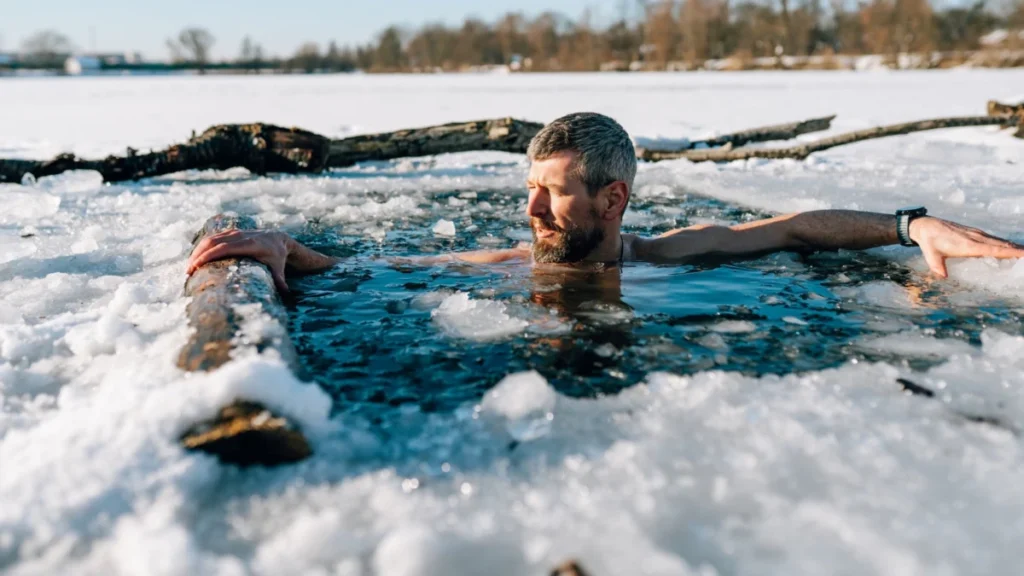
The final study under review, published in the Journal of Sports Sciences by a French research team led by Thomas Rupp and Sébastien Racinais, offers a classic glass-half-empty or glass-half-full dilemma for sports medicine. The researchers put 22 healthy volunteers through a demanding, simulated soccer match designed to induce substantial physical strain. Immediately after the match, as well as one day and two days later, the participants were subjected to 25-minute recovery sessions in either an ice bath maintained at 57 degrees Fahrenheit or a hot tub maintained at 108 degrees Fahrenheit. Throughout the testing period, the researchers closely monitored markers of subjective soreness, overall muscle fatigue, and objective neuromuscular function.
Once again, the empirical results were remarkably clear-cut: there were no statistically significant differences in recovery outcomes between the ice bath group and the hot tub group.
From a purely logical standpoint, the most straightforward conclusion is that neither intervention does anything physiologically meaningful. It defies basic biological reasoning to assume that performing a physical intervention, and subsequently performing the exact opposite intervention, would both produce positive recovery outcomes. Regardless of the specific cellular mechanism theorized to be at play—whether involving alterations in local blood flow, the reduction of inflammatory signaling pathways, changes in antioxidant levels, or other systemic responses—cold exposure and heat exposure should theoretically yield opposing biological effects. If both hot water immersion and freezing water immersion produce identical end results, it is highly probable that the induced physiological changes do not actually matter for recovery.
However, that is not how the researchers chose to frame their findings. The primary motivation of the study was actually to test the viability of hot-tubbing as a novel recovery modality, with the ice bath group serving as the established "standard of care" control group. Operating from the entrenched assumption that ice baths are inherently effective for recovery, the fact that hot-tubbing produced identical results led the authors to conclude that a hot soak is simply a practical and effective alternative for athletes seeking post-exercise recovery.
Despite the optimistic framing in academic literature, skepticism remains warranted. While the physical sensation of stepping into an ice bath following a grueling workout remains widely popular among competitors, the underlying physiological benefits continue to be a subject of intense debate among sports scientists. While remaining open to future evidence, the accumulated data increasingly point toward recovery modalities functioning largely as powerful placebos. In that context, concluding that a hot tub is just as good as an ice bath may ultimately mean that neither offers much more than psychological comfort.
Related News