Ford E-Series Dimensions and History: What to Know Before Building a Budget Camper Van
Article Editorial Team
For DIY builders and travel enthusiasts seeking an affordable entry point into the world of mobile living, the Ford E-Series—historically known as the Econoline—remains one of the most reliable and budget-friendly platforms available. Spanning more than six decades of production, these full-size American workhorses have cemented their reputation as a foundational vehicle for van life conversions. For prospective builders looking to evaluate whether these platforms offer the necessary interior space for a custom layout, understanding their exact structural dimensions and historical variants is an essential first step.
The Ford E-Series represents the fourth generation of full-size commercial and passenger vans from the manufacturer. Manufactured continuously from 1992 through 2014, the model line was eventually phased out for cargo and passenger configurations and replaced by the modern Ford Transit. Prior to the year 2000, these vehicles were widely marketed under the names Ford Econoline, Ford Econovan, or Ford Club Wagon. Having remained in production for over 60 years in various forms, the model line stands as one of the longest-running vehicle architectures in Ford’s history, establishing a massive secondary market supply of affordable used platforms.
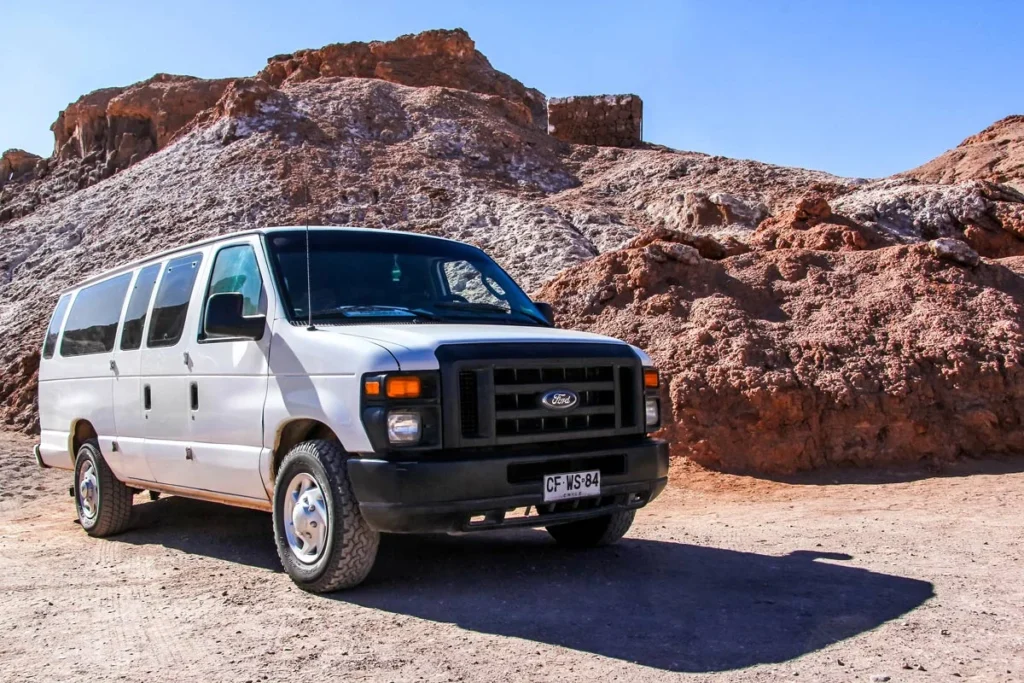
When evaluating the model lineup, buyers will find that all fourth-generation Ford E-Series vans share a standardized 138-inch wheelbase. Within this shared wheelbase, Ford offered two distinct length variations—regular and extended—alongside a single standard roof height configuration. Additionally, buyers can choose between three primary nameplates: the E-150, E-250, and E-350. The E-150 serves as the standard-duty option suited for typical recreational builds, while the E-250 and E-350 designations represent heavy-duty and super-duty variants engineered with significantly higher towing capacities, heavier payload thresholds, and much more robust suspension systems designed originally for commercial trade applications.
Examining the physical dimensions of these vehicles reveals the spatial constraints and advantages builders must navigate. For regular length models, the exterior length measures 216.7 inches, providing an interior cargo floor length of 121.4 inches. Upgrading to the extended body style increases the exterior length to 236.7 inches and stretches the interior cargo floor length to 142.4 inches. Across all fourth-generation models, the exterior width measures 97.5 inches including the side mirrors, or 79.3 inches when excluding them. Inside the cargo area, the maximum floor width reaches 72.4 inches, while the usable width between the interior wheelhouses narrows to 52.8 inches. In terms of vertical space, standard roof variants feature an exterior ground-to-roof height of 82.3 inches, which translates to an interior cargo floor-to-ceiling height of 53.9 inches.
Making sense of these technical specifications requires a clear understanding of how automotive manufacturers calculate and present standard vehicle dimensions. The wheelbase, defined as the precise distance between the front and rear axles, dictates not only the overarching interior layout potential but also influences the vehicle’s turning radius and overall highway stability. Because the E-Series utilizes a fixed 138-inch wheelbase across its primary variants, the additional interior volume in extended models is achieved entirely through rear overhang rather than a stretched center span.
Roof height is another critical consideration for prospective van lifers. Because the standard E-Series roof sits at an interior height of 53.9 inches, an average adult cannot stand upright inside the cabin without aftermarket modifications. While a lower ceiling might initially seem like a drawback for full-time travel, a standard-height roof offers several distinct advantages. Lower-profile vans provide superior clearance for navigating low-hanging tree branches, drive-thru lanes, and parking garages. Furthermore, maintaining a lower overall height simplifies roof maintenance and improves access to mounted solar panels or storage cargo boxes. Vehicles with standard roofs are also generally less expensive to acquire upfront and offer a much higher degree of stealth camping discretion compared to high-roof alternatives.

Door dimensions also dictate how builders design their interior layouts and access gear. Key measurements include the side-door opening height from the ground, the side-door opening width when fully extended, and the rear cargo door opening width. Cargo capacity metrics further refine spatial planning. Total cargo volume measures the cubic feet available behind the driver’s seat based on the combined length, width, and height of the living space. Builders should note that passenger van variants, historically marketed as the Ford Club Wagon, feature significantly restricted cargo volumes in their stock configurations because their interior floor space is occupied by factory seating rather than open floor plan area.
Additional technical figures provided in manufacturer documentation include cargo length measured at the floor level versus the beltline, maximum floor width, and the distance between interior wheelhouses. Unloaded load height indicates how high heavy equipment must be lifted to clear the cargo floor, while maximum payload and Gross Vehicle Weight Rating metrics define the safe structural limits for combined vehicle and gear weight.
The enduring popularity of the Ford Econoline for van life on a budget stems from its sheer market ubiquity and cost-effective maintenance. Because these vehicles were produced in massive quantities for fleets, tradespeople, and shuttle services, replacement parts are readily available and affordable. The E-Series features a reliable rear-wheel-drive platform paired with a variety of robust engine options, making it exceptionally capable for towing trailers and handling rugged terrain or unpaved forest service roads. Many experienced travelers consider the platform to be among the most dependable foundations for an economical mobile home build.
Regarding the lifecycle of the vehicle line, production of the E-Series passenger and cargo vans officially concluded in 2014 to make way for the Euro-style Ford Transit. However, Ford continues to manufacture cutaway and stripped chassis versions of the E-Series for commercial use today. For builders struggling with the limitations of a standard-height roof, aftermarket modifications remain a viable solution. Installing a custom pop-top roof can expand interior standing room to six feet or more, though professional installation costs for high-tops and pop-tops typically range between $7,500 and $12,000 depending on the specific design and supplier.
When selecting between specific nameplates, builders generally weigh the E-150 against the heavier E-350. The E-150 provides a comfortable, standard-duty platform ideal for straightforward camper conversions focused on living space. Conversely, builders planning to haul heavy gear, attach heavy trailers, or integrate extensive off-grid infrastructure frequently opt for the E-350 due to its heavy-duty suspension and superior towing capabilities.
Related News