Art in Bloom: Rockford Students Transform Climate-Threatened Birds into Vibrant Mosaics
Article Editorial Team
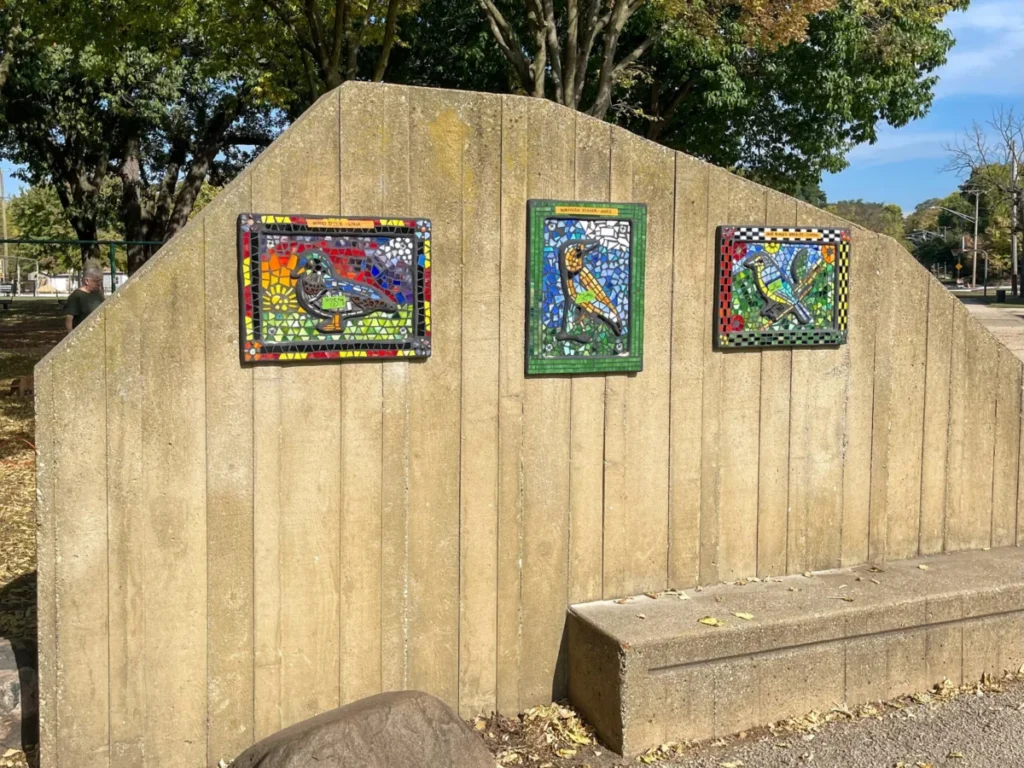
In the heart of Rockford, Illinois, a transformation has taken place that is as much about environmental advocacy as it is about artistic expression. Over the course of a single summer, a group of local students, guided by the vision of artist Susan Burton and the environmental expertise of the Sinnissippi Audubon Society, has turned the delicate, often invisible crisis of climate change into a series of vivid, permanent public installations. By crafting intricate mosaic portraits, large-scale murals, and a towering three-dimensional sculpture, these young creators have turned their community into an open-air gallery that honors avian life while highlighting the species most at risk from a warming planet.
The initiative grew out of the SPARK! Mosaic program, a free summer workshop directed by Susan Burton. The program is designed to provide local students with the technical skills required for mosaic art, but its mission extends far deeper than the assembly of glass and stone. For Burton, the most rewarding aspect of the program is witnessing the shift in student self-perception. "My favorite part is always watching kids who say, ‘I’m not an artist,’ slowly forget they ever believed that," Burton observes. This year, that sense of discovery was paired with a profound sense of purpose.
The thematic pivot toward birds was the brainchild of Jennifer Kuroda, president of the Sinnissippi Audubon Society. Kuroda has long been a champion of using public art to bridge the gap between human communities and local ecosystems. Having collaborated with the Audubon Mural Project on several initiatives across northern Illinois, Kuroda saw an opportunity to engage a younger generation in the plight of native birds. Her connection to the SPARK! program was personal—her own daughter had been both a participant and a staff member—which gave her a unique vantage point on the program’s potential. When she approached Burton with the concept of a bird-centric curriculum, the synergy was immediate. "Honestly, Jennifer’s passion was contagious," Burton says.
The summer program began with a rigorous academic and artistic challenge: the creation of a gallery-style series of 29 bird portraits. Rather than choosing species at random, the students were tasked with selecting birds identified in the National Audubon Society’s "Survival by Degrees" report as being vulnerable to extinction due to climate change. This research component required students to engage with complex scientific data before they ever touched a piece of mosaic tile.
The creative process for these portraits demanded a high level of discipline. While students were given the freedom to design the backgrounds and decorative frames of their pieces, the birds themselves had to be rendered with anatomical precision. This requirement forced the students to slow down and look closely at the natural world. They were tasked with identifying and replicating subtle feather patterns, specific color gradations, and the distinct silhouettes that define a species. Through this process, the students moved from being casual observers to becoming active stewards of the species they were depicting.
The resulting collection is now housed at the STEAM Academy at Haskell, a magnet school in Rockford. To ensure that the art serves an educational purpose, each portrait is accompanied by a QR code that invites viewers to learn more about the specific environmental threats facing that bird. The exhibit includes a diverse array of species, such as the Common Loon, a bird whose nesting habits are increasingly disrupted by climate-fueled flooding; the Cerulean Warbler, which is threatened by the encroachment of spring heat waves into its breeding season; and the Northern Shrike, a resilient raptor whose range could be pushed into the northernmost reaches of Canada if current warming trends persist.
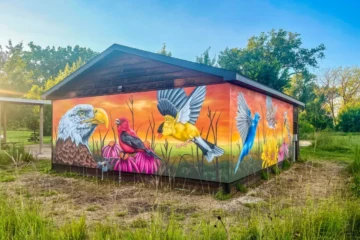
Following the success of the portrait series, the students transitioned from the classroom to the city streets, applying their mosaic skills to a much larger canvas. Working on the side of a downtown Rockford parking garage, the group created three massive bird installations: an Indigo Bunting, an American Goldfinch, and a Hooded Warbler. Scaling their work up from small-scale portraits to large-scale public murals presented a new set of challenges, particularly regarding the representation of movement and the translation of fine textures into large, durable materials. The finished murals now provide a striking visual experience for anyone passing through the city center, serving as a reminder of the avian presence that exists in the urban environment.
The culmination of the summer’s efforts was perhaps the most ambitious project of the entire session: the creation of "Woodrow the Woodpecker," a 9-foot-tall, three-dimensional mosaic sculpture. Woodrow quickly transcended his status as a mere art project to become the unofficial mascot of the group. The construction of the sculpture was a feat of engineering as much as art; the students first carved the massive form out of high-density Styrofoam before coating it in mesh and cement to provide a rigid foundation. The final step was the painstaking application of hundreds of individual glass pieces, each cut and placed by hand to form the bold, characteristic plumage of the Red-headed Woodpecker.
Today, Woodrow stands as a sentinel at Nature at the Confluence, an environmental education center in South Beloit. The placement of the sculpture was intentional, designed to draw visitors into the preserve. "It helps welcome and guide people," explains Julie Uram, executive director of Nature at the Confluence. "The beak strategically points toward our front door like an arrow."
Beyond its decorative function, Woodrow serves as a sobering reminder of the environmental challenges facing Illinois. The Red-headed Woodpecker was once a common sight across the Eastern United States, but its population has dwindled significantly in recent years. Science from the Audubon Society suggests that, should current climate trajectories continue, the species could be pushed out of the majority of its traditional breeding grounds within Illinois. By immortalizing the woodpecker in glass, the students have created a permanent advocate for its survival.
Jennifer Kuroda’s hope is that these installations serve as a catalyst for environmental action. To encourage a genuine connection with the natural world, she frequently brought binoculars and field guides to the camp, encouraging the students to spend their breaks observing birds in the wild. For many of these young people, it was their first real exposure to the hobby of birding. By providing the tools to observe birds, Kuroda hoped to cultivate a new generation of environmental enthusiasts who see these species not just as subjects for art, but as living creatures deserving of protection.
As the summer program concluded, the legacy of the students’ work remains visible throughout the region. For Susan Burton, the project reaffirmed her belief in the power of the mosaic medium to teach life lessons that extend well beyond the studio. "Whether it’s creating art, helping their community, or protecting wildlife, small actions add up," she says. "That’s what a mosaic teaches. One tiny piece by itself doesn’t seem like much, but when everyone contributes, something amazing happens."
The mosaics now serve as a permanent fixture in the Rockford landscape, bridging the gap between artistic education and scientific awareness. By translating the abstract, often daunting data of climate change into tangible, beautiful, and accessible public art, the students of the SPARK! program have provided their community with a way to visualize the stakes of environmental conservation. Whether through the QR-coded portraits at the STEAM Academy, the soaring murals on the downtown parking garage, or the welcoming presence of Woodrow the Woodpecker, the message is clear: the health of the environment is a collective responsibility, built one piece at a time.
Related News