Aligning Local Action with Global Ambition: Rowe Sanctuary Unveils New Strategic Roadmap
Article Editorial Team
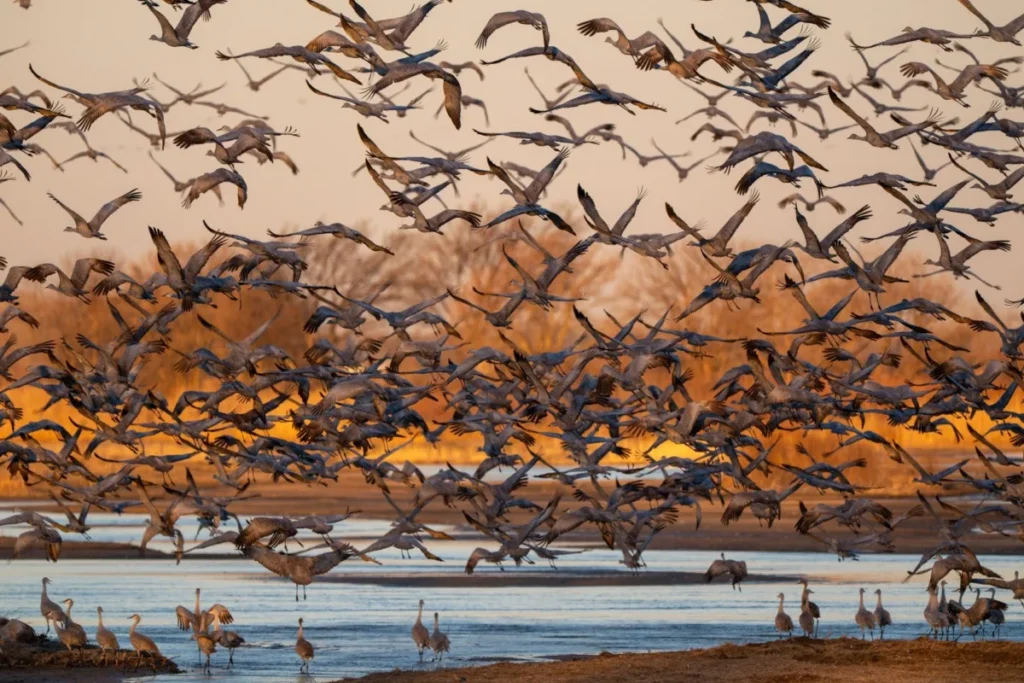
"Dedicated to the conservation of Sandhill Cranes, Whooping Cranes, and other migratory birds and their habitat along the Platte River." For more than half a century, this mission statement has served as the heartbeat of the Iain Nicolson Audubon Center at Rowe Sanctuary. It is a promise written into the soil of Central Nebraska, a commitment to the thousands of avian travelers that rely on the Platte River’s braided channels as a critical refueling station during their perilous migrations. Yet, as the ecological challenges of the 21st century grow in complexity—from shifting climate patterns to the rapid transformation of agricultural landscapes—the team at Rowe Sanctuary has recognized that a legacy of dedication must be matched by a rigorous, forward-thinking strategy.
Following an intensive planning process conducted in late 2025, the staff and stewardship board members of Rowe Sanctuary have finalized a new strategic plan. This document is not merely a bureaucratic exercise; it is a blueprint for the future, designed to bridge the gap between hemispheric conservation goals and the immediate, on-the-ground realities of Nebraska’s unique ecosystem. By aligning their regional efforts with the broader vision of the National Audubon Society, the sanctuary is ensuring that its localized expertise contributes to a much larger, global movement.
The Hemispheric Context: Audubon’s Flight Plan
To understand the weight of Rowe Sanctuary’s new direction, one must first look at the organization of which it is a part. As a vital hub within the National Audubon Society network, Rowe Sanctuary operates under the umbrella of an ambitious, overarching mandate: to "bend the bird curve." This phrase refers to the urgent need to halt and, eventually, reverse the staggering decline in North American bird populations that has been documented since 1970.
This objective is formalized in Audubon’s "Flight Plan," a strategic document that directs conservation efforts across the vast expanse of the Americas. The Flight Plan provides a cohesive framework, focusing on four essential pillars: Habitat Conservation, Climate Action, Policy, and Community Building. These four pillars represent the core competencies through which Audubon intends to secure a future for birds.
The recent update to the Rowe Sanctuary strategic plan represents a deliberate effort to translate these high-level, hemispheric goals into actionable, regional initiatives. It is a process of localization—taking broad principles and applying them to the specific environmental pressures of the Platte River Valley. By syncing their mission with the Flight Plan, Rowe Sanctuary staff are positioning themselves to be more effective stewards, ensuring that their work on the ground is reinforced by the resources, data, and advocacy power of the entire Audubon network.
From Strategy to Seasonal Reality
The true test of any strategic plan lies in its application to day-to-day operations. For the team at Rowe, the work is cyclical, dictated by the rhythm of the seasons and the arrival of thousands of migratory birds. The sanctuary’s new plan acts as a guidepost, helping staff navigate the demands of their workload while keeping the long-term vision in sight.
A clear example of this integration is the preparation for the spring crane migration. The arrival of the Sandhill Cranes is a phenomenon that requires immense logistical coordination. Under the pillars of "Habitat Conservation" and "Community Building," the sanctuary’s plan outlines specific strategies to facilitate this event. Habitat conservation efforts focus on the physical maintenance of the river—specifically ensuring that the Platte remains a wide, open corridor with minimal vegetation, which is essential for the cranes’ safety and roosting behavior. Simultaneously, the community-building strategy dictates how the sanctuary approaches the human element of the migration: preparing to host the thousands of visitors who travel from around the world to witness the spectacle, and providing the educational programming that transforms a bird-watching trip into a meaningful lesson in conservation.
By categorizing these tasks within the framework of their strategic plan, the staff can ensure that every action, from clearing brush along the riverbank to managing visitor traffic, is directly contributing to the core mission. It moves the sanctuary beyond reactive management, allowing for proactive, long-term stewardship.
Navigating Local Landscapes and Policy
The reach of the sanctuary’s strategic plan extends well beyond the boundaries of its protected lands. In recent months, Rowe Sanctuary has taken an active role in offering guidance on local county regulations, a move that falls squarely under the "Habitat Conservation" strategy of supporting wildlife in broader, human-altered landscapes.
In a region dominated by agriculture and private land ownership, the health of the Platte River ecosystem is inextricably linked to the decisions made by landowners and local government bodies. The sanctuary’s plan explicitly includes a mandate to provide guidance and assistance to local communities on how to foster environments that support native wildlife. This involves creating strategies for agricultural fields, grasslands, and private properties that exist in the shadow of the sanctuary.
This approach recognizes a fundamental truth of modern conservation: that protected areas alone are insufficient. To sustain migratory populations, the surrounding landscape must also be managed in a way that provides resources and safe passage. By offering their expertise to local officials and community members, the staff at Rowe are acting as facilitators, helping to bridge the gap between agricultural productivity and ecological health. This work demonstrates the "Policy" and "Community Building" components of the Flight Plan in action, showing that a sanctuary’s influence can, and must, ripple outward.
A Living Document for a Changing World
Perhaps the most significant aspect of the new strategic plan is its intended flexibility. The planners at Rowe Sanctuary have designed the document as a "living" resource. They acknowledge that the dynamics of the Platte River, the behavior of migratory birds, and the social and political landscape of Nebraska are constantly evolving. A static plan would quickly become obsolete in the face of such change.
Instead, the staff engages with the plan on a regular basis, using it as a reference point for daily decisions and performing annual updates based on the accomplishments and aspirations of the previous year. This iterative process allows the sanctuary to be responsive. If a new environmental threat emerges, or if a particular community engagement initiative proves exceptionally successful, the plan can be adjusted to reflect these new realities. This ensures that the sanctuary remains agile, capable of pivoting its limited resources to address the most pressing needs of the moment.
Ultimately, the strategic plan serves as a vital tool for focus. In an era where the needs of conservation often exceed the resources available, the ability to prioritize is essential. By concentrating attention where they can make the greatest difference, the staff at Rowe are optimizing their impact.
As the sanctuary moves forward under this new roadmap, the document stands as both a practical guide and a source of inspiration. It provides a clear line of sight from the daily labor of habitat restoration and visitor management to the grand, long-term vision of a healthy, functioning ecosystem. It is a commitment to the idea that the Platte River can remain a vital lifeline for migratory birds and a source of wonder for generations to come. Whether through the meticulous restoration of native grasses or the quiet education of a student witnessing their first crane migration, every effort is now consciously woven into a larger narrative of resilience and recovery. The plan is not just about the birds; it is about the future of a landscape that holds the power to sustain life on a hemispheric scale.
Related News