Supreme Court Weighs Trump Administration’s Bid to Resume Border Construction in Big Bend
Article Editorial Team
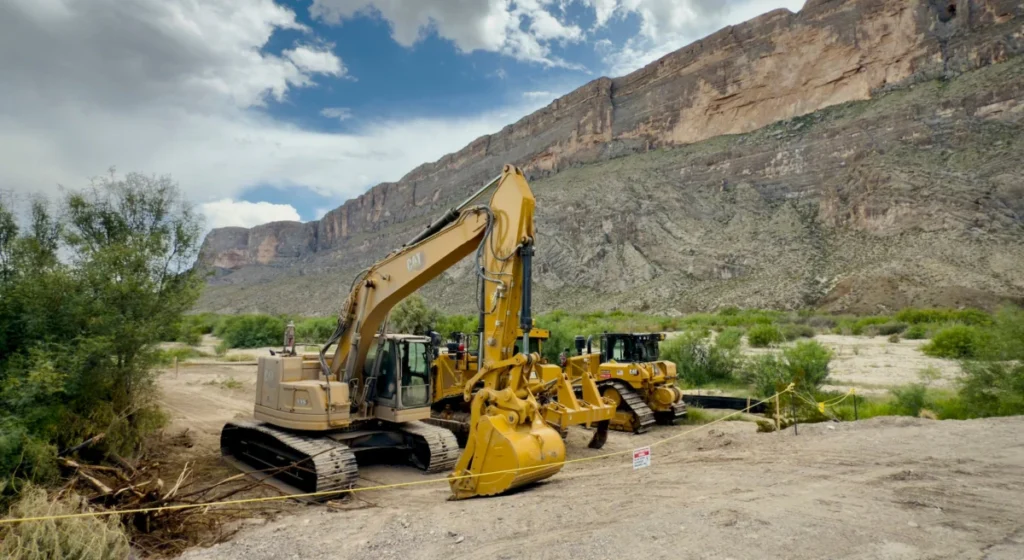
The high-stakes legal battle over border security infrastructure in West Texas has officially reached the U.S. Supreme Court. The Trump administration has petitioned the nation’s highest court to override a lower federal judge’s order and allow construction crews to immediately resume building border walls, roads, and associated barriers across a fragile, ecologically sensitive stretch of the Chihuahuan Desert.
The emergency appeal follows a temporary injunction issued by U.S. District Judge Kathleen Cardone on October 2. Judge Cardone’s ruling had brought heavy machinery, including excavators and bulldozers, to a sudden halt near iconic locations like Big Bend National Park’s Santa Elena Canyon. In response to the administration’s Supreme Court filing, a coalition of plaintiffs—including the Center for Biological Diversity, Friends of the Ruidosa Church, and local river guides—submitted a detailed 50-page brief on October 29 urging the justices to maintain the pause on construction.
The plaintiffs’ filing warns that the resumption of heavy infrastructure work could inflict irreversible damage on the unique desert ecosystem surrounding Big Bend National Park and Big Bend Ranch State Park. Beyond environmental degradation, local residents, business owners, and conservationists argue that the project threatens public access to the Rio Grande, compromises local livelihoods dependent on wilderness tourism, and disrupts historic sites across a vast swath of West Texas.
The impending decision from the Supreme Court will carry immense weight for the region, dictating whether industrial-scale construction can move forward while the underlying lawsuit proceeds through the federal court system. The disputed plans vary significantly across the landscape. Within the boundaries of Big Bend National Park, U.S. Customs and Border Protection (CBP) has proposed the installation of surveillance technology, new access roads, and approximately 17 miles of vehicle barriers explicitly designed to block cars and trucks. In other sectors throughout the broader Big Bend Border Patrol sector, the federal government has laid out plans for much taller and more imposing structures, including 30-foot border walls.
Security Claims Meet Judicial Pushback
At the core of the ongoing litigation is a fundamental disagreement over executive authority, environmental protections, and the true necessity of immediate border barriers in a region defined by some of the most unforgiving terrain on the North American continent.
In their October 21 emergency application to the Supreme Court, Justice Department attorneys argued that keeping construction on hold severely compromises national security and leaves dangerous vulnerabilities along the southern border. The administration’s legal team emphasized the proximity of transnational criminal organizations operating directly south of the sector.
"The Sinaloa and Juarez cartels operate south of this sector across the Mexico border and seek to exploit any vulnerabilities in United States border protection to traffic humans, drugs, and weapons," Justice Department attorneys wrote in the filing. They cautioned that leaving what they termed a "300-plus-mile gap in border defenses" acts as an open invitation for international criminal syndicates. In a subsequent reply filed on October 30, the administration doubled down on its position, arguing that Judge Cardone fundamentally lacked the legal authority to halt the construction projects and that the injunction poses an ongoing threat to national security initiatives.
However, these security rationales have faced rigorous skepticism from both local opponents and the federal judiciary. When Judge Cardone halted the work on October 2, she pointed to operational data compiled by the Border Patrol itself. While the agency recorded more than 89,000 apprehensions across the 517-mile sector over a five-year period, Big Bend consistently registered the lowest apprehension rate per mile of any sector along the entire southern border.
Furthermore, the region’s dramatic physical geography serves as an intense natural deterrent. The area is dominated by the Chisos Mountains, vast expanses of waterless desert, and towering 1,500-foot limestone cliffs that make human transit on foot exceptionally hazardous. In May, CBP officially acknowledged these realities, noting that the extreme topography of Big Bend naturally deters foot traffic across the international boundary.
Centuries of Impact on Land and Lives
While federal authorities emphasize the strategic imperative of closing perceived gaps in border defense, local stakeholders are sounding the alarm over the permanent environmental and cultural scars that heavy machinery leaves behind in the desert.
Jeffrey Renfrow, an ecologist and the director of Rio Bravo Restoration who has spent more than two decades working in the Big Bend region, provided sobering testimony to the court regarding the long-term ecological consequences of unchecked construction. Renfrow warned that the disruption caused by heavy equipment extends far beyond temporary inconvenience, predicting that the damage to local hydrology, native vegetation, and fragile soils will persist for decades, centuries, or, in some cases, never recover at all.
The deployment of bulldozers and other heavy vehicles poses a direct threat to biological soil crusts—delicate, living networks of mosses, lichens, and cyanobacteria that bind the desert floor together and prevent severe wind and water erosion. According to data from a U.S. Forest Service report cited in the legal proceedings, certain foundational organisms within these biological soil crusts can take roughly a century to fully regrow once crushed or disturbed.
The human toll of the landscape’s transformation has proven equally profound for longtime residents and business owners whose lives are intertwined with the wilderness. Bill Guerra-Addington, a local rancher, testified about the emotional distress of watching industrial operations alter the home he holds sacred, describing the ongoing changes as a dystopian nightmare. Others fear for the economic viability of the entire region. Billy Miller, a local rafting guide who leads tourists through scenic sections of the Rio Grande, warned in court documents that industrializing the border would fundamentally alter the visitor experience.
"If this actually occurred, I think it would destroy the tourism that Terlingua, Presidio, Marfa—all those towns depend on," Miller said. "I don’t think they’ll have an experience anymore. I think it will be a tour of the military-industrial complex, not a tour of the wilderness."
The central legal mechanism that enabled the construction to begin in the first place involved the federal government’s use of special statutory exemptions. These waivers allowed agencies to bypass standard environmental reviews and circumvent various statutory requirements that would otherwise govern public lands. Judge Cardone’s October injunction temporarily blocked the administration from utilizing those exemptions to push forward with the disputed work.
Now, the Supreme Court holds the authority to decide the immediate future of the project. If the justices choose to lift Judge Cardone’s order, heavy construction machinery could return to the borders of Big Bend National Park while the broader lawsuit continues to wind its way through the judicial system. If the court leaves the injunction intact, the federal government will be legally required to complete comprehensive environmental reviews and comply with applicable federal laws before any further construction can take place in the region.
Related News