Meet the Fabricateurialist: The MBA-Turned-Social-Media-Critic Decoding the Modern Men’s Shirt
Article Editorial Team
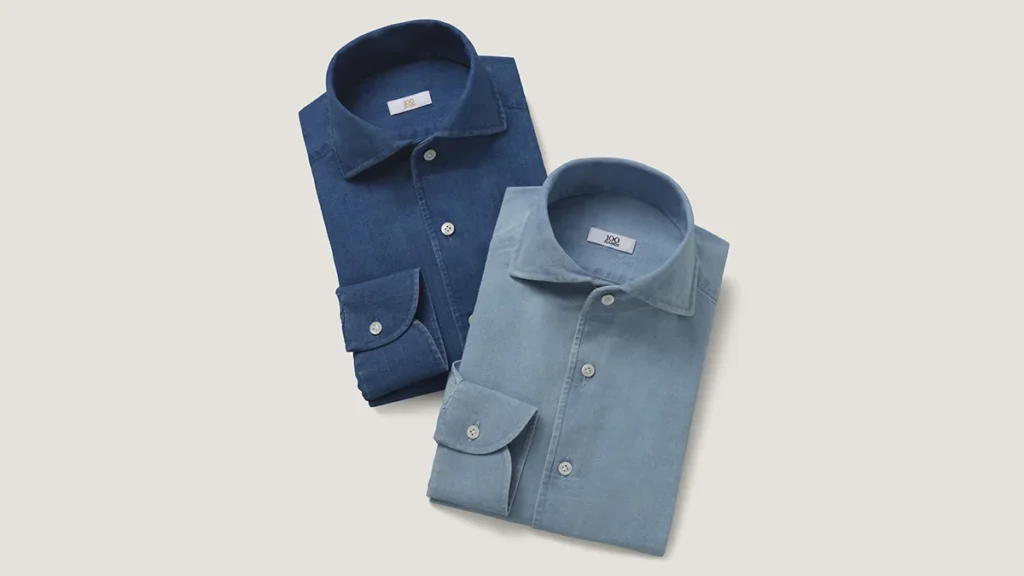
As jackets and ties have transitioned from essential daily office armor to completely optional wardrobe additions, the humble dress shirt has increasingly become the most visible, defining piece of the modern man’s wardrobe. Yet, in an era overflowing with seemingly well-crafted options lining digital storefronts and department store racks, determining what actually makes one model superior to another has arguably never been harder for the average consumer to identify. Amid a sea of marketing buzzwords, high thread-count claims, and opaque manufacturing origins, discerning true sartorial excellence requires an expert eye.
That is precisely where the Fabricateurialist steps in. Boasting a rapidly expanding digital audience with over 100,000 followers on Instagram and nearly 80,000 on TikTok, the man behind this semi-anonymous social media presence has quietly emerged as the world’s premier shirting critic. From mass-market stalwarts to ultra-luxury heritage labels like Eton and Kiton, he evaluates garments using a rigorous, weighted 25-point system. His meticulous evaluation criteria take into account subtle technical factors that most buyers overlook, ranging from the inclusion of spare buttons and hand craftsmanship to complex metrics like stitch density and internal construction integrity.

The man behind the persona is Marc, a 38-year-old German native who is now based in Italy. Choosing to keep his surname private, Marc credits his acute, highly trained eye for spotting manufacturing quality to his early professional background working within his family’s consumer-goods business. However, when the COVID-19 pandemic disrupted global commerce and ultimately forced the firm to fold, Marc found himself at a professional crossroads. Equipped with a fresh M.B.A., a deep foundational knowledge of manufacturing and commerce, and precious little traditional work to occupy his time, he began looking for a new creative outlet.
The turning point arrived in the fall of 2023, when a friend casually encouraged him to experiment with short-form video content on TikTok. The initial concept was straightforward: create educational posts explaining how everyday consumers could recognize genuinely great fabrics and superior garment construction. To his initial surprise, his analytical, no-nonsense breakdowns quickly struck a chord with viewers, pulling in tens of thousands of views almost overnight. Reflecting on the sudden traction, Marc recalls thinking that he might have stumbled onto something significant, prompting him to fully commit and double down on the niche project.
In addition to maintaining his popular social media channels, Marc has expanded his digital footprint into long-form publishing via a Substack blog. For his paid subscribers, he offers an exclusive, quarterly-updated spreadsheet tabulating comprehensive reviews and scores for over 130 distinct shirts from various brands across the global market. Within his ranking framework, any garment that manages to score above 20 points is classified by the critic as “exceptional.” Predictably, these top-tier winners rarely come as a shock to the bespoke-only sartorial set: G. Inglese leads the pack with a stellar score of 22, followed closely by Kiton at 21, and 100Hands securing a spot at 20.

Moving down the scale, shirts scoring north of 15 points land in the “very good” category, territory currently occupied by luxury heavyweights such as Tom Ford and Cesare Attolini. Garments rated 11 points or higher—including offerings from Loro Piana, Stenströms, and Alessandro Gherardi—are categorized simply as “good.” At the very bottom of Marc’s comprehensive index sits Charles Tyrwhitt, which crashes out with a score of 1.
To arrive at these scores, Marc inspects structural details that go completely unnoticed by the untrained consumer. Among the key indicators he evaluates is whether a shirt incorporates a side gusset, a small triangular piece of fabric reinforcement at the base of the side seams that helps prevent the hem from tearing under the daily tension of movement. He also searches for bar tacks, which are tight, specialized zigzag stitches designed to reinforce high-stress zones such as pocket corners or buttonhole openings.
More subtle still is the technical question of stitch density. While conventional wisdom often dictates that a higher number of stitches per inch inherently signifies superior quality, Marc notes that certain delicate materials, such as silk and linen, actually benefit from a lower stitch count to prevent puckering and material degradation. Part of his critique involves looking for concrete signs that a manufacturer actually took the time to understand the unique physical properties of different textiles rather than applying a blanket production approach.

Rather than remaining solely an outside observer throwing stones from the sidelines, Marc has also subjected his own manufacturing philosophy to public scrutiny. He recently founded his own independent brand, Acitura, which produces high-quality shirts and knitwear crafted entirely in Italy. Among its offerings is an Italian oxford shirt priced at $335, which Marc evaluates under his own system and scores at a respectable 17. As for the company’s distinct name, Marc admits without hesitation that it was strategically chosen for a very specific marketing reason: it was made up to sit prominently at the very top of alphabetized brand lists.
With a background in corporate strategy, Marc leans into his professional roots with dry amusement. “I have a master’s in marketing, so that’s how this entire thing came to be,” he notes. It would appear that his M.B.A. has ultimately proven remarkably useful after all, helping him engineer both a viral digital brand and a thriving direct-to-consumer enterprise.
Is It Worth It?
Beyond the world of shirting, we asked the Fabricateurialist to apply his uncompromising eye for quality to a broader selection of everyday menswear items and accessories, evaluating whether select high-end pieces truly deliver value for their respective price tags.

When looking at the Santoni Goodyear Welted Range of footwear, Marc highlights the brand as a personal favorite. Having worn their shoes for two decades, his confidence in their enduring construction is underscored by a recent milestone: he just successfully resoled his very first pair, proving the long-term durability afforded by traditional Goodyear-welted construction.
Turning to legwear, Marc identifies Ambrosi Napoli trousers as arguably the finest bespoke pantmakers in the industry. He points to the staggering amount of intricate handwork and artisanal labor that the tailoring house pours into every single pair of trousers as justification for their elite status among connoisseurs of classic menswear.
In the category of travel gear, Michino Paris earns praise for its duffle bag offerings. Marc describes the label as a thoughtful, exceptionally high-end brand that manages to deliver luxury-tier craftsmanship and design sensibilities without slapping customers with the astronomical price tags typically associated with legacy ultra-luxury houses.

Finally, examining accessories, Marc evaluates the leather card wallets crafted by Peter Nitz. He notes that the maker is phenomenally detail-oriented, which easily explains why his handcrafted leather goods retail in such elevated price brackets despite operating without the massive mainstream name recognition of global fashion conglomerates.
Related News