Vacheron Constantin and the Met Just Unveiled a Collection of Artworks
Article Editorial Team
This unique initiative—born from a close and ongoing collaboration between the Metropolitan Museum of Art and the storied Swiss luxury watchmaker Vacheron Constantin—represents a deliberate effort to bridge the centuries-old worlds of fine horology and museum-level fine art. The program officially launched in May 2025, setting in motion an intensive 18-month artistic journey designed to foster cross-disciplinary dialogue, support modern creators, and breathe new life into time-honored artisanal techniques that risk being lost to the rapid pace of industrialization.
For Vacheron Constantin, this high-profile partnership with the Met marks the third major cultural alliance of its kind for the maison. The luxury watch manufacturer, known globally for its centuries of uninterrupted watchmaking history in Geneva, has previously established similar prestigious residency programs with other titan cultural institutions. These include a landmark partnership with the Louvre in Paris, which dates back to 2019, as well as a collaboration with the Palace Museum within the Forbidden City in Beijing, established in 2024. Through these institutional bridges, the watchmaker consistently seeks to demonstrate that the delicate, highly specialized hand-crafts utilized to decorate miniature watch dials—such as micro-enameling, hand-engraving, and guillochage—share a direct lineage with the grand decorative arts housed in the world’s most comprehensive museums.
The core philosophy guiding the Artisan Residency Programme is the vital need to pass on, preserve, and radically reinterpret traditional craft techniques for a modern audience. To achieve this, the program is structured as an immersive, dual-location experience. The chosen artists are given unprecedented access not only to the vast, encyclopedic collections of the Metropolitan Museum of Art in New York, where they can study historical masterworks up close, but also to the inner sanctum of the Vacheron Constantin Manufacture in Geneva, Switzerland. There, side-by-side with master artisans whose daily work involves the minute detailing of luxury timepieces, the artists absorb techniques that have been passed down through generations. These rich, hands-on experiences serve as the foundational launching points for the entirely new, site-inspired bodies of work that each resident is tasked with creating.
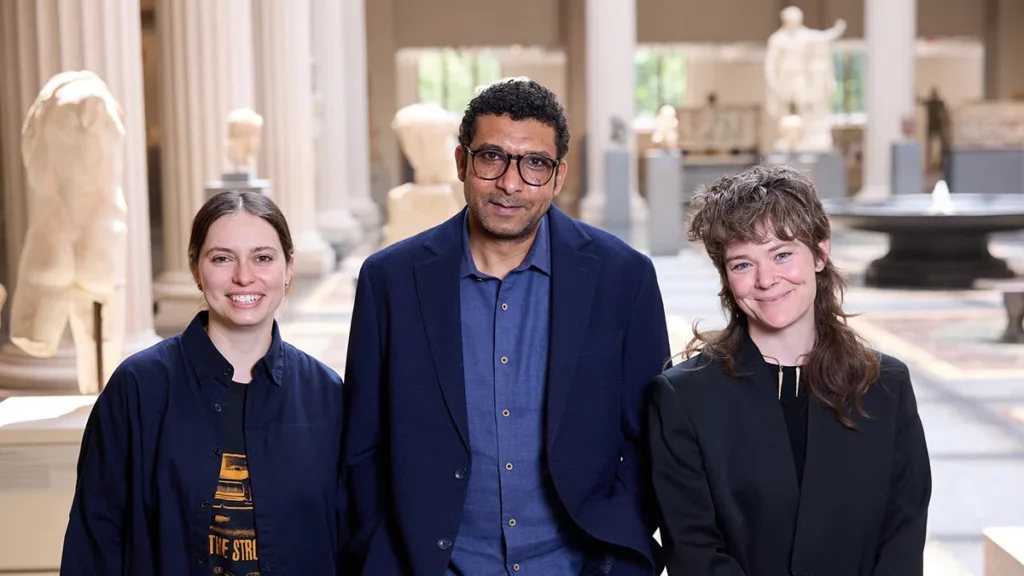
For this inaugural cohort at the Met, three distinct and highly accomplished artists were chosen: Aspen Golann, Ibrahim Said, and Joy Harvey. Each brought a completely different material focus, aesthetic background, and conceptual framework to the residency, resulting in three divergent interpretations of history, time, and craftsmanship.
Aspen Golann, whose practice is deeply rooted in woodworking and historical furniture forms, approached the residency with an eye toward American decorative arts. For her contribution to the program, Golann produced a monumental wooden vessel, aptly titled Vessel, which is elaborately adorned with intricate nature motifs carved entirely in bas-relief. In developing the concept and visual vocabulary for the piece, Golann drew direct inspiration from a series of historical wooden chests dating from the 17th to the 19th century originating from Connecticut and Pennsylvania. Those historical works, alongside other comparable examples preserved within the Met’s permanent American Wing collections, exemplified a distinct neoclassical New England style. This historical regional aesthetic heavily informed the structural and decorative decisions behind her contemporary creation.
However, Golann’s journey extended far beyond the woodshops of America. During her immersive time at the Vacheron Constantin Manufacture in Geneva, she stepped far outside her traditional comfort zone to collaborate directly with master watchmakers and studio artists. There, she studied and experimented with complex decorative techniques typically reserved for watch dials and cases, specifically focusing on the meticulous arts of enameling and metal engraving. Integrating these miniature decorative sensibilities into a monumental wooden sculpture allowed Golann to forge an unexpected dialogue between the scale of architectural furniture and the microscopic precision of haute horlogerie.
Ibrahim Said, another luminary selected for the program, chose to explore the architecture of time and memory through ceramics and sculpture. His resultant work, titled Shaping Time, is a striking three-tiered vertical sculpture. The piece commands attention through its elaborate surface treatment, which features detailed relief carvings, precise structural piercings, and luminous glazed surfaces. To conceive this intricate work, Said immersed himself in the Met’s extensive collections of ancient Egyptian and Islamic art, studying how ancient cultures manipulated clay, stone, and light to convey permanence and spiritual transcendence.
Much like Golann, Said’s creative process was profoundly transformed by his residency at the Geneva watch manufacture. Working closely with the house’s seasoned artisans, Said expanded his technical repertoire by engaging directly with specialized decorative disciplines. He spent intensive periods working alongside watchmaking masters to master advanced enameling techniques, fine engraving, and the delicate art of lacquer painting. By marrying the ancient, earthy traditions of ceramic sculpture with the impossibly refined, high-precision decorative arts of Swiss watchmaking, Shaping Time stands as a physical manifestation of cultural synthesis, bridging millennia of human craftsmanship into a single contemporary object.
The third resident artist, Joy Harvey, turned her focus toward metallurgy, ancient adornment, and the poetic concept of deliberate decay. Her contribution, titled Ruined splendour, takes the form of a dramatic bronze diadem. The piece is meticulously composed of forged rhomboid bronze elements interlaced with delicate panels. These panels were directly inspired by the breathtaking fine filigree work observed on ancient Greek necklaces housed within the Met’s classical antiquities collection.
In a conceptual masterstroke that challenges traditional notions of perfection in luxury and antiquity, Harvey subjected the completed bronze structure to a process of intentional disruption. After the diadem was fully constructed, the work was pierced with rigid rods, a technique deliberately employed to instill a sense of curated "ruination." This artistic choice reflects a meditation on the passage of time, the fragility of historical artifacts, and the beauty found in archaeological fragmentation.
To achieve the nuanced surface textures of her diadem, Harvey drew inspiration from ancient jewelry spanning multiple civilizations within the Met collection, pulling stylistic threads from ancient Greece, India, and China. She then traveled to the Vacheron Constantin Manufacture in Geneva, where she immersed herself in the mastery of guillochage. Guillochage is an exceptionally demanding mechanical engraving technique used to carve extraordinarily intricate, precise geometric patterns—such as repeating leaf and floral motifs—directly onto metal surfaces. By applying this hyper-controlled watchmaking technique to a raw, monumental bronze diadem that she subsequently "ruined," Harvey created a fascinating tension between absolute precision and the relentless, eroding force of time.
The unveiling of these three distinct works in New York marks not only the culmination of an intense creative partnership, but also a significant moment for the cultural institutions involved. Reflecting on the broader cultural and artistic implications of the initiative, Max Hollein, the Chief Executive Officer of the Metropolitan Museum of Art, shared his perspective in an official statement. Hollein praised the program as “a collaborative initiative that embodies our mutual commitment to supporting artistic innovation and cultural dialogue.”
By opening its doors, its conservation labs, and its encyclopedic galleries to contemporary artists who work hand-in-hand with traditional watchmaking artisans, the museum and Vacheron Constantin have successfully demonstrated that the preservation of heritage craft does not mean locking history behind glass cases. Instead, through programs like the Artisan Residency Programme, historical techniques are handed down, reinterpreted, and given a vibrant new lease on life in the hands of today’s most imaginative creators. As the works of Golann, Said, and Harvey now take their place in the ongoing narrative of contemporary art, they serve as a testament to the enduring power of human hands to shape, preserve, and transcend time itself.
Related News