Navigating the Evolution of B2B Marketing: How Visual Content and Smart Resource Management Drive Campaign Success
Article Editorial Team

The landscape of business-to-business (B2B) marketing has undergone a profound transformation in recent years, driven by shrinking attention spans and rising buyer expectations. Today, companies are no longer just competing on the merit of their products or services; they are fiercely competing on the clarity, speed, and effectiveness with which they present those offerings to a busy market. In an environment where decision-makers are inundated with information, the ability to communicate value swiftly has become the ultimate differentiator.
Visual content, particularly dynamic video formats and high-impact imagery, has emerged as a cornerstone of multichannel marketing strategies. Yet, simply deploying visual assets is no longer a guaranteed ticket to success. Marketing teams across industries are learning that not all content delivers equal returns. Understanding what resonates with modern audiences and discovering the most efficient ways to leverage professional stock media platforms—such as Shutterstock—can empower marketing departments to design campaigns that are significantly more effective, agile, and manageable to scale.
How B2B Buyers Approach Content
To understand why modern marketing requires a fresh approach, one must examine the behavior of the modern B2B buyer. Unlike consumer audiences who may browse leisurely, professionals operating in a B2B context rarely spend extended periods exploring content purely for entertainment. They are typically driven by a pressing, specific business challenge and are searching for immediate solutions. Consequently, their primary objective when encountering marketing materials is to quickly ascertain whether the presented information is directly relevant to their current operational hurdles.
Because of this efficiency-driven mindset, content that performs exceptionally well tends to prioritize instant comprehension over elaborate artistic flourishes. The overarching goal for content creators is not to overwhelm the viewer with complex visual spectacles, but rather to communicate a core message with crystal clarity. When a buyer can grasp a value proposition within seconds, the friction between initial discovery and meaningful engagement is dramatically reduced.

Common Traits of Effective Visual Content
Across a wide array of formats and digital channels, certain consistent patterns emerge in campaigns that consistently outperform their peers. High-performing visual assets generally share a commitment to immediate legibility, thematic relevance, and authentic execution. These fundamental traits become even more critical when deployed within paid advertising campaigns, where marketing teams face intensely restricted windows of time to capture a user’s wandering attention and prevent them from scrolling past.
In this high-stakes arena, Shutterstock has established itself as an indispensable resource, offering precisely the kind of versatile, high-impact content required to build attention-grabbing, conversion-driven advertisements. By tapping into professionally curated libraries, organizations can bypass the guesswork and secure assets designed to perform under the rigorous demands of modern digital advertising channels.
Adjusting Content for Different Platforms
Even when a marketing campaign relies on a consistent core message, the execution and presentation of that message must remain fluid. Different digital platforms have distinct user behaviors, aesthetic norms, and technical requirements. Content designed for a professional networking platform requires a vastly different visual approach than assets deployed on fast-paced social video feeds or traditional display networks.
Adapting content to fit the native environment of each specific channel can make a profound, measurable difference in campaign performance. When visuals look and feel natural to the platform where they appear, audiences are far more likely to pause, engage, and digest the underlying message. Conversely, rigid, unadapted content often feels out of place, signaling an impersonal ad that viewers have been conditioned to ignore.

The Challenge of Producing Content Regularly
Despite the recognized necessity of maintaining a steady stream of fresh, engaging media, many marketing departments struggle relentlessly against the sheer demand for new content. Creating every single asset from scratch requires an immense investment of time, specialized talent, and financial resources—luxuries that are frequently unavailable in fast-paced corporate environments.
While custom video production and bespoke photoshoots certainly retain their unique utility, they often introduce logistical bottlenecks. Custom workflows typically demand extensive planning, casting, shooting, editing, and revision cycles that can stall broader marketing initiatives. Utilizing pre-made visual assets sourced from platforms like Shutterstock can alleviate a significant portion of this operational pressure, granting teams the agility needed to build, test, and adjust campaigns dynamically without exhausting their internal bandwidth.
Avoiding Delays Related to Usage Rights
Beyond the sheer logistical hurdles of production, another formidable obstacle frequently slows down marketing workflows: uncertainty surrounding licensing and usage rights. When creative teams operate in a gray area regarding copyright permissions, campaigns can grind to a halt while legal and compliance departments review assets.
If marketing professionals lack clarity on where, how long, or in what formats an image or video can be deployed, hesitation sets in. This friction can lead to missed market opportunities and delayed product launches. Working with content providers that explicitly and clearly state their licensing terms helps organizations bypass these administrative roadblocks entirely, keeping projects moving forward smoothly. Shutterstock’s transparent, comprehensive licensing framework provides teams with the legal peace of mind necessary to deploy assets rapidly across global channels.
Why Realistic Content Matters More Now
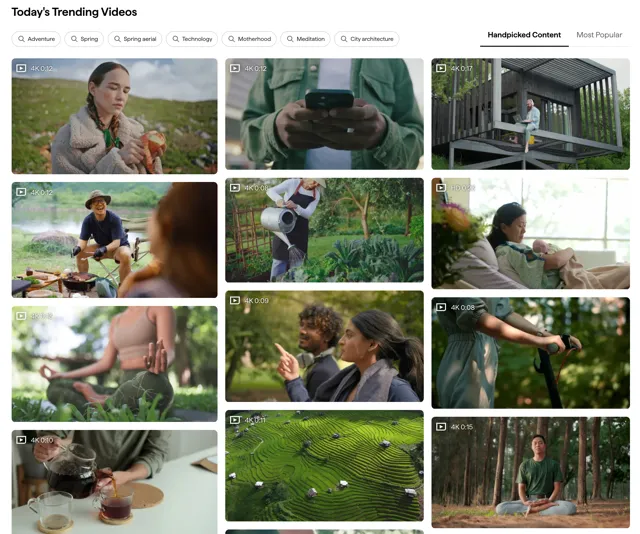
An unmistakable cultural and aesthetic shift has taken place across digital media in recent years, leaning heavily toward more natural, unpolished, and authentic-looking visuals. This trend has accelerated dramatically as digital spaces become increasingly saturated with hyper-processed or artificial-looking media. Today’s audiences have developed a sharp radar for manufactured perfection and consistently demonstrate a stronger, more trusting response to content that feels grounded, familiar, and believable.
Authentic-looking imagery and video can humanize a brand, foster genuine emotional connections, and build immediate trust with skeptical buyers. In the realm of B2B communication—where transactions involve high stakes, long evaluation cycles, and substantial financial investments—establishing this baseline of credibility is paramount. Realistic visuals cut through the noise of corporate posturing and speak directly to the human beings making the purchasing decisions.
A More Practical Approach to B2B Content
Acknowledging these shifting dynamics, many forward-thinking marketing teams are abandoning the pursuit of hyper-polished, cinematic perfection in favor of a more pragmatic, resource-efficient philosophy. Instead of striving to create every asset from the ground up with maximum production value, successful departments are focusing squarely on what is genuinely useful, relevant, and manageable within tight operational constraints.
This practical methodology relies on smart curation, rapid testing, and the integration of ready-made professional resources. By incorporating high-quality, versatile visual assets from platforms like Shutterstock into their daily workflows, marketing professionals can bridge the gap between ambitious strategic visions and practical, day-to-day execution. Ultimately, this enables businesses to maintain a consistent market presence, engage time-pressed buyers effectively, and adapt swiftly to the ever-changing demands of the digital economy.
Related News