JetBlue Raises Checked Baggage Fees Again, Pushing First-Bag Minimum to $50
Article Editorial Team
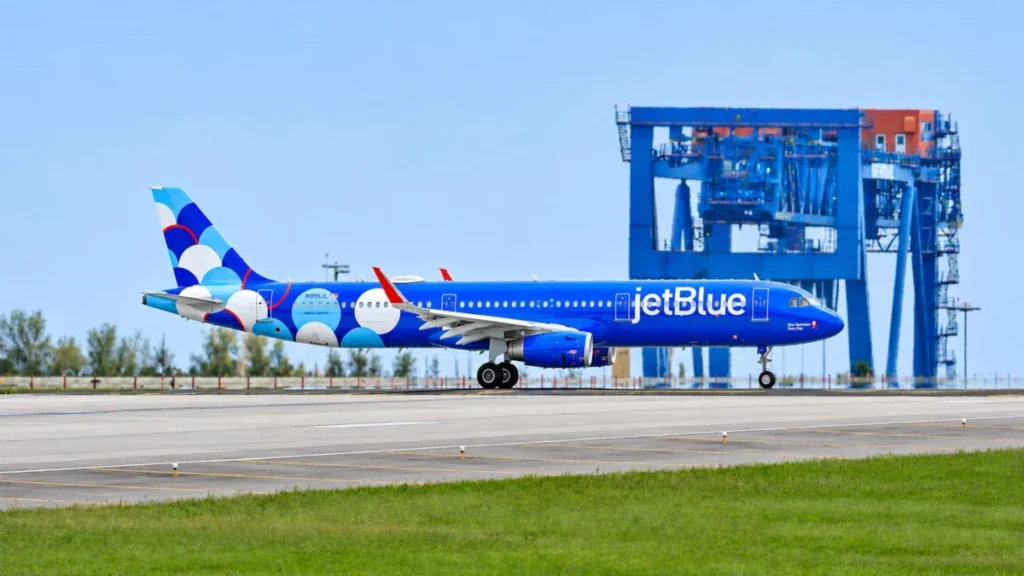
JetBlue has raised its checked baggage fees for the second time this year, increasing the minimum charge for a first checked bag on most North American and Caribbean routes from $39 to $50 each way. The new pricing structure applies to tickets purchased on or after November 3, 2026. When measured against the $35 minimum fee that was in effect as recently as May 2024, this latest adjustment represents a substantial increase of approximately 43% over a period of roughly two and a half years. Travelers who wait until they arrive at the airport, fly during designated peak travel periods, or need to check additional pieces of luggage will face considerably higher out-of-pocket costs.
The price hike extends well beyond basic economy customers, impacting travelers who purchase standard Main and Main Flex fares as well. Unless these passengers qualify for complimentary baggage allowances through an eligible fare category, airline loyalty program status, or a co-branded JetBlue credit card, they will be subject to the higher fees. Airline executives have defended the adjustments by stating that the additional revenue helps offset climbing fuel and operating expenses, allowing the carrier to maintain competitive advertised base fares on flight search engines. However, industry analysts note that this aggressive move by a major domestic carrier could easily prompt another round of widespread baggage-fee increases across the wider United States airline industry.
First Checked Bag Now Costs At Least $50 Each Way
For flights operating within the United States, Canada, Latin America, and the Caribbean, JetBlue’s first checked bag now carries a baseline cost of $50 each way during off-peak periods, provided the customer prepays online or through the mobile application more than 24 hours before scheduled departure. That price automatically increases to $55 when travel falls during peak periods. For passengers who wait until within 24 hours of departure to add their bag, the off-peak fee rises to $60, while peak-date travelers must pay $70.

Additional luggage has also become significantly more expensive under the new schedule. A second checked bag now costs $70 during off-peak windows and $75 during peak periods when prepaid in advance, jumping to $75 and $85, respectively, when purchased closer to the flight. Bringing a third checked bag incurs a flat $200 charge regardless of the travel date or booking window. Meanwhile, passengers flying on transatlantic routes to Europe on the cheapest economy fares will find that checking their first bag starts at $80, with late purchases climbing as high as $100.
Booking timing plays a crucial role in determining the final travel bill. For instance, a passenger checking a single bag for a peak-season round-trip journey could pay $110 by handling the transaction ahead of time, or face a $140 total if they wait to pay at the airport counter. Tickets purchased prior to November 3 remain governed by the previous fee schedule, meaning the recent increase does not retroactively affect existing itineraries.
A 43% Increase Since May 2024
This latest adjustment is the continuation of an ongoing trend that has steadily driven up the cost of checked luggage on JetBlue flights. In May 2024, the minimum fee for a first checked bag on domestic, Canadian, Caribbean, and Latin American routes stood at $35. That figure crept upward to $39 in March 2026 before leaping to the current $50 baseline in November. The cumulative change from $35 to $50 marks an increase of roughly 42.9% over a relatively short span.

JetBlue structures its baggage pricing dynamically, factoring in local demand, booking timing, and route characteristics rather than enforcing a single, universal fee. Peak travel periods encompass large portions of the summer season—stretching from late May through early September—alongside major holiday travel windows throughout the year. Interestingly, according to the airline’s published schedules, March stands out as the only month in 2027 entirely devoid of designated peak travel dates. This nuanced pricing framework enables the carrier to capture additional revenue precisely when consumer demand is at its strongest.
Despite the sweeping nature of the fee increases, several customer groups remain shielded from the extra costs. Passengers purchasing JetBlue Mint tickets receive checked baggage bundled directly into their fare. Similarly, TrueBlue Mosaic loyalty program members are entitled to one or two complimentary checked bags depending on their specific tier status. Furthermore, eligible cardholders holding JetBlue Plus, Business, and Premier credit cards can check a first bag for free for themselves and up to three companions when they use the card to purchase the flight.
Fuel Costs And Industry-Wide Pricing Pressure
JetBlue has directly pointed to mounting fuel and operating costs as the primary catalyst for the latest fee adjustments. A company spokesperson explained that updating baggage charges allows the airline to keep its initial headline fares competitive while ensuring that customers only pay for the specific ancillary services they utilize. Jet fuel prices have placed considerable financial strain on commercial carriers, and because U.S. airlines generally do not engage in fuel hedging to the same degree as some of their international counterparts, they remain acutely vulnerable when global market prices spike. Ancillary fees like baggage charges provide a reliable mechanism to recoup a portion of these operational expenses without tampering with the base airfares displayed during initial consumer flight searches.

The airline’s broader financial climate adds further context to the decision. JetBlue recently reported a $257 million net loss for the third quarter, reigniting industry discussions regarding its timeline for returning to sustained profitability, though management firmly dismissed recent speculation regarding a possible bankruptcy filing. By relying on ancillary revenue streams, the carrier can generate much-needed income without making its front-end ticket prices appear inflated against budget-conscious competitors.
Historically, JetBlue has occasionally acted as an early mover when it comes to shifting ancillary pricing structures. Following its previous fee hike in March 2026, several other major U.S. carriers implemented parallel increases of their own within a matter of weeks. While past precedent does not guarantee an immediate industry-wide domino effect, it creates a pathway for competitors to raise their own baggage fees without bearing the burden of being the first to break ranks. For everyday travelers, JetBlue’s latest move serves as a stark reminder that the initial ticket price is increasingly only a fraction of the total cost of flying with baggage.
Related News