Exploring Cornwall: A Comprehensive Guide to the Region’s 15 Most Iconic Destinations, Beaches, and Cultural Landmarks
Article Editorial Team
Cornwall stands out as one of the most captivating and geographically diverse regions to visit in England. Characterized by its dramatic coastline, gorgeous sandy beaches, quaint fishing villages, and rich tapestry of local folklore, the county easily accommodates an extended week-long holiday or a scenic regional road trip. Spanning a substantial geographic area with distinct micro-regions along both its northern and southern shores, planning an itinerary to Cornwall requires careful consideration to capture the absolute best the destination has to offer.

Frequent travelers to the region note that Cornwall’s appeal peaks during the warmer summer months when visitors can safely take a swim in the sea and fully appreciate its glorious stretches of sand. Whether travelers are seeking a completely chilled, low-tempo vacation or an active driving tour across the peninsula, the region accommodates all ages and travel styles. Below is a detailed breakdown of 15 must-visit locations across Cornwall, combining iconic historical sites, dramatic natural landscapes, and premier local dining experiences.

1.) St Michael’s Mount
Easily one of the region’s most iconic landmarks, St Michael’s Mount is situated on a picturesque tidal island just off the south coast of Cornwall. Accessible via a historic causeway at low tide or by boat when the waters rise, the location shares a striking architectural and geographical resemblance to Mont Saint-Michel in France. The Cornish island was heavily influenced by its French counterpart centuries ago, resulting in a formidable stone fortress and medieval church rising sharply from the sea.

Visitors exploring the island can spend a couple of hours touring the historic castle buildings, walking through the meticulously maintained terraced walled gardens, and stopping by the Harbour Loft for a light lunch. Local folklore adds a layer of myth to the site, suggesting that the tidal island was once inhabited by a giant named Cormoran, whose legendary cave can still be viewed on the grounds. For travelers looking to avoid the stress of navigating Cornwall’s notoriously winding country lanes, private guided tours led by fully qualified local experts are available, offering tailored itineraries for small groups.

2.) Minack Theatre
Perched dramatically on the granite cliffs overlooking Porthcurno Beach, the Minact Theatre stands as one of England’s most remarkable open-air performance spaces. Located roughly a 20-minute drive from Penzance, the theatre was carved directly into the rugged cliffside by hand during the early 20th century, with the first performances staged nearly one hundred years ago.

During the summer months—specifically from May through September—the venue hosts a dynamic schedule of live theatrical productions against the sweeping backdrop of the Atlantic Ocean. Even outside of performance schedules, visitors can tour the amphitheater grounds and gardens. Below the theatre lies Porthcurno Beach, widely regarded as a sandy paradise defined by crystal-clear turquoise waters and dramatic coastal cliffs.

3.) Rame Head
Situated on the southeastern edge of the county, Rame Head offers an ideal countryside escape for travelers based in nearby Plymouth. The Rame Head Heritage Coast features sweeping walking trails that lead visitors past historic stone structures, including the medieval St Michael’s Chapel, which provides breathtaking panoramic views, particularly around sunset.

Further along the coastal path, hikers can discover Queen Adelaide’s Grotto, a historic seaside shelter overlooking Cawsand Bay. For those looking to dine in the area, the nearby village of Kingsand features establishments such as The Devonport Inn, known locally for traditional Sunday roasts and baked camembert.

4.) Newquay
As one of Cornwall’s most famous coastal hubs, Newquay has evolved over the past century into a bustling center for surfing, beach holidays, and vibrant town activity. Despite its relatively small size, the town supports several world-class stretches of sand, including Fistral Beach and Newquay Beach, both within easy walking distance of the center, alongside the expansive Watergate Bay located just up the coast.

The town provides a range of dining and accommodation options, from relaxed eateries like the Concho Lounge to sunset spots such as the Fort Inn, known for classic seaside fare. Premium accommodations, such as the Watergate Bay Hotel and high-end suites in the area, offer direct beach access and upscale amenities for travelers seeking a luxurious coastal stay.

5.) St Ives
Located a short distance along the coast from Penzance, St Ives is a historic seaside town renowned for its artistic heritage, picturesque harbor, and beautiful surrounding beaches. The town serves as home to the Tate St Ives, one of the UK’s four prominent Tate galleries, which houses a magnificent collection of modern art inspired by the region’s unique coastal light.

Visitors to St Ives frequently divide their time between exploring the town’s narrow cobbled streets, browsing independent shops, and relaxing on Porthmeor Beach or Porthminster Beach. The latter is home to the renowned Porthminster Beach Cafe, which specializes in fresh local seafood dishes such as mackerel and hake.

6.) Port Isaac
Tucked away on Cornwall’s rugged Atlantic Coast, Port Isaac is a quintessential historic fishing village defined by narrow winding streets and traditional whitewashed cottages. The village can easily be explored entirely on foot, offering a peaceful atmosphere for afternoon strolls and coastal walks.

Dining options in the village include historic pubs like The Golden Lion, where visitors can enjoy freshly caught local mussels followed by traditional desserts. For those looking to venture slightly beyond the village, Polzeath Beach sits nearby, offering an extensive expanse of sand that tends to be less crowded than other major Cornish hotspots while maintaining the region’s signature natural beauty.

7.) Lizard Point
Marking the southernmost point of the UK mainland, Lizard Point and the surrounding Lizard Peninsula offer an untouched, rugged landscape defined by dramatic cliffs and sweeping oceanic views. The area is particularly striking at sunset, when the fading light illuminates the exposed rock formations and open waters where the English Channel meets the Celtic Sea.

Visitors frequently undertake sections of the South West Coast Path that wind around the peninsula, leading past secluded inlets such as Kynance Cove. Widely recognized as one of the most visually striking coves in the UK, Kynance features bright turquoise waters, pale sand, and intricate serpentine rock stacks.

8.) Fowey
Positioned along the southern shore of Cornwall near St Austell, Fowey is an estuary-side town characterized by steep, winding streets lined with historic buildings. A key landmark within the town is St Catherine’s Castle, a small artillery fort built nearly 500 years ago during the reign of Henry VIII, which remains open to the public for free-of-charge visits.

The town also serves as a transport hub for the short passenger ferry crossing to the village of Polruan across the water. Visitors frequently make the brief crossing to dine at local establishments like the Lugger Inn, which offers traditional Sunday roasts overlooking the estuary.

9.) Falmouth
As one of Cornwall’s larger and more historically significant maritime towns, Falmouth sits at the mouth of the Fal River estuary. The town combines a vibrant commercial center with major historical sites, including Pendennis Castle, another coastal fortress established by Henry VIII.

Falmouth’s cultural offerings include the Falmouth Art Gallery and the National Maritime Museum Cornwall, alongside independent cultural spots such as Beerwolf Books, a hybrid bookstore and pub. Visitors can easily spend half a day exploring the harbor front, independent shops, and nearby sandy shores like Gyllyngvase Beach before continuing their journey through the county.

10.) St Agnes Head
The heritage coastline surrounding St Agnes Head provides some of the most dramatic walking terrain in Cornwall. Hiking trails wind across the clifftops through an landscape heavily shaped by the region’s industrial mining history.

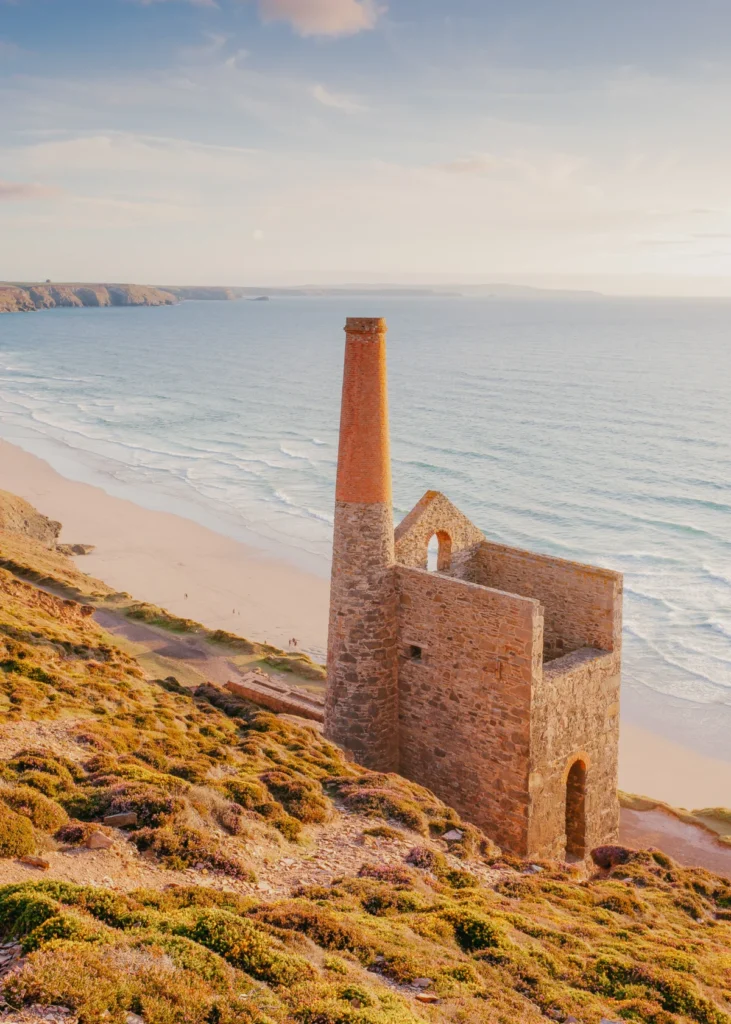
Prominent historical features along this stretch of coast include the iconic Towanroath Engine House and the Wheal Coates tin mine ruins, which cling precariously to the cliff edges. Nearby Chapel Porth Beach offers a convenient stop for a coastal picnic and features dedicated parking facilities for visitors exploring the North Cornish coast.

11.) Tintagel
Steeped in Arthurian legend and dramatic folklore, the wild northern coast around Tintagel is historically significant for its association with medieval myths. Tintagel Castle, perched across jagged headlands and deep chasms, dates back to the 13th century and remains one of the region’s premier historical attractions.

The surrounding village features ancient architecture, including the 14th-century Old Post Office managed by the National Trust, as well as the Norman Church of St Materiana, which houses an ancient Roman milestone within its walls. The dramatic geography of the area, featuring dark slate cliffs and Merlin’s Cave below the castle ruins, draws history enthusiasts and walkers alike.

12.) Penzance
Serving as the terminus of the Great Western railway line from London, Penzance is a substantial south coast town that functions as an ideal base for exploring West Cornwall. The town features historic thoroughfares like Chapel Street, lined with antique shops, restaurants, and Georgian architecture, alongside contemporary exhibition spaces like The Exchange Gallery.

Penzance is also home to the Jubilee Pool, an iconic art deco lido built into the seafront. While the tidal pool offers a unique seawater swimming experience, visitors should note that the water temperature can be brisk depending on the season. From Penzance, travelers have easy access to nearby landmarks such as St Michael’s Mount and the Minack Theatre.

13.) Land’s End
As the most westerly point of mainland England, Land’s End is a notable geographical milestone where the English Channel meets the Celtic Sea. While the main landmark attracts visitors seeking the iconic signpost photo opportunity, the surrounding area provides access to extensive networks of coastal paths.

Walkers can follow the rugged trails from Land’s End toward quieter, unspoiled coastal locations such as Sennen Cove and Gwynver Beach. These neighboring shores offer sweeping sandy beaches and Atlantic swells without the heavier crowds found at more commercialized Cornish resort towns.

14.) Looe
Located on the south coast between St Austell and Plymouth, Looe is a traditional fishing community divided into East and West Looe by the River Looe. The town centers around East Looe Beach, a sheltered bay well-suited for swimming and relaxing during warm summer days.

Visitors can explore the historic Old Guildhall Museum & Gaol during the summer months or sample regional cuisine at local waterfront eateries. Establishments such as The Sardine Factory highlight the area’s maritime heritage by serving fresh seafood dishes, including Cornish crab linguine.

15.) The Eden Project
Situated approximately five kilometers outside St Austell, The Eden Project is one of Cornwall’s most distinct contemporary attractions. Built within a reclaimed china clay pit, the facility consists of two massive, interconnected geodesic biomes that house specialized botanical environments.

The larger dome replicates a humid tropical rainforest biome, complete with exotic plant life and canopy walkways, while the second dome mirrors a warm Mediterranean climate. Open year-round, the site also hosts cultural events, music performances, and outdoor recreational activities, including the Skywire, which holds the title of England’s longest zipline.
Related News