Behind the Scenes at El Camarón Peludo: A Day in the Life at New York’s Newest Mexican Seafood Wine Bar
Article Editorial Team
When Tania Apolinar and Giovanni Cervantes first made their mark on the New York City dining scene with Taqueria Ramirez, they won over local food enthusiasts with their dedication to the rich, comforting traditions of roasted and slow-cooked meats. Known for bringing authentic flavors and meticulous techniques to the borough, the duo established a reputation for uncompromising quality and genuine hospitality. But culinary creativity rarely stands still. Looking to channel their passion into a fresh concept, Apolinar and Cervantes teamed up with chef Carlos Barrera to unveil a completely different side of Mexican gastronomy this year. Their latest venture, El Camarón Peludo, brings the vibrant coastal flavors of Mexico to the West Village in the form of a seafood-focused wine bar that has quickly become one of the most talked-about openings in the neighborhood.
To understand what makes El Camarón Peludo tick, one has to look past the finished plates of tostadas, tacos, and aguachiles that make their way to eager diners each evening. Instead, the real story unfolds hours before the doors open, during a rigorous, fast-paced daily prep routine that transforms raw ingredients imported from international waters into sophisticated, flavor-packed dishes.
The morning routine begins long before the first customer steps through the door, anchored by an intense focus on fresh seafood. The kitchen staff receives shipments of pristine shrimp sourced from diverse international locales, including the sun-drenched waters of Sinaloa, Mexico, and Ecuador. Transforming these delicate crustaceans into the foundation for three of the restaurant’s central shrimp dishes requires a painstaking, hands-on approach. Kitchen hands carefully de-shell and de-vein each shrimp, ensuring that only the highest-quality texture and flavor make it to the cooking line.
While the seafood is being prepped, Giovanni Cervantes turns his attention to the salsas, an essential element of the restaurant’s culinary identity. Quality control is paramount in this step. Cervantes meticulously tastes and compares each newly prepared batch against samples from the previous week, maintaining a strict standard to ensure absolute consistency in flavor from one service to the next. Among these creations is a bright, vibrant red salsa destined to be mixed with mayonnaise, creating the signature sauce that coats the camarones zarandeados. This dish is a creative nod to a classic preparation from the Pacific coast of Mexico, where seafood is traditionally grilled in a flat wire grill basket over open flames, imbuing the shrimp with a distinct, smoky depth.
While the kitchen hums with the rhythmic chopping of vegetables and the whisking of marinades, Tania Apolinar focuses on getting the front of the house ready for the evening rush. Upstairs, she prepares the wine bar space, arranging chilled seafood thoughtfully on a bed of glistening ice in the window to catch the eyes of passersby on the lively West Village streets. She also sets out the wine bottles that will soon be immersed in chilled buckets, ready for rapid service once the dining room fills up. When asked about the ideal experience at El Camarón Peludo, Apolinar recommends securing a seat at the long, winding bar. From this vantage point, guests have a front-row view of the culinary choreography, watching the bartenders and chefs move in tandem to craft drinks and assemble plates.
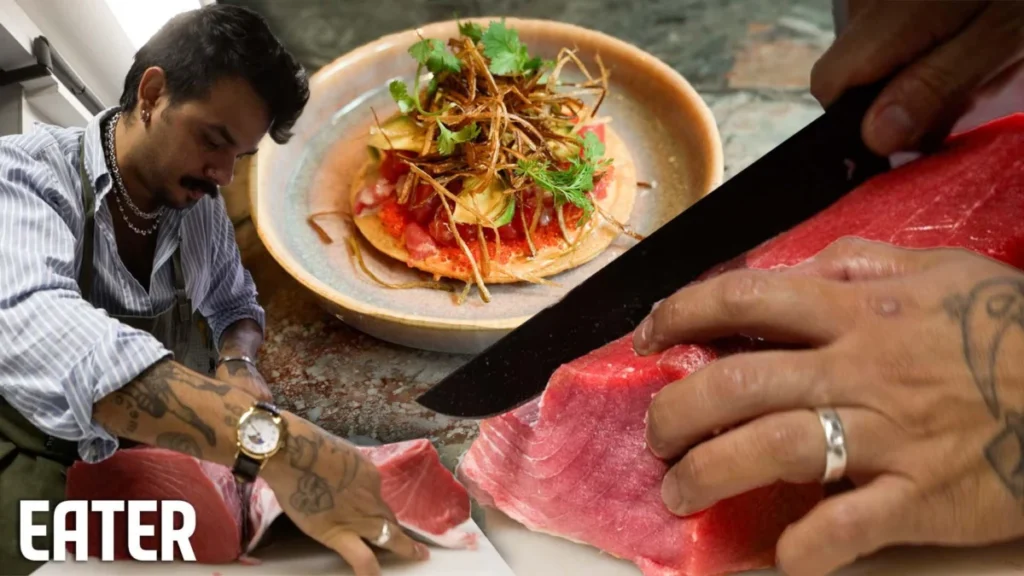
Downstairs in the kitchen, chef Carlos Barrera dives into the intricate process of breaking down massive cuts of Spanish tuna. This premium fish is destined for a creative and visually striking tuna tostada, a dish that layers the rich, buttery tuna with spicy mayonnaise, delicate fish eggs, a fragrant habanero-lime oil, fresh avocado slices, and a crown of crispy leeks that add a necessary crunch to every bite.
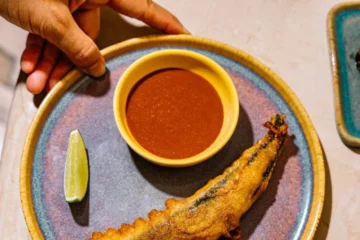
The preparation then pivots to the restaurant’s extensive taco offerings. Barrera and his team prep the ingredients for the pescadilla, a popular deep-fried fish taco that offers a satisfying contrast of crispy textures and tender, flaky fillings, alongside a specialized shrimp taco. The latter is built with a foundation of savory refried beans, crumbly queso fresco, and delicate slices of roasted poblano peppers, introducing a smoky, earthy note that complements the natural sweetness of the shrimp.
The finishing touches of the prep shift toward the raw bar area, where Cervantes and Barrera craft specialized salsas that elevate the seafood dishes. Among these are a vibrant salsa verde made with a heavy base of fresh parsley, and a complex salsa negro. The black salsa is a labor-intensive creation layered with the intense heat of habaneros and piquin chiles, darkened and deepened with the addition of rich squid ink.
The beverage program at El Camarón Peludo underwent its own evolution before finding its identity. Cervantes explains that his original vision paired the innovative, spice-forward seafood plates with bubbly wines. Over time, that initial concept naturally expanded into a dedicated natural wine bar format. Today, the restaurant sources an eclectic array of bottles from all over the world, curating a wine list designed to complement the bold, acidic, and sometimes fiery profiles of Mexican coastal cuisine.
For diners eager to see the craftsmanship behind the plates without stepping into the kitchen themselves, the team’s meticulous approach to preparing tostadas, tacos, and flavor-packed aguachile is showcased in the newest episode of Now Open, offering a closer look at the dedication required to bring coastal Mexican seafood to the heart of New York City.
Related News