How to Bypass the Rolex Waitlist: Buy a Luxury Cruise Ticket Instead
Article Editorial Team
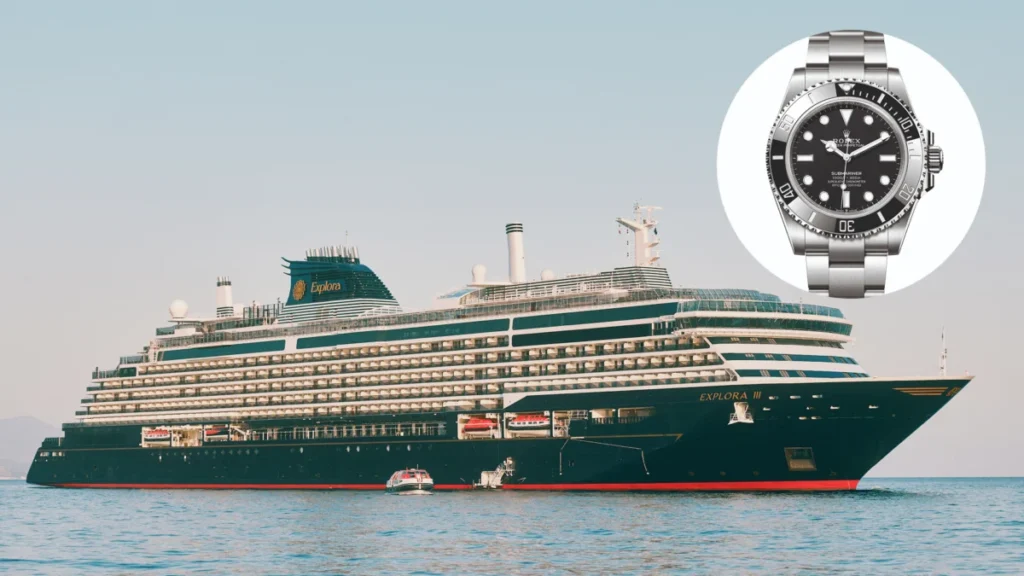
By the traditional metrics of the horological world, I am neither a cruise-ship aficionado nor a seasoned watch nerd. Yet, through a strange confluence of maritime travel and high-end retail strategy, my summer vacation aboard a luxury vessel this past July resulted in an unexpected acquisition: my very first “real” timepiece, a brand-new Rolex Submariner Ref. 126610LN, purchased entirely tax-free and without spending a single month—let alone a year or more—trapped on a land-based retailer’s notoriously elusive waitlist.
While I can certainly appreciate the intricate mechanical craftsmanship of a fine timepiece, I have always operated under the assumption that those die-hard collectors willing to jump through endless hoops, build manufactured purchase histories, and cultivate relationships with authorized dealers deserved the pieces far more than I did. However, when the Submariner was presented as one of just three available watches I could purchase during a private appointment at the Rolex boutique aboard Explora III—the latest ultra-luxury vessel from MSC Group’s newly launched cruise line, Explora Journeys—declining the offer would have felt like missing the boat in the most literal sense possible.
For many travelers, the word "cruise" conjures up mental images of crowded conga lines, bustling poolside decks, and massive buffets featuring elaborately carved fruit displays. But I knew well before stepping aboard that this maiden voyage along the French and Italian coasts would resemble nothing of the sort. Boarding the ship, I was immediately struck by an atmosphere that felt less like a traditional cruise liner and much more like a private, ultra-exclusive mega-yacht. The onboard restaurants, world-class spa facilities, and serene pool areas were elevated, intimate, and sophisticated enough to feel completely at home in any five-star luxury resort situated firmly on dry land.
Later that afternoon, while standing in the ship’s gleaming central rotunda and gazing up at a magnificent Murano glass chandelier, my eyes drifted past a series of high-end retail windows. There, nestled along a row of prestigious boutiques that included both Chopard and Cartier, sat the world’s first Rolex boutique at sea. The compact storefront, measuring just a couple hundred square feet, was shuttered at the time. Because of strict international maritime tax laws, luxury boutiques aboard ships are strictly prohibited from operating while the vessel is physically docked in port. Even so, the enticing models displayed in the windows immediately caught my attention.
In today’s hyper-competitive luxury market, walking casually out of a standard land-based Rolex boutique with a stainless-steel sports model is widely considered nearly impossible. A small acrylic placard sitting quietly beside the maritime display drove that harsh reality home: “For exhibition purposes only.” In other words, the message to passing tourists was clear: these coveted watches are simply not for you. Assuming, however, that I could simply saunter in whenever the shop opened, I casually mentioned to a member of the ship’s hospitality staff that I hoped to browse the selection later.

To my genuine surprise, within the hour my stateroom telephone rang. On the other line was the boutique’s store manager, a friendly yet remarkably firm British gentleman who politely shattered my casual assumptions. He explained that sauntering in was entirely out of the question, and casual browsing was strictly prohibited. Instead, prospective buyers were required to book rigid 30-minute private appointments. Because demand among passengers was extraordinarily high, these exclusive time slots tended to fill up rapidly for the duration of the entire voyage.
Before securing my spot, the manager asked me a few baseline screening questions to gauge my preferences: Was I interested in something crafted from stainless steel, gold, or platinum? Were there any particular dial colors that caught my eye? Satisfied with my responses, he officially scheduled me for an appointment the following day, at which point I would be formally presented with three curated timepieces of his choosing.
Naturally, in the hours leading up to my scheduled appointment, I attempted to educate myself as best I could by diving deep into the often turbulent depths of online watch forums and collector communities. I resolved to enter the boutique with a strict personal code of conduct. First, I vowed never to purchase a watch simply in the hope of flipping it quickly for a tidy profit on the secondary market. Second, I needed to feel an authentic emotional connection the moment I strapped it onto my wrist. Finally, I promised myself I would actually wear the piece regularly. After all, this was not just another casual pair of pants or shoes; it was a precision instrument that deserved care and regular use.
When I arrived at the boutique’s velvet rope the next day, I was asked to wait briefly on a nearby sofa while the two customer appointments ahead of mine wrapped up. Through the clear glass panels, I watched as fellow well-heeled passengers routinely swiped their black credit cards and meticulously filled out lucrative tax-refund forms for heavy gold and platinum watches. When my turn finally arrived, I was welcomed inside and greeted warmly as “Mr. Weiss,” an unexpected formality that instantly made me feel less like a vacationer in shorts and more like a senior partner at a prestigious corporate law firm.
All three watches brought out for my viewing were entirely brand-new inventory. I quickly learned that while I had brought my own set of personal rules to the table, the boutique staff operated under an equally rigid framework. Despite the tempting array of various models sitting quietly behind the window glass as “exhibition” pieces, I was not permitted to view or request alternative variations. Furthermore, the staff made it explicitly clear that if I chose to purchase a watch, I was barred from reselling it. Doing so would immediately land my name in a permanent corporate database of flagged customers barred from all future sales across the brand’s global network.
Following some light conversational chitchat, the two attending salespeople presented me with their curated selection: two classic Datejust models and one robust Submariner Date. As we examined the pieces, the staff patiently helped me weigh the mechanical pros and cons of each reference while actively calculating the exact value of the European tax refund I could successfully claim when eventually flying out of Milan’s airport.

In the end, it was the Submariner Date fashioned from Oystersteel, featuring a deep black dial and a matching scratch-resistant black ceramic bezel, that instantly felt right. It is a legendary design universally praised for its remarkable versatility, easily pairing with anything from casual denim and a t-shirt to a sharp tuxedo—though I personally remain an adherent to the traditional school of thought arguing that a rugged sports watch should never truly be paired with black tie.
The sole logistical hurdle of the entire transaction was that the purchase legally had to be completed—and the watch officially collected, complete with a few bracelet links removed for a proper fit—while the ship was actively sailing out in international waters away from port. This amusing operational constraint ultimately resulted in a rather memorable post-midnight pickup at the boutique following a celebratory round of evening martinis.
Altogether, the entire acquisition process was remarkably painless and genuinely fun, bearing a striking resemblance to what purchasing a luxury watch from Rolex used to entail decades ago: you walked into a storefront, selected a timepiece you genuinely loved, and walked out with a smile on your face and the watch securely strapped to your wrist. As it turns out, that old-school retail experience is still entirely possible today, provided you are willing to pony up the considerable fare for a luxury cruise aboard an Explora vessel.
When I later quietly shared the news of my purchase with more-seasoned passengers who had previously sailed aboard Explora III and her sister ships, they immediately recognized what had happened. They explained that this retail setup represents a legitimate loophole in the notoriously restrictive modern world of Rolex acquisitions—a rare, floating sanctuary where a novice buyer with zero prior purchase history can successfully walk away with a brand-new, highly sought-after sports watch.
Then came the corporate lore shared among the cruising regulars. Previous passengers, I was told, had occasionally booked high-end cruises for the sole purpose of securing a Rolex—effectively sailing right past the endless waitlists on dry land for the total price of a luxury ocean voyage. Some particularly determined travelers were even rumored to disembark early, brand-new watches safely secured on their wrists, before the ship’s itinerary had even reached its final destination. Apparently, for those particular collectors, their time on land was far too precious to spend actually luxuriating on a cruise for very long.
Related News