Beyond the Oceans: Why Major Airlines Regularly Deploy Widebodies Like the Boeing 787-9 on Domestic Routes
Article Editorial Team

For aviation enthusiasts and casual travelers alike, the Boeing 787-9 Dreamliner is universally recognized as a purpose-built long-haul champion. Engineered specifically to conquer vast oceanic expanses and connect distant continents on ultra-long-range intercontinental missions, the twin-aisle flagship is a staple of global transit. However, travelers booking domestic itineraries across the United States frequently encounter this exact widebody aircraft operating high-density trunk routes between major domestic hubs. Far from being an operational anomaly or a scheduling error, the deployment of widebody aircraft on domestic sectors represents a sophisticated, highly calculated operational strategy used by major network carriers to maximize asset utilization, test new cabin products, and expertly manage peak passenger flows.
Why Fly Domestic?
Airline networks operate on tightly synchronized banking structures where multi-million-dollar widebody aircraft simply cannot afford to sit idle on the tarmac for hours between international arrivals and departures. When a modern 787-9 touches down from an overnight intercontinental flight at a major hub like San Francisco International Airport (SFO), its scheduled transoceanic departure might not occur until late evening. Leaving such a valuable asset parked indefinitely is a significant economic waste. To prevent this, network planners utilize high-volume domestic trunk routes as ideal operational bridges, keeping the airframe active, efficient, and continuously generating revenue.
Network planners routinely schedule the 787-9 onto high-demand domestic legs connecting key strategic hubs, such as flights linking San Francisco to Houston George Bush Intercontinental Airport (IAH) or Newark Liberty International Airport (EWR). These high-volume corridors experience heavy passenger flows throughout the day, providing an ideal volume of travelers to comfortably fill a widebody cabin. The underlying objective is to keep the aircraft active on a domestic rotation, ensuring continuous asset utilization and maintaining minimal disruption to its overarching, highly complex international schedule.
Furthermore, this hub-to-hub positioning ensures that aircraft arrive precisely where they are needed for outbound international banks without requiring expensive and inefficient empty ferry flights. Operating a revenue-generating flight between domestic hubs while simultaneously repositioning the airframe achieves a high degree of operational efficiency, effectively covering fuel and crew costs while satisfying heavy regional passenger demand. Consequently, spotting a widebody on a domestic sector is typically the visible outcome of a complex, highly synchronized global aircraft-routing puzzle.
Chance To Prove Its Worth
Beyond the routine mechanics of scheduling and asset rotation, network airlines often deploy newly delivered widebodies on domestic sectors as a controlled, live-fire proving ground for newly upgraded interior products. When carriers introduce the latest batches of aircraft featuring premium-heavy cabins and advanced business-class configurations, management often refrains from immediately thrusting them into remote intercontinental service. Instead, initial revenue flights are deliberately scheduled across high-frequency domestic trunk routes to ensure that all onboard hardware performs flawlessly under real-world operating conditions.
This domestic deployment plan serves as an invaluable training environment for both flight deck and cabin crew members who are experiencing newly certified cabin layouts for the first time. Operating a widebody packed with hundreds of passengers requires flight attendants to rapidly master unfamiliar galley layouts, complex emergency equipment stowage, and multi-zone inflight entertainment systems. Running these systems on shorter domestic hops allows crews to build operational familiarity and troubleshoot minor cabin discrepancies near major domestic maintenance bases, thereby avoiding costly and disruptive mechanical delays thousands of miles away from their home hubs.
For instance, major carriers have historically utilized select domestic rotations—such as high-profile flights connecting San Francisco to Houston—as direct introductory lanes ahead of pushing new widebody fleets deep across the Atlantic toward London Heathrow Airport or into competitive Asia-Pacific markets. By vetting the passenger experience, Wi-Fi connectivity, and seat performance on domestic sectors, the airline ensures that when the aircraft finally enters long-haul rotation, the onboard product is fully polished and reliable.
Scheduling widebody aircraft on domestic trunk routes also provides powerful commercial advantages in the form of elevated premium passenger revenue and substantial belly-cargo capacity. Major domestic connectors, including transcontinental paths and high-frequency hub links, regularly attract heavy concentrations of corporate travelers, high-net-worth flyers, and priority freight forwarders. Deploying a widebody like the 787-9 on these high-density domestic corridors allows carriers to capture exceptional ticket yields from business-class and premium economy seats that consistently outperform standard narrowbody capacity.
This premium revenue generation is especially critical as airlines continue to record sustained corporate demand for lie-flat comfort on longer domestic hops. A single widebody equipped with a high-density premium configuration can house dozens of business-class suites, turning a routine domestic flight into a high-margin revenue generator. Passengers booking connecting itineraries deeply appreciate the continuity of flying in a flagship long-haul suite right from their initial domestic departure, creating a seamless premium travel experience that builds long-term brand loyalty early in the journey.
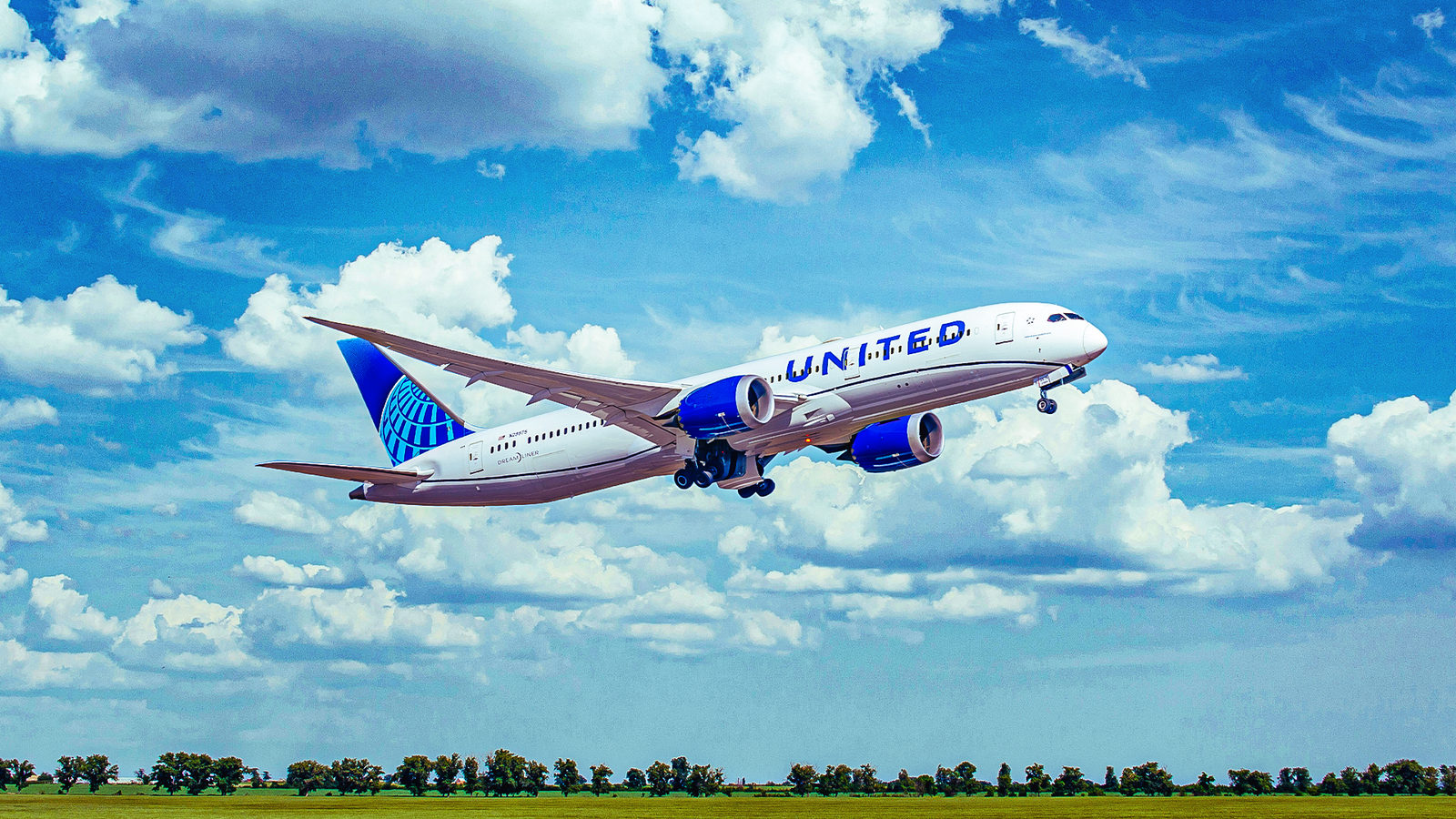
At the exact same time, widebody deployment provides massive under-floor cargo capacity that narrowbody aircraft simply cannot match. High-volume domestic sectors frequently move valuable commercial freight, express parcels, and time-sensitive cargo designed to feed international widebody departures waiting at the hub. With air cargo markets demonstrating robust yields, utilizing the vast belly-hold space of a 787-9 on domestic legs adds an extra layer of financial success, which can often prove vital to an individual route’s overall profitability.
Combatting Slot Scarcity
When passenger demand surges far beyond what standard narrowbody frequencies can comfortably accommodate, major network hubs frequently face rigid operational delays and severe gate limitations. Adding extra daily narrowbody departures to handle rising volume is often physically impossible at congested airports constrained by strict hourly arrival caps or limited gate availability. Instead of increasing flight frequency, network planners must turn to aircraft gauge optimization, utilizing widebody capacity to scale passenger volume efficiently within existing slot allocations.
Upgrading a high-density domestic rotation from a single-aisle jet to a 787-9 Dreamliner increases seat capacity by over 100 passengers per departure without consuming a single additional scarce takeoff or landing slot. At major mega-hubs where slot controls and ramp congestion heavily restrict extra aircraft movements, upgauging is mathematically the most efficient solution to handle heavy passenger flows. This strategy maximizes the passenger throughput of a single movement, successfully avoiding the infrastructure constraints that typically limit frequency expansion.
Of course, operating smaller narrowbody aircraft multiple times a day provides a varied schedule tailored for business travelers, but it can quickly overwhelm crowded terminal concourses and ramp space during peak morning and evening hours. Deploying a widebody on these heavy domestic corridors allows carriers to consolidate large passenger loads into fewer departures while optimizing ground infrastructure use.
Best Of Both Worlds
Domestic widebody deployments are inherently fluid and are rarely considered permanent fixtures of a static schedule. Instead, these deployments shift dynamically in response to seasonal fluctuations in international travel demand. During shoulder seasons or temporary troughs in transatlantic and transpacific travel, long-haul aircraft availability naturally fluctuates, creating strategic windows of opportunity for network planners to route widebodies onto domestic trunk lines. This flexibility allows carriers to maximize asset productivity year-round, importantly ensuring that expensive multi-million-dollar airframes continue generating revenue even when international route demand contracts.
On occasion, tactical equipment swaps and network adjustments place aircraft onto domestic schedules to solve short-term operational hurdles. If unexpected passenger surges or maintenance schedule revisions occur at a primary hub, airlines can rapidly upgauge domestic rotations without disrupting long-term fleet allocations.
Ultimately, the ability to weave long-range widebodies into domestic loops highlights the sophisticated adaptability required to manage modern, multi-layered airline networks. When global travel patterns shift or maintenance routing needs to be positioned near major engineering bases, domestic widebody operations provide the operational elasticity needed to keep fleets balanced. By treating these aircraft as versatile assets rather than rigid intercontinental specialists, carriers can achieve both strong financial performance and enduring network resilience.
The presence of a long-haul flagship like the 787-9 on domestic routes underscores the complex operational and commercial calculus governing modern network airlines. Far from an accidental routing choice, deploying twin-aisle widebodies across high-density domestic corridors lets carriers optimize asset rotation, test advanced premium cabin hardware, capture lucrative business yields, and relieve the slot congestion that increasingly limits airlines worldwide. Turning highly valued intercontinental aircraft into flexible domestic workhorses during turnaround windows means that major carriers can continue to extract maximum value from every single airframe in the fleet.
Related News