Unraveling the Roots of Inequality: New Study Tracks Social Status and Paternal Lineages in Ancient Bohemia
Article Editorial Team

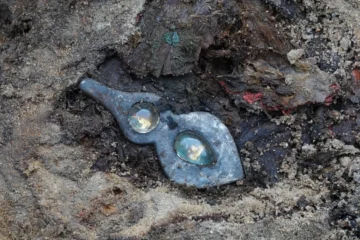
COPENHAGEN, DENMARK—According to a statement released by the University of Copenhagen, researcher Mikkel Nørtoft has developed an innovative analytical system that utilizes multiple sources of information to reconstruct social status and hierarchy from ancient grave goods. To put this novel methodology to the test, Nørtoft and his colleagues evaluated comprehensive data drawn from approximately 300 Corded Ware culture graves located in Bohemia, a region spanning an era between 4,000 and 5,000 years ago.

The detailed analyses of these ancient burials were subsequently compared against genetic ancestry profiles and Y-chromosome patterns to closely track paternal lineages over generations. Furthermore, the estimated ages of the individuals included in the study, their biological sex, and any known illnesses documented through skeletal analysis were integrated into the broad evaluation.
The resulting study offers a fresh perspective on the ancient past, suggesting that social inequality did not arrive overnight with migrating populations. Instead, the data indicates that significant social inequality emerged gradually over the course of several centuries after people originating from the Pontic-Caspian steppe migrated into Bohemia. During the initial phases of this migration and settlement, differences in wealth and material culture appear to have been relatively small, mostly age-related, and distributed fairly evenly across different paternal lineages.

For generations, researchers and academics have debated the fundamental nature of these prehistoric migrations. "Archaeologists have long debated whether steppe populations migrating across Europe from Ukraine brought with them a highly unequal social system and patriarchy," Nørtoft noted in the university’s statement, highlighting the long-standing questions surrounding the social structures of prehistoric Europe.
Rather than pointing to an immediate imposition of a rigid hierarchy, the findings suggest a more dynamic evolution of society. "Achieving status through life actions appears to have been more important than through inheritance, at least during the first 400 years," Nørtoft explained. During this initial era, personal achievements, community roles, or individual actions likely dictated a person’s standing within their community and the nature of the items placed with them in death, rather than inherited familial wealth or entrenched aristocratic privileges.

However, the archaeological and genetic landscape shifted notably as time progressed. The study reveals that after a new paternal lineage appeared in the region, falling roughly between 2700 and 2500 B.C., clear signs of both wealth and gender inequality began to increase across the burial sites. During this transitional phase, adult men increasingly began to appear with more richly furnished graves, signaling a divergence in how status and resources were distributed and displayed within society.
The transformation reached a distinct stage in the final phase of the studied period, which runs roughly from 2500 to 2300 B.C. According to Nørtoft, researchers observed a few exceptionally rich displays of family wealth manifested through children, while the lineage that had previously appeared as a newcomer now firmly dominated the entire burial record. These pronounced shifts could well serve as an archaeological indicator of inherited wealth, dynastic accumulation, and a growing degree of social competition among rival groups or families, Nørtoft added.

While the study provides a compelling glimpse into the prehistoric development of social hierarchy, the researchers emphasize that these findings represent a regional correlation that warrants further exploration. "We now have a correlation between changing Y-haplogroup lineages and unequal burial wealth display in one region, but we need more DNA data to confirm this at the family level, and elsewhere," Nørtoft concluded.
Those interested in reading the original scholarly article detailing this research can find the study published in the Journal of Neolithic Archaeology. Additionally, readers wishing to explore the specific kinds of artifacts recovered from Corded Ware burials that ancient societies used to signify wealth and status can find further coverage in related archaeological publications.
Related News