Audubon Washington Launches Search for 2027 "Spokesbird" as Public Voting Opens
Article Editorial Team
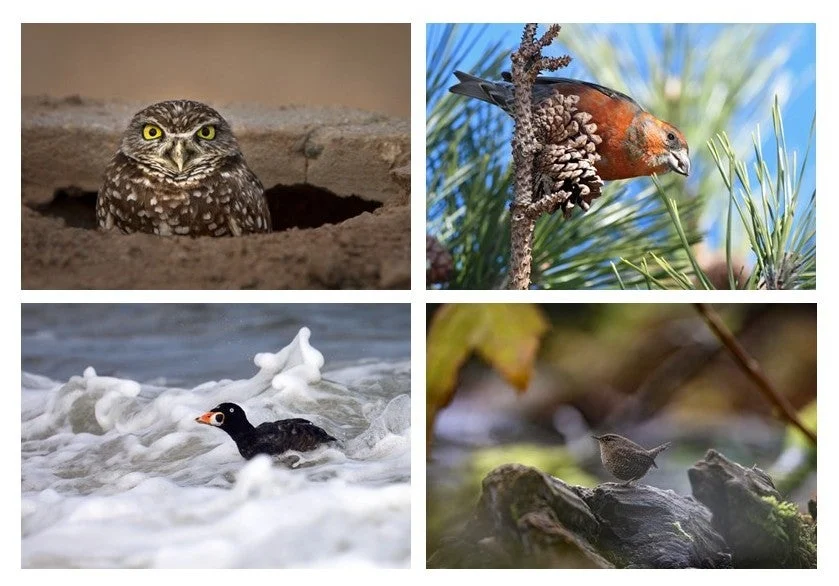
Audubon Washington has officially opened the polls for its highly anticipated "Bird of the Year" election, a unique initiative that invites the public to select a representative avian ambassador for the 2027 calendar year. This annual campaign, which aims to bridge the gap between complex conservation science and the personal connection people feel toward nature, serves as a rallying cry for the protection of the Pacific Northwest’s diverse habitats and the vulnerable species that call them home.
The organization has narrowed the field to four distinct candidates, each chosen for their ecological significance and their ability to highlight a specific, pressing conservation challenge within Washington State. By casting a vote, participants are not merely picking a favorite species; they are helping to determine the narrative of Audubon Washington’s advocacy efforts for the year to come. The winning bird will serve as the "spokesbird," fronting educational campaigns, spotlighting critical habitat needs, and mobilizing the public to take tangible action on behalf of local wildlife.
The decision to elevate a single species as a representative for the year is rooted in the philosophy that environmental conservation can often feel overwhelming to the general public. By focusing on the story of one specific bird—its habits, its struggles, and its home—Audubon Washington seeks to make the broader mission of habitat protection feel more personal and attainable. This strategy proved successful in the previous cycle, during which the 2026 Bird of the Year, the Swainson’s Thrush, became a focal point for discussions on migration patterns, climate change, and the necessity of preserving migratory corridors.
Meet the Candidates
The four finalists in this year’s election offer a diverse cross-section of Washington’s biological wealth, representing environments that range from the arid, high-desert shrub-steppe to the deep, mossy floors of ancient forests and the rugged beauty of the Pacific coastline.
The first candidate, the Burrowing Owl, brings a unique perspective to the ballot. Known for its distinctively bobbing head—often described as a friendly "howdy" to passersby—the Burrowing Owl is a species that lives in close connection with the earth. As a daytime hunter and a remarkably swift runner, the owl is a resilient survivor in an increasingly fragile environment. However, the Burrowing Owl’s situation is dire; with fewer than 100 breeding pairs remaining in Washington, the species serves as a sobering indicator of the health of the state’s shrub-steppe landscape. The owl’s candidacy is a plea for the preservation of open spaces and the recognition that protecting these birds requires the conservation of the entire ecosystem, including the badgers and ground squirrels whose abandoned burrows the owls rely on for shelter.
Representing the aquatic frontiers of the region is the Surf Scoter, a hardy sea duck that has become an expert at navigating the deep waters of the Pacific Coast. Capable of diving up to 80 feet to forage for mussels and clams, the Surf Scoter is a social creature that often moves in synchronized, rhythmic flocks. Its presence is vital to the health of Washington’s bays and shorelines. Since the 1970s, however, the population of these birds has seen a sharp decline. Because approximately one in five Surf Scoters that winter along the Pacific Coast does so in Washington waters, the state holds a significant responsibility for their survival. A vote for the Surf Scoter is an acknowledgement of the interconnectedness of the shoreline, serving as a reminder that healthy eelgrass beds and herring spawns are essential not just for the ducks, but for the salmon and orcas that share these coastal corridors.
For those who value the intricate beauty of the forest interior, the Pacific Wren offers a compelling story. Despite its minuscule size—weighing in at just 8 to 12 grams—the Pacific Wren possesses one of the most powerful and complex songs in the avian world, capable of producing up to 36 notes per second. As a master nest-builder, it constructs intricate, dome-shaped structures that can be surprisingly large relative to its own body. The Pacific Wren is an ambassador for the forest floor, a habitat that is often overlooked in favor of the towering canopy. Both recent and long-term community science data have signaled a downward trend in the population of these wrens, underscoring the urgent need to protect the moss-covered logs, tangled roots, and dense undergrowth that characterize a healthy forest floor.
Rounding out the list is the Red Crossbill, a species defined by its evolutionary ingenuity. Its uniquely crossed bill is a specialized tool engineered to pry open conifer cones, providing access to a food source that few other birds can reach. Highly social and nomadic, the Red Crossbill does not adhere to a rigid migratory schedule; instead, it wanders hundreds of miles in search of the most abundant cone crops. This reliance on mature conifer forests makes the species an ideal candidate to highlight the threat of a changing climate. According to projections from Audubon’s climate science team, nearly 60% of the Red Crossbill’s current breeding habitat could be lost if global temperatures continue to rise by 3°C. Supporting the Red Crossbill is an opportunity to advocate for the resilience of our forests in the face of warming trends.
The Power of the Ballot
The "Bird of the Year" initiative is more than a contest; it is a mechanism for engagement. Audubon Washington recognizes that while policy changes and large-scale habitat restoration are essential, the success of these initiatives often rests on the willingness of the public to get involved. By requiring voters to provide their email address, the organization is building a community of advocates who will receive direct updates on the election results and, more importantly, stay informed about the specific conservation challenges facing the winning bird.
This communication loop is a vital component of the project. Once the 2027 Bird of the Year is crowned, the organization plans to utilize the momentum of the vote to drive participation in specific conservation actions. Whether it involves supporting legislative protections for shrub-steppe lands, participating in shoreline monitoring for the Surf Scoter, or advocating for the preservation of old-growth forest structures, the "spokesbird" will act as the face of these efforts.
The organization emphasizes that conservation often feels like a distant, impersonal, and overly complicated field dominated by technical reports and bureaucratic hurdles. By centering the conversation around the life story of a single, relatable species, the campaign makes the stakes clear: the future of these birds is tied directly to the choices made by the humans who share their environment. Each candidate tells a different story about the health of the region—the Burrowing Owl speaks to the vanishing grasslands, the Surf Scoter to the purity of our bays, the Pacific Wren to the integrity of the forest floor, and the Red Crossbill to the stability of our timberlands.
As the voting period progresses, the public is encouraged to learn more about each candidate’s unique biology and the specific environmental pressures they face. The election serves as a reminder that every bird has a role to play in the ecosystem, and every voter has a role to play in ensuring those birds continue to thrive. The results of the 2027 Bird of the Year election will be announced following the conclusion of the voting period, marking the start of a year-long campaign dedicated to the champion chosen by the public.
Related News