A Window into the Wild: Mac Stone’s Photography Exhibit Brings the Secrets of Ancient Swamps to Life
Article Editorial Team
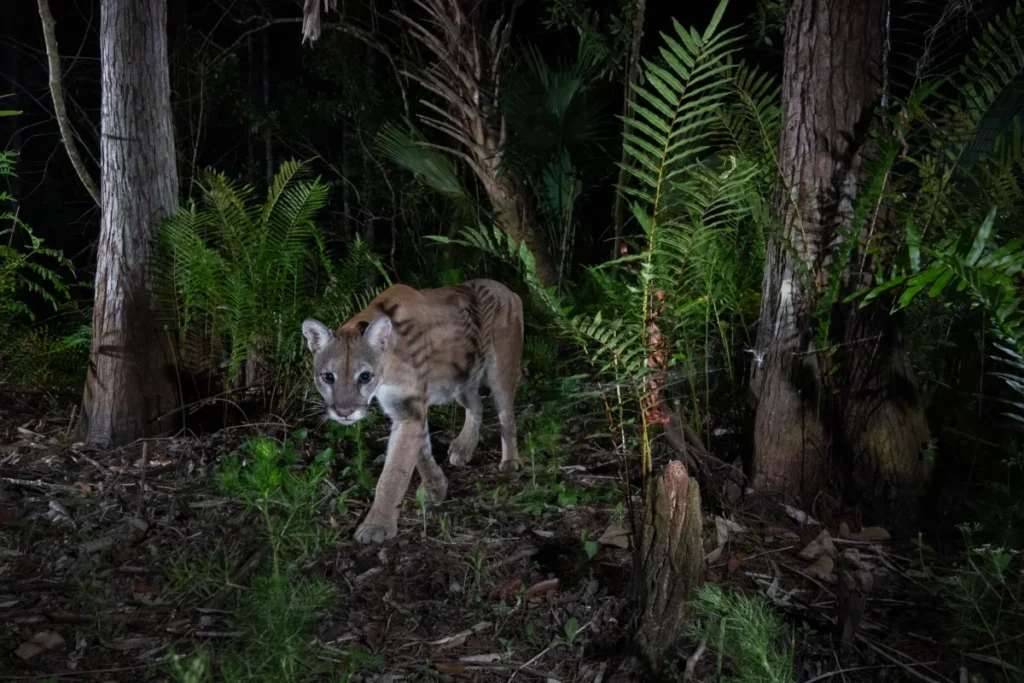
A walk along the boardwalk at the Corkscrew Swamp Sanctuary in Florida is a journey into a primordial world. Towering bald cypress trees, some with trunks spanning more than twenty feet in circumference, reach toward the canopy, casting deep, protective shadows over the forest floor. These giants serve as the structural backbone of the ecosystem, providing essential nesting grounds for birds and a tranquil sanctuary for an array of wildlife. Now, visitors to this unique landscape have the opportunity to see these hidden wonders through a new lens, thanks to an expansive outdoor photography exhibit curated by National Geographic Explorer and photographer Mac Stone.
Mounted directly onto the handrails of the 2.25-mile boardwalk, the gallery features 60 large-format prints that offer an intimate look at the rare, surviving wetland forests of the Southeast. These forests, which have managed to persist despite centuries of human-driven logging and land development, are revealed in Stone’s work with striking clarity. Through his lens, the scale, complexity, and quiet, enduring power of these ecosystems are brought to the forefront, allowing visitors to appreciate the mystery and immense biodiversity of habitats that are all too often overlooked.
The exhibit, which is scheduled to run through March 2027, captures a wide spectrum of swamp life. Visitors walking the path may find themselves face-to-face with a sprawling alligator resting in a reflective pool alongside its young, a group of river otters playing along a muddy bank, or a tiny tree frog camouflaged perfectly against the textured bark of a cypress tree. These images, captured using both traditional hand-held cameras and motion-activated camera traps, provide a comprehensive glimpse into the vibrant life that exists just beyond the reach of the boardwalk.
The collection is not limited to the Corkscrew Swamp itself; it draws from Stone’s extensive work across several vital southeastern ecosystems, including the Beidler Forest in South Carolina and the vast landscapes of Congaree National Park. For Stone, the Corkscrew Swamp Sanctuary is not just a subject for his photography—it is a beacon of conservation.
"There is no place in the world like Corkscrew Swamp Sanctuary," Stone says. "What Audubon has preserved in this block of forest is rare beyond measure. It is a north star for other tropical swamps in the Everglades and an example of what long-term conservation can be if we give them the key ingredient that most are missing: time."
Stone’s relationship with the camera began early, as a ninth-grade student. Over the ensuing decades, his interest in the natural world evolved from a hobby into a professional calling. He spent years working for the National Audubon Society, serving in capacities as both a biologist and a naturalist. This scientific background informs his artistic process; his photography is an extension of his desire to learn, explore, and communicate the importance of these ecosystems to the public. He views the camera as a tool for storytelling, a way to bridge the gap between the scientific understanding of wetlands and the public’s appreciation for them.
Reflecting on his first visit to the Corkscrew Swamp, Stone describes being deeply moved by the sheer density and vitality of the forest. "I remember walking the boardwalk, looking into the dense forest and thinking how I needed to find a way to get my feet in the water and explore," he recalls. He was immediately struck by the abundance of epiphytes, ferns, orchids, and strangler figs—a sharp contrast to the specific composition of the South Carolina swamps he grew up exploring. More than the flora, however, it was the potential for discovery that captured his imagination. "The thought that at any turn you could see an otter, owl, or even a panther was really exciting," he adds.
That drive to document the unseen led to one of the most significant moments in his career. In 2019, during a visit to the sanctuary, Stone teamed up with entomologist Peter Houlihan, PhD. Armed with a research permit from the National Audubon Society, the pair undertook the ambitious task of climbing the bald cypress tree that houses the famous "Super" ghost orchid. Their primary goal was to photograph a giant sphinx moth, which had long been theorized to be the primary pollinator of the rare orchid.
The project required immense patience and a sophisticated camera system set up in the canopy. When they finally reviewed the data, the team realized they had captured something far more significant than a routine pollination event. Their imagery proved that the giant sphinx moth was not, in fact, the pollinator of the ghost orchid, effectively overturning a long-standing belief in the scientific community.
"We had worked so long and put so much faith in the system we set up, knowing that it would be extremely rare to document, and to see a result come from that felt like winning the lottery," Stone explains. Subsequent imagery confirmed that a different species, the fig sphinx moth, was the one responsible for the orchid’s pollination. This discovery highlights the scientific value of Stone’s artistic endeavors and his commitment to deep-field research.
The current exhibit at Corkscrew serves as a testament to these years of exploration and dedication. However, the installation is designed to be a traveling experience. Once the exhibit concludes its tenure at the Corkscrew Swamp Sanctuary at the end of March, it will be relocated to the Audubon Center and Sanctuary at Beidler Forest in South Carolina. This move is particularly meaningful for Stone, as Beidler Forest is an old-growth sanctuary where he spent many years honing his craft as a photographer and working as a naturalist.
The transition to the South Carolina location is viewed as an opportunity for cross-pollination of knowledge and experience between the two sites. Emily Davis, the interim center director at Beidler, notes that the exhibit will provide a unique educational bridge for their visitors.
"One of the things I’m most looking forward to about bringing this exhibit to Beidler is allowing our visitors to experience Corkscrew Swamp through Mac’s photography," Davis says. "While both sanctuaries are home to extraordinary old-growth cypress forests, the landscapes are remarkably different."
By placing the photography in the context of the Beidler forest, organizers hope to draw parallels between the two environments, encouraging visitors to look past the superficial differences and recognize the shared biological connections. From the ancient, towering trees to the migratory patterns of the birds and the complex interactions of the local wildlife, these sanctuaries are part of a larger, interconnected web of life that requires ongoing stewardship.
The exhibit serves as a quiet, powerful reminder of what remains in these protected corridors. As visitors traverse the boardwalks of these sanctuaries, they are not merely observers of a static scene, but participants in a much larger, ongoing story of survival and discovery. Through the 60 images displayed in the gallery, Mac Stone has managed to synthesize decades of biological expertise and photographic skill into a narrative that invites everyone—from the casual visitor to the serious naturalist—to appreciate the "quiet power" of the swamp.
For those interested in witnessing the exhibit firsthand, the Corkscrew Swamp Sanctuary remains open for visitors who wish to experience the intersection of art and conservation. As the seasons change and the light filters through the cypress canopy, the prints along the boardwalk offer a permanent, yet ever-changing, reflection of the beauty that persists in the deep, quiet corners of our natural world. By bringing these images out of the archives and into the very environments they depict, the exhibit ensures that the mystery of the swamps remains, for the time being, a tangible and awe-inspiring reality for those who take the time to look.
Related News