Solo Travel in Kuwait: A First-Hand Account of the 16 Best Things to Do, Where to Stay, and Essential Cultural Insights
Article Editorial Team
Last updated: October 2026, by Lisa Imogen Eldridge

Kuwait, renowned globally as one of the wealthiest nations due to its vast oil reserves and affluent ruling families, is rarely the first destination that comes to mind for international travelers. However, spending a week exploring the country solo reveals a deeply fascinating, welcoming, and safe Middle Eastern destination that offers a rich blend of ancient heritage and modern ambition.

Nestled strategically between Iraq and Saudi Arabia, Kuwait boasts a history stretching back to at least 2000 B.C., when early Mesopotamian settlements established roots in the region, a fact evidenced by enduring Greek ruins. While the country carries visible historical scars from the Iraqi invasion—such as the poignant debris still found on Falaika Island—its people have demonstrated extraordinary resilience. Today, magnificent monuments stand across Kuwait City to honor the courageous soldiers and citizens who sacrificed their lives during the conflict.

For travelers seeking an alternative winter getaway, Kuwait presents an appealing climate between November and March. Visitors can unwind along pristine coastlines, spend a night under the stars in the desert, or explore the rich biodiversity of the nation’s nine islands. Though a compact nation where the major highlights can be seen in a relatively short timeframe, Kuwait delivers a rewarding cultural experience.

Understanding Kuwaiti Customs and Heritage
Kuwaiti culture is deeply rooted in Islamic traditions and strong community values, seamlessly blending modern conveniences with age-old customs. The official language is Arabic, and traditional attire remains common, with men typically wearing the thobe—a long white robe—and women wearing the abaya.

The nation’s heritage is inextricably linked to the sea, particularly its historical pearl diving industry, which continues to be celebrated during annual festivals. Museums such as the Kuwait National Museum offer comprehensive insights into the country’s artistic and historical evolution. Visitors should note that the official weekend in Kuwait falls on Friday and Saturday rather than Saturday and Sunday.

Social hospitality is a cornerstone of daily life, with Arabic coffee and fresh dates traditionally offered to welcome guests. Traditional cuisine reflects regional trade routes and local flavors, most notably Machboos, a spiced rice dish served with meat or seafood, followed by sweet regional treats such as Luqaimat.

Exploring the Top Attractions and Landmarks
Kuwait City and its surrounding areas offer a diverse array of landmarks, cultural institutions, and recreational spaces. Among the most prominent sites is the Grand Mosque, officially known as Al-Masjid Al-Kabir. Spanning 45,000 square metres and constructed in 1986, it stands as the largest official mosque in the country, featuring magnificent Islamic architecture, intricate woodwork, and expansive domes. Guided tours are available for visitors wishing to learn more about Islamic traditions.

Directly opposite the mosque lies Seif Palace, constructed in 1904 by Sheikh Mubarak. Serving as the historic seat of the Kuwaiti government since the late 19th century, the palace complex covers 16,000 square metres and incorporates traditional elements of rock, clay, and limestone, alongside modern features like a helipad and watchtower. While public access is restricted beyond the main gates, the exterior remains a striking architectural stop.

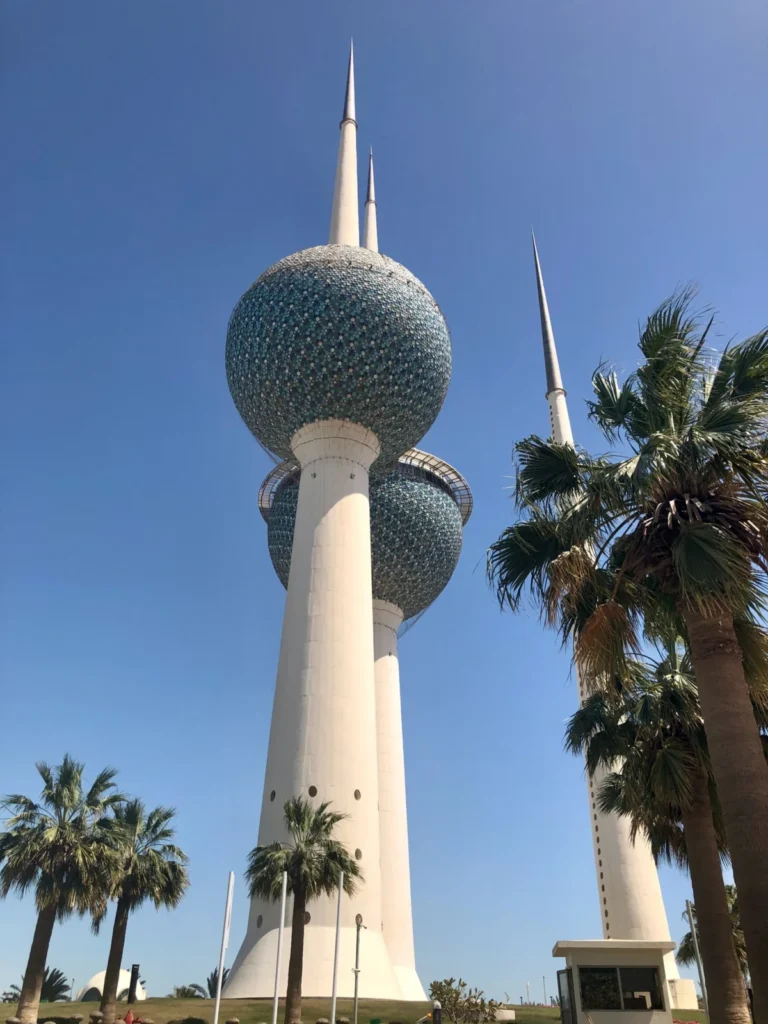
No visit to Kuwait is complete without experiencing the iconic Kuwait Towers. Designed by Danish architects and completed in 1979, the twin structures offer panoramic views of the city skyline and the Arabian Gulf coastline. Arriving in the late afternoon allows visitors to witness daylight views, the sunset, and the city lights illuminating the evening sky. Similarly, the 372-metre-tall Liberation Tower, built in 1993 to commemorate the nation’s freedom, stands as a prominent telecommunications landmark housing exhibition galleries and a revolving restaurant.

For green spaces, Al Shaheed Park spans 55,000 square metres as the largest green roof project in the Arab world. Dedicated to the nation’s martyrs, the park features the striking glass Martyr Monument, the Constitution Monument, the Remembrance Museum, the Habitat Museum, and an outdoor amphitheatre that hosts regular cultural events.

Museum enthusiasts will find immense value in the Tareq Rajab Museum, which houses a private collection of over 30,000 pieces of Islamic art, including jewelry, musical instruments, ceramics, and historical manuscripts. Nearby, Sadu House preserves the heritage of the indigenous Bedouin tribe, showcasing traditional weaving techniques and offering workshops alongside authentic handicrafts.

Cultural appreciation reaches new heights at the Sheikh Jaber Al Ahmad Cultural Center, a striking performing arts venue situated within Kuwait’s National Cultural District. The complex features modern theaters, outdoor dancing fountains, and fine dining options, while nearby cultural hubs like the Sheikh Abdullah Al Salem Cultural Centre offer natural history and science museums.

Shopping, Markets, and Coastal Leisure
Shopping in Kuwait ranges from traditional bazaars to ultra-modern complexes. Souq Al-Mubarakiya offers a traditional Middle Eastern marketplace experience where visitors can browse Persian silk carpets, local perfumes, spices, and antiques, followed by meals at traditional restaurants. For contemporary retail, Souq Sharq provides international high-street brands alongside scenic views of the marina, while the sprawling Avenues Mall stands as the largest shopping complex in the country, featuring luxury international labels, diverse dining options, and indoor entertainment.

For outdoor relaxation, Kuwait’s coastline offers several well-maintained beaches. Messilah Beach provides a tranquil environment, while Egaila Beach offers gardens, barbecue areas, and swimming facilities. Visitors should note that conservative dress codes apply across public beaches, where bikinis are generally not permitted unless worn within private hotel resorts.

Beyond the urban center, the Kazmah Desert offers dramatic cliffside views, camel safaris, quad biking, and sand gliding during the cooler winter months. Man-made green spaces like Green Island offer cycling tracks and picnic areas along the Corniche, while historical offshore locations like Failaka Island—situated 20 kilometers from the mainland—feature ancient Greek ruins, archaeological sites, and remnants from the Gulf War alongside modern ferry services. Further north, Boubyan Island and Warbah Island serve as crucial sanctuaries for migratory birds and marine wildlife, providing serene escapes for nature enthusiasts.

Accommodation and Transport Infrastructure
Kuwait offers a broad spectrum of accommodations, ranging from budget-friendly international chains to five-star luxury beach resorts. Because Kuwait is a dry country, hotel properties do not serve alcohol, but they typically feature high-end restaurants, fitness centers, and swimming pools. Popular options include the central Ramada Encore by Wyndham Kuwait Downtown, the five-star Radisson Blu Hotel Kuwait, the historic Sheraton Kuwait, and The Regency Hotel Kuwait, which features dedicated female-only facilities.

Getting around the city is accessible through several transport methods. City buses provide an inexpensive way to travel, though routes require advance planning. Taxis are widely available and metered, while ride-hailing applications such as Uber and Careem offer convenient digital booking and payment options. Car rentals are also available for travelers comfortable navigating busy urban traffic, provided they hold an International Driving Permit.

Practical Considerations for Solo Travelers
Kuwait International Airport (KWI), located approximately 15 kilometers outside the capital, connects the country to international destinations through active terminal facilities. Taxis, ride-hailing services, and public bus lines connect the airport directly to the city center.

The most favorable time to visit Kuwait is during the cooler winter months between November and March. While summer temperatures from June to August are extremely high, travelers visiting during shoulder months can comfortably navigate the city with adequate hydration and sun protection.

Solo travel in Kuwait is characterized by a high degree of personal safety and welcoming local hospitality. While tourism infrastructure is still developing compared to other regional hubs, independent travelers who appreciate cultural exploration, historical landmarks, and coastal views will find Kuwait to be a rewarding and secure destination to discover.
Related News